Every american patient can benefit from the precision that modern science brings to health care. Roughly 90 percent of current medical decisions rely on laboratory testing, yet few realize how molecular pathology is transforming diagnostics behind the scenes. By focusing on the tiniest details within our genes and cells, this cutting-edge field reveals the true drivers of disease. You will uncover how these molecular techniques power better diagnoses, targeted treatments, and a deeper understanding of individual health risks.
Table of Contents
- Defining Molecular Pathology And Core Principles
- Types Of Molecular Pathology Testing Methods
- How Molecular Pathology Is Performed
- Clinical Applications In Diagnostic Medicine
- Benefits, Limitations, And Quality Considerations
Key Takeaways
| Point | Details |
|---|---|
| Molecular Pathology Overview | This field examines diseases at the molecular and genetic levels, integrating genetics, biochemistry, and cellular biology. |
| Testing Methods | Advanced techniques like PCR, FISH, and DNA sequencing provide critical insights for targeted treatment strategies. |
| Clinical Applications | Molecular pathology enhances cancer diagnostics, infectious disease detection, and personalized medicine based on genetic profiles. |
| Benefits and Limitations | While offering precision diagnostics and early disease detection, it faces challenges like sample quality dependency and technical complexity. |
Defining Molecular Pathology and Core Principles
Molecular pathology represents a sophisticated medical discipline that examines disease processes at the molecular and genetic level, transforming our understanding of human health and illness. According to Annual Reviews, this field investigates how molecular mechanisms contribute to disease progression and development, providing unprecedented insights into complex biological interactions.
Molecular pathology integrates multiple scientific disciplines, including genetics, biochemistry, and cellular biology, to understand diseases at their most fundamental level. Researchers utilize advanced techniques to analyze genetic mutations, protein expressions, and cellular interactions that underlie various medical conditions. As reported by Genetic Testing and Molecular Biomarkers, these investigations help medical professionals develop targeted diagnostic and therapeutic strategies.
The core principles of molecular pathology focus on several critical aspects:
- Genetic Analysis: Examining DNA and RNA sequences to identify mutations
- Biomarker Detection: Identifying specific molecular indicators of disease
- Cellular Mechanism Understanding: Exploring how molecular changes impact cellular function
- Precision Medicine Development: Creating personalized treatment approaches based on individual genetic profiles
Through comprehensive molecular analysis, pathologists can now detect disease risks, understand complex genetic interactions, and develop more targeted interventions. This approach shifts medical understanding from generalized treatments to highly personalized, molecular-level healthcare strategies.
Types of Molecular Pathology Testing Methods
Molecular pathology testing encompasses a range of sophisticated diagnostic techniques designed to analyze biological specimens at the molecular level. According to research from PubMed, these methods provide critical insights into genetic and cellular mechanisms that drive disease progression and help clinicians develop targeted treatment strategies.
The primary molecular pathology testing methods include several key approaches:
- Polymerase Chain Reaction (PCR): A powerful technique that amplifies specific DNA segments to detect genetic mutations
- Fluorescence In Situ Hybridization (FISH): Allows visualization of specific genetic sequences within chromosomes
- DNA Sequencing: Enables comprehensive mapping of genetic material to identify variations
- Gene Expression Profiling: Measures activity levels of specific genes in tissue samples
As highlighted by Surgical and Experimental Pathology, each molecular testing method offers unique advantages in detecting actionable genetic alterations. For instance, PCR can rapidly identify specific genetic markers, while DNA sequencing provides a more comprehensive genetic analysis.
Advanced molecular testing methods continue to revolutionize diagnostic capabilities, enabling healthcare professionals to develop more precise, personalized treatment approaches. These techniques not only help identify disease risks but also provide unprecedented insights into individual genetic profiles, marking a significant advancement in medical diagnostics.

How Molecular Pathology Is Performed
Molecular pathology involves a complex, multi-step process that transforms biological samples into actionable diagnostic insights. According to research from arXiv, advanced microfluidics and lab-on-a-chip technologies have revolutionized the way molecular diagnostics are conducted, enabling more precise and efficient sample processing.
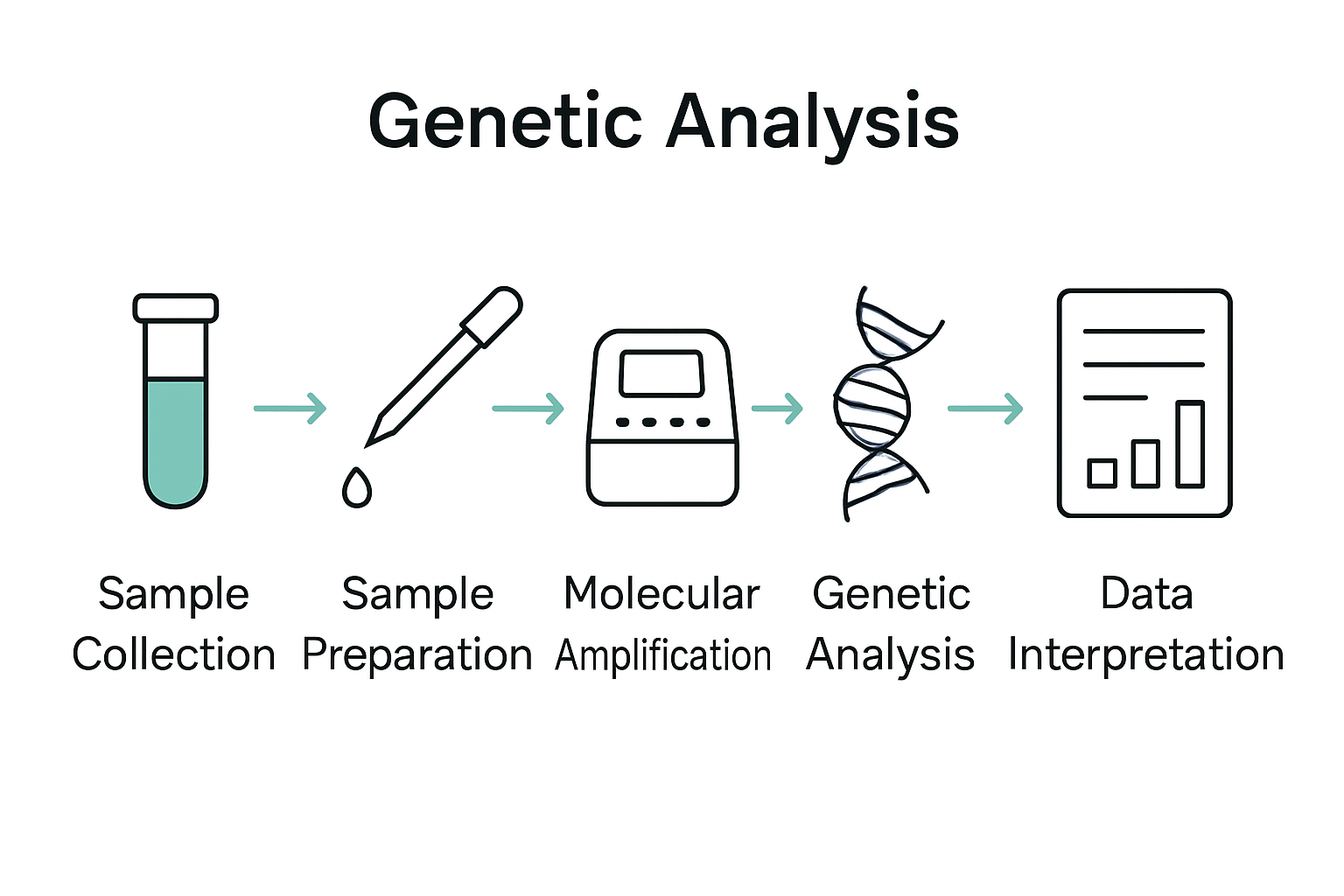
The molecular pathology workflow typically encompasses several critical stages:
- Sample Collection: Obtaining high-quality biological specimens such as blood, tissue, or cellular material
- Sample Preparation: Extracting and isolating genetic material (DNA/RNA) from the collected samples
- Molecular Amplification: Using techniques like PCR to enhance genetic material for detailed analysis
- Genetic Analysis: Examining molecular structures to identify specific mutations or biomarkers
- Data Interpretation: Analyzing results and translating molecular findings into clinical insights
Cutting-edge technologies continue to transform molecular pathology procedures. arXiv highlights emerging techniques like deep learning-enabled virtual histological staining, which allows researchers to generate detailed molecular images without traditional staining methods. These innovative approaches significantly enhance the precision and efficiency of molecular diagnostic workflows.
The ultimate goal of molecular pathology performance is to provide healthcare professionals with comprehensive, detailed insights into genetic and cellular mechanisms. By leveraging advanced technologies and sophisticated analytical techniques, molecular pathology enables more personalized, targeted approaches to diagnosis, treatment planning, and patient care.
Clinical Applications in Diagnostic Medicine
Molecular pathology has transformed diagnostic medicine by providing unprecedented insights into disease mechanisms and patient-specific health profiles. Learn more about molecular diagnostics methods to understand the breadth of this revolutionary approach. According to groundbreaking research from arXiv, computational pathology algorithms are now capable of predicting tumor origins with remarkable accuracy, representing a significant leap forward in cancer diagnostics.
Key clinical applications of molecular pathology span multiple medical domains:
- Cancer Diagnostics: Identifying specific genetic mutations and tumor characteristics
- Infectious Disease Detection: Rapidly identifying pathogens and their genetic profiles
- Genetic Disorder Screening: Detecting inherited genetic variations
- Personalized Medicine: Developing targeted treatment strategies based on individual genetic makeup
- Pharmacogenomics: Predicting patient responses to specific medications
Cutting-edge technological advancements continue to expand molecular pathology’s diagnostic capabilities. arXiv highlights the emerging role of artificial intelligence in enhancing nucleic acid amplification testing, which promises to dramatically improve diagnostic precision and accuracy.
The ultimate goal of molecular pathology in diagnostic medicine is to move beyond traditional diagnostic approaches, offering healthcare professionals a more comprehensive, personalized understanding of patient health. By integrating advanced genetic analysis, computational technologies, and sophisticated molecular techniques, this field is revolutionizing our ability to diagnose, predict, and treat complex medical conditions with unprecedented specificity.
Benefits, Limitations, and Quality Considerations
Molecular pathology represents a powerful diagnostic approach with significant potential and inherent challenges. According to research from the Clinical Laboratory Science Journal, understanding the nuanced benefits and limitations is crucial for effective implementation of molecular diagnostic techniques.
Key benefits of molecular pathology include:
- Precision Diagnostics: Unprecedented accuracy in identifying genetic variations
- Early Disease Detection: Ability to identify potential health risks before symptoms emerge
- Personalized Treatment: Developing targeted therapeutic strategies
- Comprehensive Analysis: Examining complex molecular interactions at cellular levels
- Rapid Results: Faster diagnostic turnaround compared to traditional methods
However, molecular pathology also presents notable limitations. PubMed highlights critical quality considerations that healthcare professionals must carefully evaluate:
- Sample Quality Dependency: Results are highly sensitive to specimen collection and preservation
- High Technical Complexity: Requires specialized equipment and expert interpretation
- Cost Considerations: Advanced testing can be significantly more expensive
- Potential for Overdiagnosis: Risk of identifying genetic variations with uncertain clinical significance
Quality assurance remains paramount in molecular pathology. Successful implementation demands rigorous standardization, continuous professional training, and robust validation protocols to ensure diagnostic accuracy and clinical reliability.
Unlock Precise Molecular Insights with Centra Diagnostics
Understanding the complex world of molecular pathology means facing challenges like ensuring sample quality and delivering rapid, accurate genetic analysis. This article highlights essential testing methods such as PCR and DNA sequencing that demand specialized expertise and cutting-edge technology to translate molecular data into actionable clinical insights. If you are seeking reliable, fast, and personalized molecular pathology testing, Centra Diagnostics is your ideal partner. We combine advanced techniques with dedicated client support to empower healthcare decisions with confidence.

Experience the benefits of precision diagnostics today by choosing a lab that understands the nuances of biomarker detection, genetic mutation analysis, and personalized medicine development. Visit Centra Diagnostics to explore our advanced molecular testing services and connect with a team committed to improving patient outcomes. Don’t wait to harness the power of molecular pathology for your healthcare needs. Contact us now and take the next step toward faster, more accurate diagnostics.
Frequently Asked Questions
What is molecular pathology?
Molecular pathology is a medical discipline that examines disease processes at the molecular and genetic level to understand how molecular mechanisms contribute to disease progression and development.
What are the core principles of molecular pathology?
The core principles include genetic analysis, biomarker detection, understanding cellular mechanisms, and developing precision medicine approaches tailored to individual genetic profiles.
What are the common testing methods used in molecular pathology?
Common methods include Polymerase Chain Reaction (PCR), Fluorescence In Situ Hybridization (FISH), DNA sequencing, and gene expression profiling, each providing unique insights into genetic alterations.
How does molecular pathology improve patient care?
Molecular pathology enhances patient care by enabling precise diagnostics, early disease detection, personalized treatment strategies, and a comprehensive understanding of complex molecular interactions.