Over 30 million molecular diagnostic tests are performed in american hospitals and clinics each year, highlighting how essential these technologies have become in modern healthcare. As new diseases emerge and genetic research advances, understanding the science behind molecular diagnostics matters more than ever for informed patient care. This article cuts through the technical jargon and brings clear, straightforward answers about what molecular diagnostics are, how they work, and why they are changing the way medical professionals approach disease detection and treatment.
Table of Contents
- Molecular Diagnostics: Definition And Fundamentals
- Types Of Molecular Diagnostic Tests Explained
- How Molecular Diagnostic Testing Works
- Clinical Applications In Patient Care
- Risks, Costs, And Limitations To Consider
Key Takeaways
| Point | Details |
|---|---|
| Molecular diagnostics offer precise disease analysis | These methods analyze biological molecules to identify diseases at a molecular level, allowing for early detection and personalized treatments. |
| Diverse applications across medical fields | Molecular diagnostics are essential in identifying genetic conditions, detecting infectious diseases, and guiding pharmacogenetic research. |
| Complex methods with significant benefits | Techniques like PCR and sequencing provide rapid and accurate insights but require specialized training and can be costly. |
| Important considerations for implementation | While these diagnostics enhance patient care, they also carry risks of false negatives and limitations in detecting all genetic variations. |
Molecular Diagnostics: Definition and Fundamentals
Molecular diagnostics represent a cutting-edge approach in medical testing that enables healthcare professionals to analyze biological molecules with unprecedented precision. According to Cancer.gov, these laboratory methods involve examining DNA, RNA, and proteins from tissue or fluid samples to identify diseases, assess potential health risks, and guide treatment strategies.
At its core, molecular diagnostics transforms traditional medical testing by providing a molecular-level understanding of health conditions. These advanced techniques allow medical professionals to detect diseases earlier, understand genetic predispositions, and develop personalized treatment plans. By analyzing specific genetic markers, molecular diagnostics can reveal insights that conventional diagnostic methods might miss.
The applications of molecular diagnostics are remarkably diverse. Annals of Clinical Laboratory Science highlights how these techniques are crucial in multiple medical domains, including:
- Identifying inherited genetic conditions
- Detecting infectious diseases
- Analyzing neoplastic (cancer) developments
- Conducting pharmacogenetic research
- Supporting forensic medical investigations
For those seeking a deeper understanding of molecular diagnostic technologies, our guide on molecular diagnostics growth provides comprehensive insights into this rapidly evolving field.
Types of Molecular Diagnostic Tests Explained
Molecular diagnostic tests represent a sophisticated arsenal of scientific techniques designed to detect and analyze genetic material with remarkable precision. According to NCBI, these methods encompass a diverse range of technologies that enable healthcare professionals to identify genetic variations, detect pathogens, and understand complex biological processes.
Hybridization techniques are a fundamental approach in molecular diagnostics, involving the use of specific molecular probes that bind to complementary genetic sequences. These tests can reveal critical genetic information by identifying specific DNA or RNA fragments. Genotyping and sequencing methods, including advanced technologies like nanopore sequencing, provide even more detailed genetic insights, allowing researchers to map entire genetic profiles with unprecedented accuracy.
The primary molecular diagnostic test methods include:
- Polymerase Chain Reaction (PCR): A target amplification technique that multiplies specific genetic segments
- Signal Amplification Tests: Methods that enhance genetic signal detection
- Sequencing Technologies: Including advanced approaches like nanopore sequencing
- Genetic Probe Hybridization: Techniques that identify specific genetic sequences
For a comprehensive walkthrough of molecular testing procedures, check out our step-by-step molecular testing guide that breaks down these complex processes into understandable steps. These molecular diagnostic techniques offer significant advantages, such as faster turnaround times and the ability to detect pathogens that cannot be cultured through traditional methods.
How Molecular Diagnostic Testing Works
Molecular diagnostic testing represents a sophisticated scientific approach that transforms biological samples into precise genetic insights. PubMed highlights how these techniques, particularly nucleic acid amplification methods like polymerase chain reaction (PCR), have revolutionized clinical microbiology by enabling rapid detection and quantification of pathogens.
Sample preparation forms the critical first step in molecular diagnostic testing. Healthcare professionals carefully collect biological specimens like blood, tissue, or fluid samples, which are then processed to extract genetic material. These samples undergo specialized treatments to isolate and purify DNA or RNA, ensuring the genetic material is ready for detailed analysis.
 The extracted genetic material serves as the primary source of diagnostic information, allowing researchers to investigate specific genetic markers, detect potential diseases, or understand genetic variations.
The core molecular diagnostic testing process typically involves these key stages:
- Sample Collection: Obtaining appropriate biological specimens
- Nucleic Acid Extraction: Isolating DNA or RNA from the sample
- Amplification: Using techniques like PCR to multiply genetic segments
- Detection: Analyzing amplified genetic material for specific markers
- Interpretation: Translating genetic findings into clinical insights
To understand the evolving landscape of molecular diagnostics, explore our guide on the role of molecular diagnostics in 2025, which provides deeper insights into how these groundbreaking technologies are transforming healthcare diagnostics. Real-time PCR techniques, in particular, offer unprecedented capabilities to not only detect pathogens but also quantify their presence, providing critical information about disease progression and potential treatment strategies.
Clinical Applications in Patient Care
Molecular diagnostics have transformed patient care by providing unprecedented insights into complex medical conditions. According to Yale Medicine, these advanced techniques are critical in multiple clinical domains, including infectious diseases, hematopathology, genetics, and solid tumor analysis. By identifying gene mutations and assessing disease risks, molecular diagnostics enable healthcare providers to develop more personalized and targeted treatment strategies.
In the realm of hematologic malignancies, molecular diagnostic techniques play a pivotal role in patient management. PMC Research highlights the importance of specialized tests like cytogenetics, fluorescence in situ hybridization (FISH), and PCR in detecting chromosomal abnormalities and specific gene mutations. These advanced diagnostic methods provide clinicians with critical information for accurate diagnosis, precise prognosis, and tailored treatment planning.
The key clinical applications of molecular diagnostics encompass several critical areas:
- Infectious Disease Management: Rapid pathogen identification
- Cancer Diagnostics: Detecting genetic mutations and tumor characteristics
- Genetic Disorder Screening: Identifying inherited disease risks
- Personalized Medicine: Guiding targeted treatment approaches
- Pharmacogenomics: Predicting medication response and potential side effects
To gain deeper insights into the transformative potential of molecular diagnostics, explore our benefits of molecular diagnostics for healthcare providers guide. These advanced diagnostic techniques represent a quantum leap in medical science, enabling healthcare professionals to move beyond traditional diagnostic methods and provide more precise, individualized patient care.
Risks, Costs, and Limitations to Consider
Molecular diagnostic tests, while groundbreaking, come with significant considerations that healthcare providers and patients must carefully evaluate. PMC Research highlights the complexity of these advanced testing methods, noting that they can be expensive and require specialized equipment and highly trained personnel to operate effectively.
The financial and technical barriers are substantial. Molecular diagnostic technologies demand significant upfront investments in sophisticated laboratory equipment, ongoing maintenance, and specialized staff training. False-negative results represent another critical limitation, particularly when viral loads are low or sample collection is suboptimal. According to PMC Research, even advanced techniques like cytogenetics, fluorescence in situ hybridization (FISH), and PCR have inherent constraints in detecting all types of genetic variations.
Key risks and limitations include:
- High Cost: Expensive equipment and specialized personnel
- Technical Complexity: Requires advanced training and expertise
- Potential False Negatives: Risk of missed diagnoses
- Limited Detection Range: Some techniques cannot identify all genetic mutations
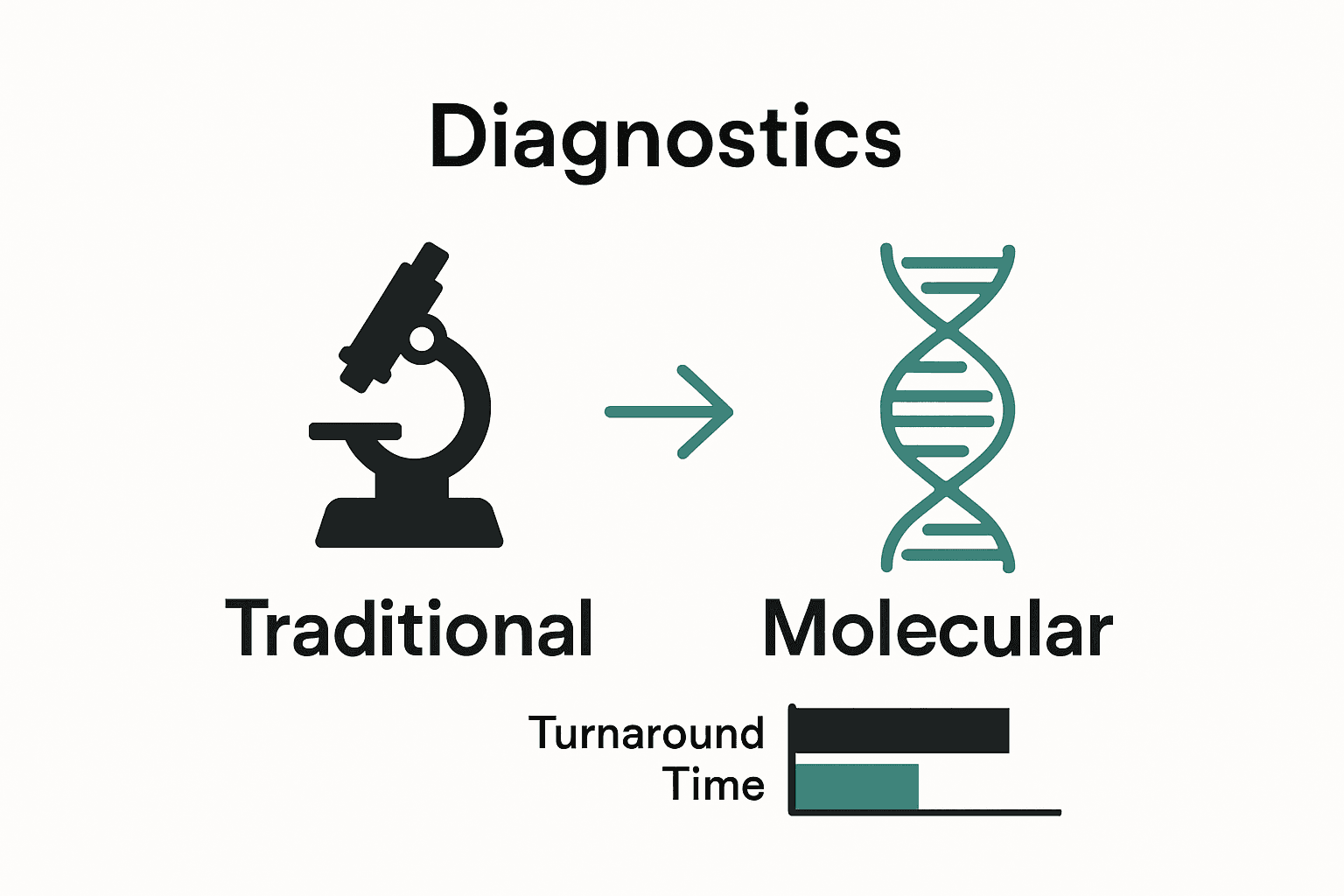
- Longer Processing Times: Certain molecular tests require extended analysis periods
To better understand how molecular diagnostics can be effectively implemented while managing these challenges, explore our molecular toxicology testing guide, which provides insights into navigating these technical complexities. Ultimately, while molecular diagnostic tests offer unprecedented medical insights, healthcare providers must carefully weigh their benefits against potential limitations and costs.
Discover How Advanced Molecular Diagnostics Can Transform Your Healthcare Decisions
Understanding the intricate process of molecular diagnostics can be overwhelming yet vital for accurate diagnosis and personalized treatment. The article explains key steps like sample collection, nucleic acid extraction, amplification, and detection that require precision and cutting-edge technology to overcome challenges such as false negatives and technical complexity. If you are a healthcare provider or patient seeking reliable and fast molecular testing solutions that deliver clear clinical insights, you need a partner equipped to handle these demands.
Take control of your diagnostic journey today with Centra Diagnostics, a trusted Los Angeles lab specializing in molecular testing and advanced diagnostics. With first-in-class turnaround times and dedicated client management, we help you navigate complexities efficiently so you can focus on effective patient care. Learn more about how our molecular testing services can support precision diagnostics and explore how to enhance healthcare insights by visiting our main website now. Don’t wait for uncertainty when innovative molecular diagnostics with Centra Diagnostics is one click away.
Frequently Asked Questions
What are molecular diagnostics?
Molecular diagnostics refer to advanced medical testing methods that analyze biological molecules, such as DNA, RNA, and proteins, to identify diseases, assess health risks, and guide treatment strategies.
How do molecular diagnostic tests work?
Molecular diagnostic tests work through a multi-step process that includes sample collection, nucleic acid extraction, amplification of genetic material, detection of specific markers, and interpretation of results to provide clinical insights.
What types of tests are included in molecular diagnostics?
Common types of molecular diagnostic tests include Polymerase Chain Reaction (PCR), Signal Amplification Tests, Sequencing Technologies, and Genetic Probe Hybridization, which vary in their methods and applications for genetic analysis.
What are the clinical applications of molecular diagnostics?
Molecular diagnostics have numerous clinical applications, such as rapid pathogen identification in infectious diseases, cancer diagnostics through genetic mutation detection, screening for inherited disorders, and tailoring personalized medicine strategies.
Recommended
- Role of Molecular Diagnostics in 2025: Complete Guide | Centra Diagnostics
- What Is Molecular Toxicology Testing? Complete Overview | Centra Diagnostics
- 7 Key Benefits of Molecular Diagnostics for Healthcare Providers | Centra Diagnostics
- Molecular Diagnostics: Complete Guide to Growing Demand | Centra Diagnostics