Over 60 percent of American adults have routine blood tests as part of their health checkups each year, yet many misunderstand their true value. With early detection now pivotal in preventing major illnesses, understanding what these tests actually reveal makes a real difference. This guide separates fact from fiction around blood work, giving you knowledge to approach your next checkup with clarity and confidence.
Table of Contents
- Routine Blood Testing Defined And Debunked
- Common Types Of Routine Blood Tests
- How Blood Work Informs Health Decisions
- Risks, Limitations, And Patient Concerns
- Choosing Reliable Diagnostic Labs And Services
Key Takeaways
| Point | Details |
|---|---|
| Routine Blood Testing Importance | Routine blood tests provide crucial insights into an individual’s health, enabling early detection of potential issues. |
| Common Blood Tests | Key tests like CBC, BMP, and lipid panels assess various health parameters, from cholesterol to kidney function. |
| Understanding Results | Patients should seek detailed explanations of their blood test results to make informed health decisions. |
| Choosing Labs | Selecting accredited labs with transparent quality processes ensures reliable and accurate test outcomes. |
Routine Blood Testing Defined and Debunked
Routine blood testing represents a fundamental diagnostic tool in modern healthcare, enabling medical professionals to assess an individual’s overall health status and detect potential issues before they become serious. Blood tests provide critical insights into physiological functioning, revealing everything from nutrient levels to potential disease markers with remarkable precision.
Contrary to common misconceptions, routine blood tests are not complex or universally uncomfortable procedures. Most blood draws take just minutes and involve minimal discomfort, typically lasting only seconds. While some tests require fasting, many standard screenings do not demand extensive preparation. Comprehensive blood work can assess multiple health parameters simultaneously, including cholesterol levels, blood sugar, liver function, kidney performance, and potential inflammatory markers.
The diagnostic landscape of blood testing has evolved dramatically, with modern techniques allowing for increasingly nuanced analysis. Advanced screening methods can now detect early warning signs of conditions like diabetes, heart disease, and certain cancers before symptoms manifest. Healthcare providers utilize these tests not just for diagnosing existing conditions, but as preventative tools that enable proactive health management. By establishing baseline health metrics and tracking changes over time, individuals can make more informed decisions about their personal wellness strategies.
Pro Health Screening Tip: Schedule routine blood tests annually, preferably during your comprehensive physical exam, to establish consistent health tracking and catch potential issues early in their development.
Pro Preparation Tip: Discuss with your healthcare provider which specific blood tests are most appropriate for your age, gender, and individual health profile to ensure targeted and meaningful screening.
Common Types of Routine Blood Tests
Blood tests represent powerful diagnostic tools that provide healthcare professionals with comprehensive insights into an individual’s physiological health. Several standard blood tests are routinely utilized to assess different aspects of bodily function, ranging from basic metabolic indicators to more complex health markers.
The Complete Blood Count (CBC) stands as one of the most fundamental screening tests, offering a detailed analysis of blood components. This test evaluates red and white blood cells, platelets, and hemoglobin levels, helping detect conditions like anemia, infections, and blood disorders. Another critical examination is the Basic Metabolic Panel (BMP), which provides crucial information about kidney function, electrolyte balance, and blood sugar levels. Healthcare providers often use this panel to assess overall metabolic health and screen for potential diabetes or kidney-related issues.

Lipid panels represent another essential category of routine blood testing, specifically targeting cardiovascular health. These tests measure cholesterol levels, including high-density lipoprotein (HDL), low-density lipoprotein (LDL), and triglycerides. By tracking these markers, medical professionals can assess an individual’s risk for heart disease and recommend preventative strategies. Advanced diagnostic techniques now allow for more nuanced blood glucose testing, enabling early detection of metabolic conditions and providing patients with critical health information.
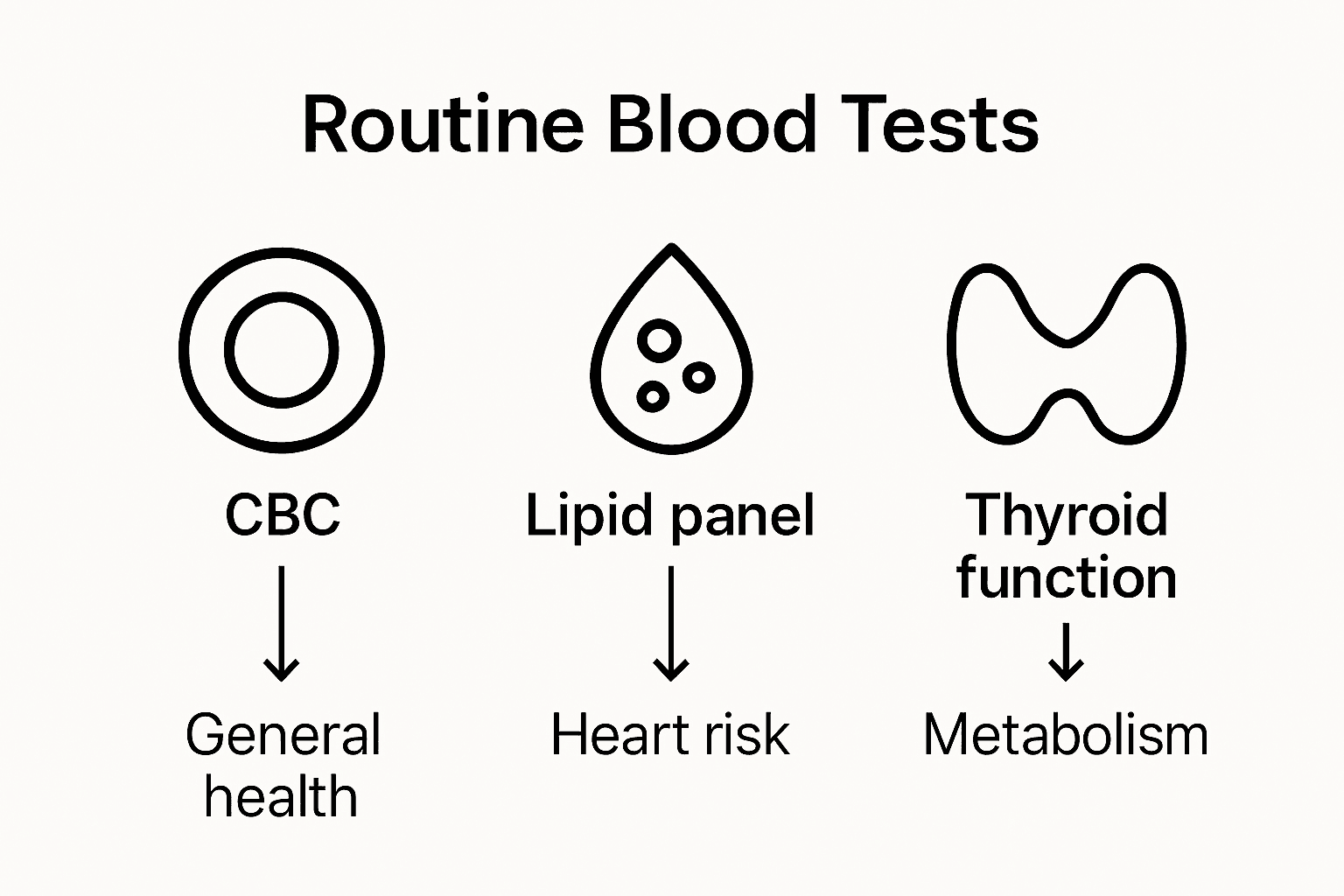
Advanced blood tests have also expanded to include specialized screenings like thyroid function tests, hormone panels, and inflammatory markers. These comprehensive examinations help detect potential health issues before they develop into more serious conditions, demonstrating the incredible diagnostic power of modern blood testing technologies.
Here’s a summary comparing key types of routine blood tests and what they evaluate:
| Test Name | Main Focus | Common Health Insights |
|---|---|---|
| Complete Blood Count | Red/white cells, platelets | Anemia, infections, blood disorders |
| Basic Metabolic Panel | Electrolytes, kidney, sugar | Metabolism, kidney health, diabetes |
| Lipid Panel | Cholesterol, triglycerides | Heart disease, cholesterol risk |
| Thyroid Function | Hormone levels | Thyroid disorders, metabolism rate |
| Inflammatory Markers | Inflammation-related proteins | Autoimmune and chronic conditions |
Pro Test Selection Tip: Consult with your healthcare provider to create a personalized blood testing strategy tailored to your age, gender, family history, and specific health risks.
Pro Screening Tip: Request a comprehensive explanation of your blood test results, ensuring you understand each marker’s significance and potential implications for your overall health.
How Blood Work Informs Health Decisions
Blood work serves as a critical diagnostic tool, transforming abstract medical data into actionable health insights. Blood tests provide comprehensive information that enable healthcare providers to make precise, personalized medical decisions across multiple health domains, from preventative care to targeted treatment strategies.
Diagnostic blood tests offer nuanced perspectives on physiological functioning by revealing intricate details about organ performance, metabolic processes, and potential health risks. Advanced diagnostic techniques can detect subtle changes in key health indicators long before clinical symptoms emerge. For instance, a lipid panel can predict cardiovascular risk by measuring cholesterol levels, allowing physicians to recommend lifestyle modifications or prescribe preventative medications. Enzyme tests can indicate potential heart muscle damage, guiding critical decisions about cardiac interventions and treatment protocols.
The power of blood work extends beyond immediate diagnosis, providing a dynamic health tracking mechanism. By establishing baseline measurements and monitoring changes over time, healthcare professionals can develop personalized health management strategies. Comprehensive blood panels enable early identification of potential health issues such as hormonal imbalances, inflammatory conditions, and metabolic disorders. This proactive approach transforms healthcare from a reactive model to a predictive and preventative framework, empowering patients to make informed decisions about their wellness journey.
Modern medical technology has revolutionized blood testing, introducing increasingly sophisticated analytical techniques that provide unprecedented insights into human physiology. Genetic markers, advanced protein analysis, and molecular-level screenings now offer medical professionals a multilayered understanding of an individual’s health status, potential risks, and optimal intervention strategies.
Pro Interpretation Tip: Request a detailed explanation of your blood test results from your healthcare provider, ensuring you understand the significance of each marker and its potential implications for your health.
Pro Tracking Tip: Maintain a personal health record of your blood test results, creating a comprehensive longitudinal view of your physiological changes over time.
Risks, Limitations, and Patient Concerns
Blood testing, while a powerful diagnostic tool, is not without potential challenges and limitations that patients should understand. Patients need awareness of possible testing complexities to approach medical screenings with realistic expectations and informed perspectives.
Blood test procedures can involve minor physical risks that patients should anticipate. These typically include temporary discomfort during blood draw, potential bruising at the injection site, and rare instances of infection. Most individuals experience minimal side effects, with trained medical professionals minimizing procedural risks through sterile techniques and skilled phlebotomy. However, patients with specific medical conditions or those taking blood-thinning medications might face increased complications and should discuss individual risks with healthcare providers beforehand.
One significant concern surrounding blood testing involves the potential for false positive or negative results. These unexpected outcomes can generate unnecessary anxiety or provide misleading health information. Advanced diagnostic techniques have reduced such occurrences, but they cannot be entirely eliminated. Complex medical conditions often require multiple tests, confirmatory screenings, and comprehensive clinical evaluations to ensure accurate diagnoses. Patients should view individual test results as part of a broader diagnostic process rather than definitive standalone indicators.
Psychological aspects of blood testing can also impact patient experiences. Anxiety about needles, fear of medical procedures, and uncertainty about potential findings can create significant emotional stress. Healthcare providers increasingly recognize these concerns, implementing patient-centered approaches that prioritize communication, explain procedures thoroughly, and create supportive testing environments. Understanding that blood tests are routine, minimally invasive diagnostic tools can help patients approach screenings with greater confidence and reduced apprehension.
Pro Preparation Tip: Discuss any medical anxieties or specific health concerns with your healthcare provider before blood testing to develop personalized strategies for a comfortable experience.
Pro Management Tip: Request a comprehensive explanation of your test results, ensuring you understand the context, potential variations, and any recommended follow-up actions.
Choosing Reliable Diagnostic Labs and Services
Selecting a diagnostic laboratory requires careful consideration of multiple critical factors that directly impact the accuracy and reliability of medical testing. Understanding laboratory certification standards represents the foundational step in making an informed healthcare decision.
Reliable diagnostic labs distinguish themselves through several key indicators. Accreditation from recognized bodies like the Clinical Laboratory Improvement Amendments (CLIA) serves as a primary marker of quality and competence. Patients should prioritize laboratories that demonstrate transparent quality control processes, employ board-certified medical professionals, and utilize advanced technological platforms for testing. The most reputable facilities maintain rigorous standards for equipment calibration, staff training, and result verification, ensuring consistent and accurate diagnostic outcomes.
Technology and expertise intersect critically in high-quality diagnostic services. Modern laboratories leverage cutting-edge molecular testing techniques, sophisticated analytical instruments, and comprehensive quality assurance protocols. Patients should investigate a laboratory’s technological capabilities, including their turnaround times, range of available tests, and ability to handle complex diagnostic challenges. Additional considerations include the lab’s experience with specialized testing, their collaboration with healthcare providers, and their track record of precise, reliable results.
Beyond technical capabilities, patient-centered services distinguish exceptional diagnostic laboratories. Communication transparency, clear result reporting, and professional support throughout the testing process are essential. Look for facilities that offer comprehensive explanations of test results, provide direct access to medical professionals for interpretation, and demonstrate a commitment to patient education and understanding.
Below is a reference comparing common concerns and how modern labs address them:
| Patient Concern | Lab Solution | Benefit to Patient |
|---|---|---|
| Result inaccuracy | Rigorous quality checks | More reliable diagnoses |
| Needle anxiety | Patient-centered approach | Reduced stress and discomfort |
| Delayed turnaround | Advanced processing technology | Faster access to results |
| Complex result reports | Direct access to professionals | Easier result interpretation |
Pro Verification Tip: Request documentation of a diagnostic lab’s certifications, accreditations, and quality control processes before committing to testing services.
Pro Research Tip: Consult with your healthcare provider to understand which specific diagnostic capabilities are most relevant to your individual health needs and medical history.
Take Control of Your Health with Expert Blood Testing Services
Routine blood testing plays a vital role in making informed health decisions by detecting early warning signs and tracking your body’s changes over time. If you are looking to overcome concerns like confusing test results or anxiety around the testing process, Centra Diagnostics in Los Angeles offers reliable, cutting-edge solutions designed with your needs in mind. Our advanced blood work services provide precise insights into cholesterol, metabolic health, thyroid function, and more, helping you stay ahead of potential issues before they impact your well-being.

Experience fast turnaround times and clear, professional result interpretations from a dedicated team focused on empowering your health. Visit Centra Diagnostics today to schedule your routine blood test or consult about which specific screenings best fit your profile. Make your next health decision confident and informed with Centra Diagnostics’ advanced testing designed to support both patients and healthcare providers every step of the way.
Frequently Asked Questions
What is routine blood testing and why is it important?
Routine blood testing is a diagnostic tool used by healthcare professionals to assess overall health and detect potential health issues early. It provides insights into blood components, organ function, and disease markers.
How often should I get routine blood tests?
It is recommended to schedule routine blood tests annually, preferably during your comprehensive physical exam, to track your health consistently and catch potential issues early.
What are the common types of routine blood tests?
Common types of routine blood tests include the Complete Blood Count (CBC), Basic Metabolic Panel (BMP), and Lipid Panel. Each serves a different purpose, such as assessing blood health, kidney function, and cardiovascular risk.
How do blood tests inform my health decisions?
Blood tests provide detailed information about your body’s physiological functioning, helping healthcare providers make personalized medical decisions, develop prevention strategies, and track changes over time for better health management.