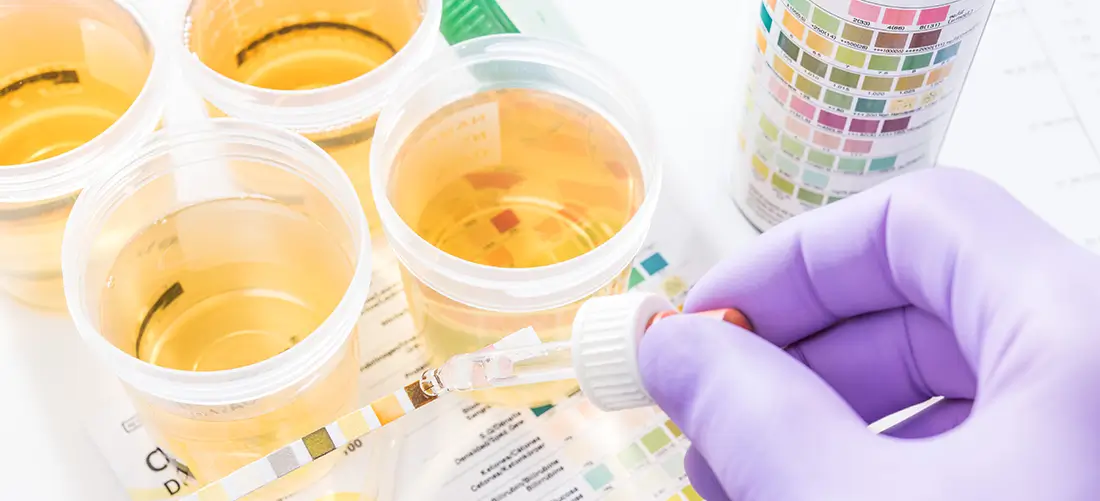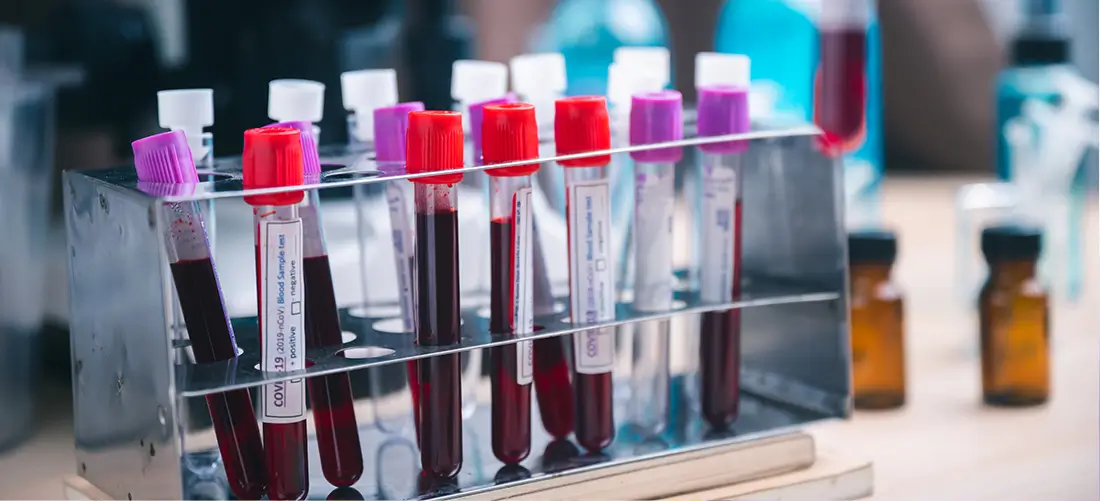
Did you know that doctors in the United States order over 7 billion blood tests each year? Blood work analysis has become a vital step in uncovering health problems and guiding medical care. These tests offer a clear look at how organs are working, reveal risks that might not show symptoms yet, and give doctors the knowledge they need to deliver the right treatment at the right time.
Table of Contents
- Defining Blood Work Analysis In Healthcare
- Major Types Of Blood Tests And Their Purposes
- How Blood Work Is Collected And Processed
- Common Uses For Blood Work Analysis
- Preparing For Blood Tests: Key Tips And Guidelines
- Risks, Costs, And Interpreting Blood Results
Key Takeaways
| Point | Details |
|---|---|
| Blood tests are essential diagnostic tools | They provide insights into health status, monitor conditions, and assist in treatment strategies. |
| Multiple types of blood tests exist | Each test serves unique purposes, from evaluating organ function to detecting cancer markers. |
| Preparation is crucial for accurate results | Patients should adhere to specific guidelines, including fasting and medication disclosure, to enhance testing accuracy. |
| Understanding results requires patient engagement | Collaborating with healthcare providers helps patients interpret results and make informed health decisions. |
Defining Blood Work Analysis in Healthcare
Blood work analysis is a critical diagnostic tool that allows healthcare professionals to examine and evaluate an individual’s health status through comprehensive laboratory testing of blood samples. Blood tests provide detailed insights into various physiological processes, helping medical practitioners detect potential health issues, monitor existing conditions, and develop targeted treatment strategies.
According to Johns Hopkins Medicine, blood tests can track how well patients are managing specific health conditions like diabetes or high cholesterol. These diagnostic assessments offer a window into the body’s internal functioning by analyzing multiple components such as:
- Blood cell counts
- Cholesterol levels
- Glucose concentrations
- Organ function markers
- Potential disease indicators
The National Heart, Lung, and Blood Institute emphasizes that blood tests are extremely common medical procedures designed to help doctors comprehensively assess patient health. They serve multiple critical purposes beyond routine checkups, including:
- Screening for potential diseases
- Evaluating organ performance
- Monitoring treatment effectiveness
- Identifying underlying health risks
By providing precise, quantifiable data about an individual’s internal biological processes, blood work analysis empowers healthcare providers to make informed, personalized medical decisions with unprecedented accuracy and insight.
Major Types of Blood Tests and Their Purposes
Blood tests are complex diagnostic tools designed to evaluate multiple aspects of human health through detailed laboratory analysis. Complete Blood Count (CBC) stands out as one of the most fundamental and comprehensive blood tests, providing critical insights into overall health and potential medical conditions.
According to the National Heart, Lung, and Blood Institute, several major types of blood tests help healthcare professionals diagnose and monitor various health conditions:
- Blood Chemistry Tests: Assess organ function and metabolic processes
- Blood Enzyme Tests: Detect potential heart conditions and muscle damage
- Heart Disease Risk Tests: Evaluate cardiovascular health markers
- Complete Blood Count: Analyze blood cell composition and potential abnormalities
Cleveland Clinic highlights that blood tests for cancer specifically fall into four primary categories:
- Complete Blood Count (CBC)
- Tumor Marker Tests
- Blood Protein Testing
- Circulating Tumor Cell Tests
Each blood test type serves a unique purpose, ranging from detecting potential diseases to monitoring treatment effectiveness and providing comprehensive insights into an individual’s physiological health status.
Here’s a summary of major blood test types and their primary purposes:
| Blood Test Type | Primary Purpose | Key Insights |
|---|---|---|
| Complete Blood Count (CBC) | Evaluate overall blood health | Detect anemia Identify infections Monitor blood disorders |
| Blood Chemistry Tests | Assess organ function | Monitor liver/kidney health Analyze electrolytes |
| Blood Enzyme Tests | Detect muscle or heart damage | Identify heart attack Monitor muscle disease |
| Heart Disease Risk Tests | Screen cardiovascular health | Check cholesterol Assess triglycerides |
| Tumor Marker Tests | Detect cancer presence | Identify specific cancers Track cancer treatment |
| Blood Protein Testing | Identify abnormal proteins | Detect immune disorders Monitor cancer |
| Circulating Tumor Cell Tests | Monitor cancer spread | Track cancer progression Inform treatment strategy |
How Blood Work Is Collected and Processed
Blood work collection is a precise medical procedure involving careful sampling and handling of blood specimens to ensure accurate diagnostic results. Venipuncture represents the primary method of blood collection, where healthcare professionals extract blood directly from a patient’s veins, typically from the inner arm near the elbow.
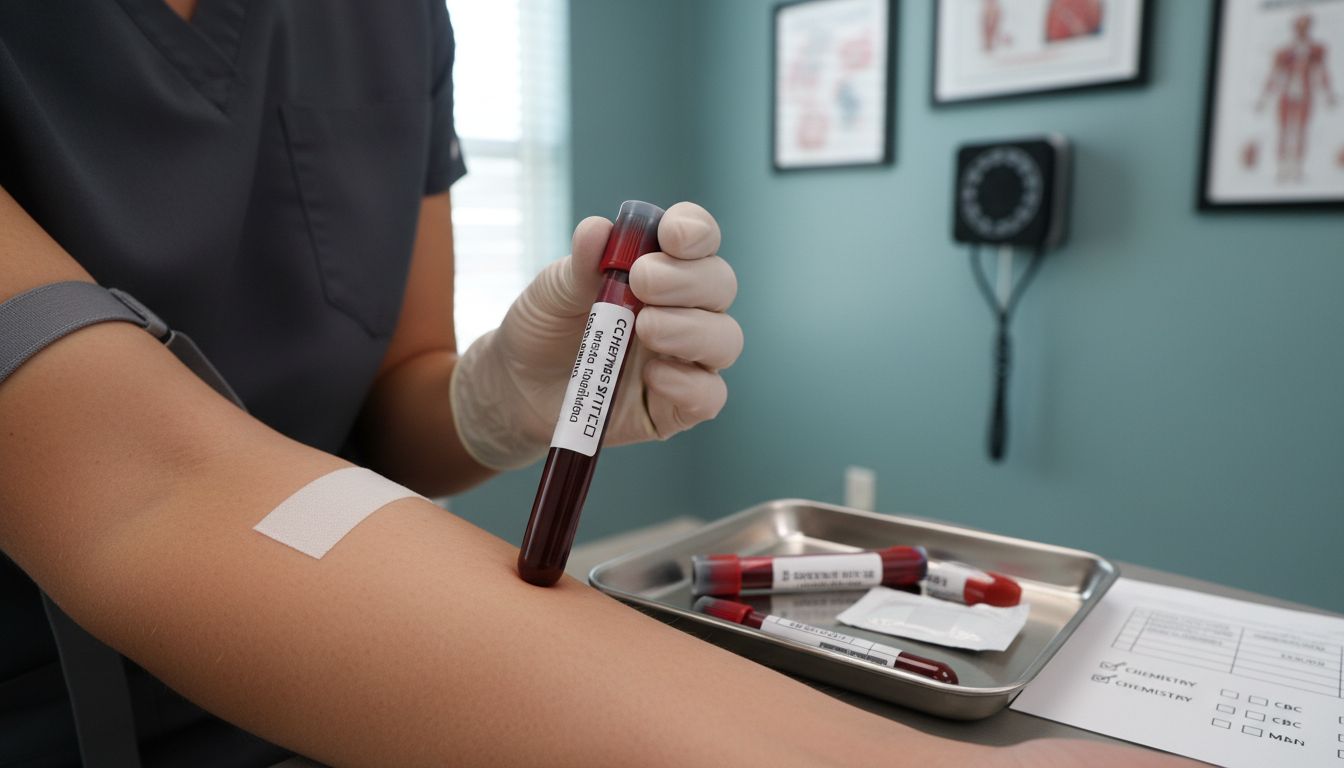
According to Harvard Health, two primary blood collection techniques exist:
- Venipuncture: Drawing a vial of blood from a patient’s vein
- Finger Stick: Obtaining a small blood sample by pricking a finger
Johns Hopkins Medicine explains the critical laboratory processing steps following blood collection:
- Blood is placed in specialized test tubes containing anticoagulant chemicals
- Samples are carefully transported to diagnostic laboratories
- Pathologists apply specific dyes to make blood cell types visible
- Detailed microscopic and chemical analyses are performed
The blood processing journey involves multiple sophisticated steps designed to preserve sample integrity and extract comprehensive medical information. Specialized laboratory techniques transform a simple blood draw into a powerful diagnostic tool that can reveal intricate details about a patient’s overall health status, helping healthcare providers make informed medical decisions.
Common Uses for Blood Work Analysis
Blood work analysis serves as a powerful diagnostic tool that provides comprehensive insights into an individual’s overall health status, helping healthcare professionals detect, monitor, and manage various medical conditions. By examining specific blood components, medical experts can uncover critical information about a patient’s physiological functioning and potential health risks.
According to Johns Hopkins Medicine, doctors order blood tests for multiple essential purposes:
- Evaluating organ function (kidneys, liver, heart, thyroid)
- Diagnosing serious medical conditions
- Monitoring treatment effectiveness
- Detecting bleeding or clotting disorders
- Assessing immune system performance
The National Heart, Lung, and Blood Institute emphasizes that while blood tests provide extensive medical information, they are typically part of a broader diagnostic approach. These tests help healthcare providers:
- Check if blood elements are within normal ranges
- Identify potential health risks
- Complement other diagnostic procedures
- Track ongoing health conditions
Blood work analysis offers a nuanced, detailed snapshot of an individual’s health, enabling medical professionals to develop targeted treatment strategies, prevent potential complications, and provide personalized healthcare interventions based on precise, quantifiable data.
Preparing for Blood Tests: Key Tips and Guidelines
Blood test preparation varies depending on the specific type of diagnostic assessment being conducted. Patient readiness plays a crucial role in ensuring accurate and reliable test results, requiring careful attention to potential factors that might influence blood composition.
According to Johns Hopkins Medicine, most blood tests do not require extensive preparation, as they aim to capture blood’s natural condition. However, some specific tests may necessitate:
- Fasting for a predetermined time period
- Avoiding certain medications
- Maintaining normal hydration levels
- Limiting physical activity before testing
Harvard Health emphasizes the critical importance of medication disclosure during test preparation. Key recommendations include:
- Inform your healthcare provider about all prescription medications
- Discuss over-the-counter supplements and drugs
- Understand how current medications might impact test results
- Follow specific pre-test instructions provided by medical professionals
By carefully following preparation guidelines and maintaining open communication with healthcare providers, patients can help ensure the most accurate and meaningful blood work analysis, ultimately supporting more precise medical diagnoses and treatment strategies.
Risks, Costs, and Interpreting Blood Results
Understanding blood test results requires comprehensive knowledge of the multiple factors that can influence diagnostic outcomes. Blood work interpretation is a nuanced process that demands careful consideration of individual health variables and potential testing complexities.
According to Harvard Health, numerous factors can significantly impact blood test results:
- Age
- Sex
- Racial background
- Current medications
- Medical history
- Overall health status
- Dietary habits
- Laboratory technique variations
Johns Hopkins Medicine emphasizes patient advocacy in the diagnostic process, recommending that individuals:
- Ask why specific tests are being ordered
- Understand the potential cost implications
- Request detailed explanations of results
- Seek clarification about any unclear findings
Navigating blood test results requires collaborative engagement between patients and healthcare providers. By asking informed questions, understanding potential variables, and maintaining open communication, individuals can gain deeper insights into their health and make more proactive medical decisions.
Take Control of Your Health with Expert Blood Work Analysis
Understanding your blood work is essential for making informed healthcare decisions. Whether you need to monitor organ function, detect potential diseases, or track treatment progress, having reliable and precise test results is key. The challenges of navigating complex blood test types like Complete Blood Count or Tumor Marker Tests can feel overwhelming without expert support and fast, accurate diagnostics.
At Centra Diagnostics, we specialize in advanced blood work analysis with cutting-edge technology and dedicated client management. Our expert team ensures your samples are handled with care and your results delivered promptly so you can take confident next steps toward your health goals.
Discover how our comprehensive services can empower you to better understand your health. Explore our testing solutions today and experience the difference precise diagnostics make.
Don’t wait to unravel the details hidden in your blood work. Visit Centra Diagnostics now and get the accurate, expert blood testing support you need to stay ahead in your health journey.
Frequently Asked Questions
What is blood work analysis?
Blood work analysis refers to a series of laboratory tests performed on blood samples to assess an individual’s health status, detect diseases, and monitor existing medical conditions.
What are the major types of blood tests?
The major types of blood tests include Complete Blood Count (CBC), blood chemistry tests, blood enzyme tests, heart disease risk tests, tumor marker tests, blood protein testing, and circulating tumor cell tests, each serving unique diagnostic purposes.
How is blood work collected and processed?
Blood work is primarily collected through venipuncture, where a healthcare professional draws blood from a vein. The samples are then processed in a laboratory to analyze various components for accurate diagnostic results.
How should I prepare for a blood test?
Preparation for a blood test can vary; some may require fasting or avoiding specific medications. Always follow your healthcare provider’s instructions and disclose all medications and supplements prior to testing.