Selecting the right diagnostic tests is a decision that shapes patient care from the start. In american healthcare, nearly 30 percent of diagnostic tests are unnecessary or misinterpreted, leading to wasted resources and patient confusion. Understanding the right steps helps clinicians collect detailed histories, choose effective tests, and interpret findings with precision. This guide breaks down the practical process so you can make confident, evidence-based choices every time.
Table of Contents
- Step 1: Assess Patient History and Clinical Needs
- Step 2: Identify Appropriate Test Categories
- Step 3: Consult Evidence-Based Guidelines
- Step 4: Evaluate Available Diagnostic Technologies
- Step 5: Verify Test Suitability and Logistics
- Step 6: Review and Act on Findings
Quick Summary
| Insight | Explanation |
|---|---|
| 1. Conduct thorough patient interviews | A detailed patient history helps in determining the right diagnostic tests and strengthens clinician-patient relationships. |
| 2. Choose test categories based on goals | Test selection should align with whether you need to rule out diseases or confirm conditions, tailoring them to patient symptoms and history. |
| 3. Utilize evidence-based guidelines | Consulting authoritative medical guidelines ensures your diagnostic approach is grounded in the latest research and best practices. |
| 4. Evaluate diagnostic technologies critically | Assess current diagnostic technologies for accuracy, implementation feasibility, and their potential to enhance patient care experiences. |
| 5. Review results with a comprehensive lens | Analyze test findings within the context of the patient’s entire health profile to avoid misinterpretation and support informed decisions. |
Step 1: Assess Patient History and Clinical Needs
Assessing patient history is a critical first step in selecting the right diagnostic tests. According to National Center for Biotechnology Information, this process establishes a foundational relationship between clinician and patient while gathering essential diagnostic information.
Start by conducting a comprehensive patient interview where you carefully document their medical background, current symptoms, and relevant health experiences. Ask targeted questions that explore the patient’s medical history, including prior diagnoses, medications, allergies, family health patterns, and lifestyle factors. Pay close attention not just to what patients say, but how they communicate their health concerns. As the famous physician William Osler noted, patients often reveal crucial diagnostic insights through their narrative.
While gathering information, be methodical but empathetic. Cross reference patient statements with existing medical records and look for potential diagnostic indicators. National Center for Biotechnology Information warns that physicians frequently order unnecessary tests or misinterpret results, so thorough initial assessment helps prevent wasteful diagnostic procedures. Your goal is creating a complete clinical picture that guides precise test selection and treatment planning.
Pro Tip: Always verify patient information and maintain an open dialogue that encourages honest, comprehensive reporting of their health status.
Step 2: Identify Appropriate Test Categories
Selecting the right diagnostic test categories is a strategic process that requires careful consideration of your clinical objectives. National Center for Biotechnology Information emphasizes that test selection fundamentally depends on your intended diagnostic purpose whether you aim to rule out a disease or confirm a specific condition.
Start by understanding the primary goals of your diagnostic investigation. Different test categories serve unique purposes. If you want to exclude a potential health issue, prioritize tests with high sensitivity that can reliably produce negative results. Conversely, when seeking to confirm a diagnosis, focus on tests that generate precise positive outcomes. Consider factors like the patient’s specific symptoms, medical history, potential risk factors, and the specific clinical questions you need to answer.
Navigate test selection by mapping clinical needs to specific diagnostic domains. Common test categories include molecular diagnostics, blood work, toxicology screenings, genetic testing, and immunological assessments. Each category offers unique insights into patient health. World Health Organization recommends developing robust verification studies to ensure testing algorithms are effective and scientifically sound. Your goal is creating a targeted testing approach that provides accurate, actionable health information.

Pro Tip: Always consult current clinical guidelines and consider consulting specialists when selecting complex or specialized diagnostic test categories.
Step 3: Consult Evidence-Based Guidelines
Consulting evidence-based guidelines is a crucial step in ensuring diagnostic accuracy and patient care quality. National Center for Biotechnology Information highlights that the ultimate goal of diagnostic testing goes beyond technical accuracy and focuses on meaningfully improving patient health outcomes.
Begin by identifying authoritative professional guidelines from recognized medical organizations specific to the diagnostic challenge you are addressing. These guidelines typically provide structured recommendations based on extensive clinical research and expert consensus. Look for resources from national medical associations, specialty boards, and reputable institutions that regularly update their protocols. Pay attention to the most recent publications, as medical knowledge evolves rapidly. Carefully review the recommended diagnostic approaches, considering factors such as patient demographics, specific symptoms, risk factors, and the latest scientific understanding of the condition.
When consulting guidelines, develop a systematic approach to interpreting and applying the recommendations. Not all guidelines will be universally applicable, so you must thoughtfully evaluate how they align with your specific patient context. World Health Organization recommends using verification studies to validate testing algorithms and ensure their effectiveness. Your objective is to integrate evidence-based recommendations with individual patient needs, creating a personalized and scientifically grounded diagnostic strategy.
Pro Tip: Always cross reference multiple guideline sources and remain open to expert consultation when dealing with complex or unusual diagnostic scenarios.
Step 4: Evaluate Available Diagnostic Technologies
Evaluating diagnostic technologies requires a strategic approach to understanding the latest advancements and their potential impact on patient care. National Center for Biotechnology Information emphasizes that the true value of diagnostic technologies extends beyond technical accuracy to directly improving patient health outcomes.
Begin by conducting a comprehensive assessment of current diagnostic technologies in your specific medical domain. Research cutting edge molecular diagnostics, advanced imaging systems, genetic testing platforms, and automated screening technologies. Look for technologies that offer superior sensitivity, faster result turnaround, and more precise diagnostic capabilities. Consider factors like accuracy rates, cost effectiveness, complexity of implementation, and compatibility with existing clinical workflows. For a deeper understanding of emerging diagnostic technologies, check out our technology in healthcare diagnostics guide that provides an expert breakdown of current innovations.
Carefully analyze each technology’s clinical validation and scientific evidence. World Health Organization recommends utilizing verification studies to validate testing algorithms and ensure technological effectiveness. Pay special attention to peer reviewed research, clinical trial data, and expert recommendations from professional medical associations. Your objective is to select diagnostic technologies that not only demonstrate exceptional technical performance but also demonstrate clear potential to improve patient diagnostic experiences and treatment outcomes.
Pro Tip: Always maintain a balanced perspective by weighing technological capabilities against practical implementation challenges and real world clinical utility.
Step 5: Verify Test Suitability and Logistics
Verifying test suitability and logistics is a critical step in ensuring accurate and efficient diagnostic processes. National Center for Biotechnology Information underscores that the ultimate goal of diagnostic testing extends beyond technical accuracy to meaningfully improving patient health outcomes.
Carefully assess the practical considerations of implementing specific diagnostic tests. Evaluate factors such as specimen collection requirements, processing time, equipment compatibility, staff training needs, and potential patient preparation protocols. Examine the logistical challenges associated with each test including sample handling, storage conditions, transportation requirements, and potential environmental constraints. For comprehensive insights into navigating these complex considerations, refer to our clinical diagnostics overview guide that provides an expert breakdown of diagnostic workflow management.
World Health Organization recommends conducting thorough verification studies to develop effective testing algorithms. This means meticulously reviewing each test’s operational parameters including accuracy rates, sensitivity thresholds, potential interference factors, and cross validation protocols. Your objective is to select diagnostic tests that not only meet scientific standards but also integrate seamlessly into existing clinical workflows while minimizing potential disruptions or complications.
Pro Tip: Always maintain flexibility in your approach and be prepared to adapt testing strategies based on emerging clinical evidence and technological advancements.
Step 6: Review and Act on Findings
Reviewing and acting on diagnostic test findings requires a systematic and patient centered approach. National Center for Biotechnology Information warns that physicians frequently misinterpret test results or order unnecessary tests which can have significant implications for patient care and healthcare resources.
Begin by carefully analyzing test results in the context of the patient’s complete medical history and current clinical presentation. Look beyond raw numerical data to understand the broader diagnostic implications. Consider factors such as potential false positive or false negative outcomes, statistical significance, and how these results align with the patient’s overall health profile. Integrate the findings with previous medical records, existing symptoms, and any known risk factors. Engage in a collaborative review process that might involve consulting with specialists or colleagues to ensure comprehensive interpretation.
National Center for Biotechnology Information emphasizes the importance of active listening and patient communication during this process. As physician William Osler famously noted, patients often provide crucial diagnostic insights through their narratives. Develop a clear communication strategy to discuss test results with patients transparently, explaining findings in accessible language and outlining potential next steps or treatment recommendations. Your goal is transforming complex diagnostic data into actionable medical insights that support patient understanding and informed healthcare decision making.
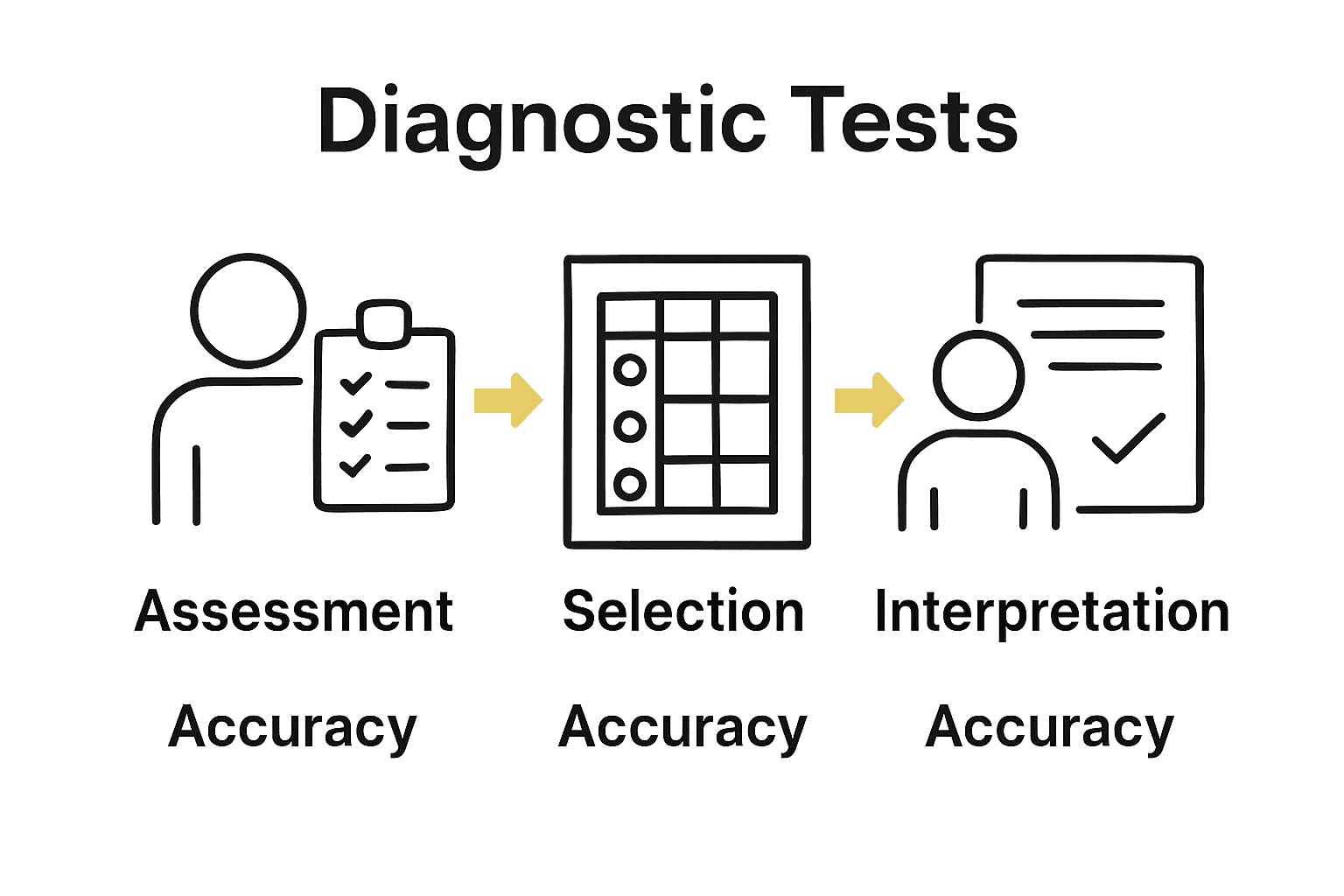
Pro Tip: Always approach test result interpretation with intellectual humility recognizing that medical knowledge is continually evolving and individual patient contexts are uniquely complex.
Achieve Better Patient Outcomes with Expert Diagnostic Test Selection
Selecting the most appropriate diagnostic tests can feel overwhelming given the complexities in patient history, clinical needs, and evolving technologies. This article highlights crucial steps such as assessing patient history, consulting evidence-based guidelines, and verifying test suitability to avoid unnecessary or misinterpreted diagnostics. If you aim to improve healthcare decisions while ensuring accuracy, sensitivity, and timely results, you need a trusted partner specializing in advanced diagnostic solutions.
At Centra Diagnostics, we understand your challenge and offer comprehensive services including molecular testing, toxicology, and blood work. Our cutting-edge technology combined with dedicated client management helps transform complex diagnostic data into actionable insights. Partner with us to benefit from first-in-class turnaround times and expert consultation that align perfectly with the article’s recommendations for verifying test logistics and technologies.
Ready to select diagnostic tests that truly improve patient care and outcomes Follow the proven path from assessment to action by connecting with experts at Centra Diagnostics. Explore our advanced testing services today and experience the difference reliable diagnostics can make for your healthcare practice or wellness journey.
Frequently Asked Questions
How do I assess patient history to select the right diagnostic tests?
Start by conducting a thorough patient interview to gather information about their medical background, symptoms, and health experiences. Document their prior diagnoses, medications, allergies, and lifestyle factors to create a comprehensive patient profile that will guide your test selection.
What are the key categories of diagnostic tests I should consider?
Identify the primary goals of your diagnostic assessment, such as ruling out or confirming a condition. Common test categories include molecular diagnostics, blood work, toxicology screenings, genetic testing, and immunological assessments, each serving distinct purposes in diagnosis.
How do I consult evidence-based guidelines for test selection?
Look for established professional guidelines from reputable medical organizations that relate to the diagnostic challenge you face. Review these guidelines by considering patient demographics and the latest clinical evidence, ensuring you apply recommendations that fit your specific patient context.
What factors should I evaluate when considering diagnostic technologies?
Assess the sensitivity, accuracy, and implementation challenges associated with various diagnostic technologies. Prioritize those that demonstrate clinical validation and can seamlessly integrate into your existing clinical workflows, ensuring efficient and effective patient care.
How can I verify the suitability and logistics of diagnostic tests?
Evaluate practical aspects such as specimen collection requirements, processing time, and staff training needs for each test. This will help you identify tests that not only meet scientific standards but also fit smoothly into your diagnostic processes.
What steps should I take to review and act on diagnostic test findings?
Analyze the results in the context of the patient’s full medical history and engage in collaborative discussions with colleagues or specialists as needed. Develop a transparent communication strategy to explain findings to patients and outline next steps in their care.