Accurate diagnosis starts long before treatment begins. More than 70 percent of medical decisions rely on diagnostic testing to reveal the true nature of a patient’s health concern. From pinpointing silent diseases to monitoring recovery, diagnostics shape the entire journey of patient care. With today’s rapid advances, healthcare providers now access deeper insights than ever, uncovering hidden problems and guiding smarter treatment choices. Discover how modern diagnostics change lives with speed, precision, and confidence.
Table of Contents
- Defining Diagnostics In Modern Patient Care
- Types Of Diagnostic Testing And Methods
- Workflow: From Sample Collection To Results
- Impact Of Timely Diagnostics On Treatment
- Limitations, Risks, And Common Pitfalls
Key Takeaways
| Point | Details |
|---|---|
| Importance of Diagnostics | Diagnostics are essential for identifying medical conditions, planning treatments, and evaluating their effectiveness. |
| Modern Diagnostic Techniques | Advanced methodologies, including molecular and genetic screenings, enhance precision in diagnosis and treatment strategies. |
| Workflow Efficiency | The structured diagnostic workflow ensures accurate results from sample collection to reporting, crucial for informed medical decisions. |
| Timeliness in Diagnosis | Early detection through timely diagnostics significantly improves treatment outcomes and reduces healthcare costs. |
Defining Diagnostics in Modern Patient Care
Diagnostics represent the foundational investigative process in modern healthcare, providing critical insights into a patient’s medical condition through specialized testing and analysis. Diagnostic tests are specialized medical procedures designed to identify, characterize, and evaluate specific health conditions by examining biological samples, imaging results, or physiological responses.
According to Cancer.gov, a diagnostic test is fundamentally used to “determine the presence of a disease or condition based on a patient’s signs and symptoms.” These comprehensive evaluations serve multiple crucial purposes:
- Identifying underlying medical conditions
- Planning appropriate treatment strategies
- Evaluating the effectiveness of existing treatments
- Establishing potential patient prognosis
Modern diagnostic approaches encompass a wide range of sophisticated techniques, including:
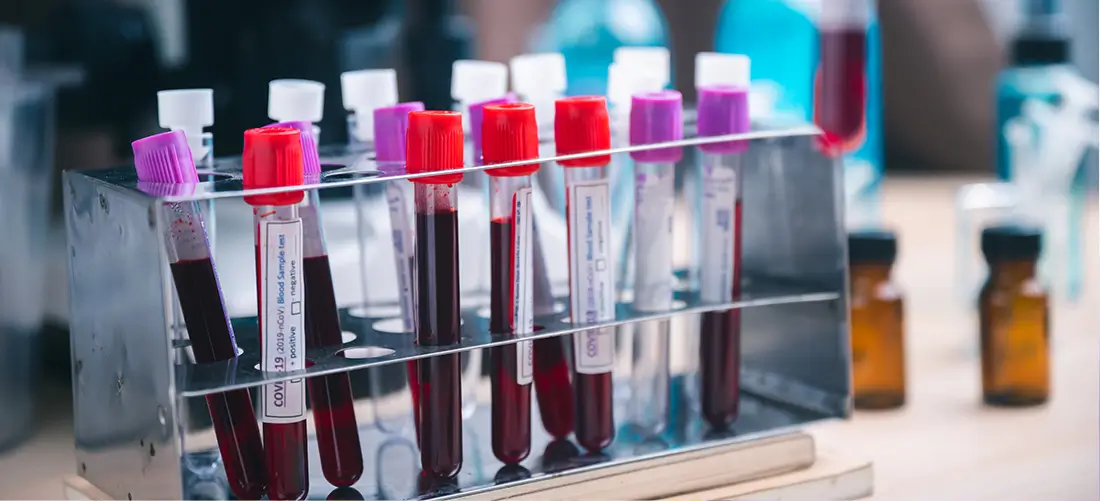
- Laboratory blood and fluid tests
- Advanced imaging technologies
- Endoscopic procedures
- Molecular and genetic screenings
- Specialized tissue biopsies
Diagnostic testing techniques have evolved dramatically, transforming how healthcare professionals understand and address complex medical challenges. These methods allow for unprecedented precision in detecting and monitoring health conditions, enabling targeted interventions that can significantly improve patient outcomes.
By providing detailed, quantifiable medical information, diagnostic tests bridge the critical gap between symptoms and targeted treatment. They empower healthcare providers to make informed decisions, reducing guesswork and enhancing the potential for successful medical interventions.
Types of Diagnostic Testing and Methods
Diagnostic testing encompasses a comprehensive array of medical procedures designed to identify, monitor, and evaluate health conditions with precision and depth. According to NIDDK, diagnostic tests span multiple methodologies, ranging from fundamental blood screenings to advanced imaging technologies that provide critical insights into patient health.
Traditional diagnostic methods include:
- Blood Tests: Analyzing blood components to detect infections, measure organ function, and screen for potential diseases
- Imaging Studies: Utilizing X-rays, CT scans, MRIs, and ultrasounds to visualize internal body structures
- Endoscopic Examinations: Inserting specialized cameras to directly observe internal organs and tissues
- Biopsy Procedures: Collecting tissue samples for microscopic analysis and definitive disease identification
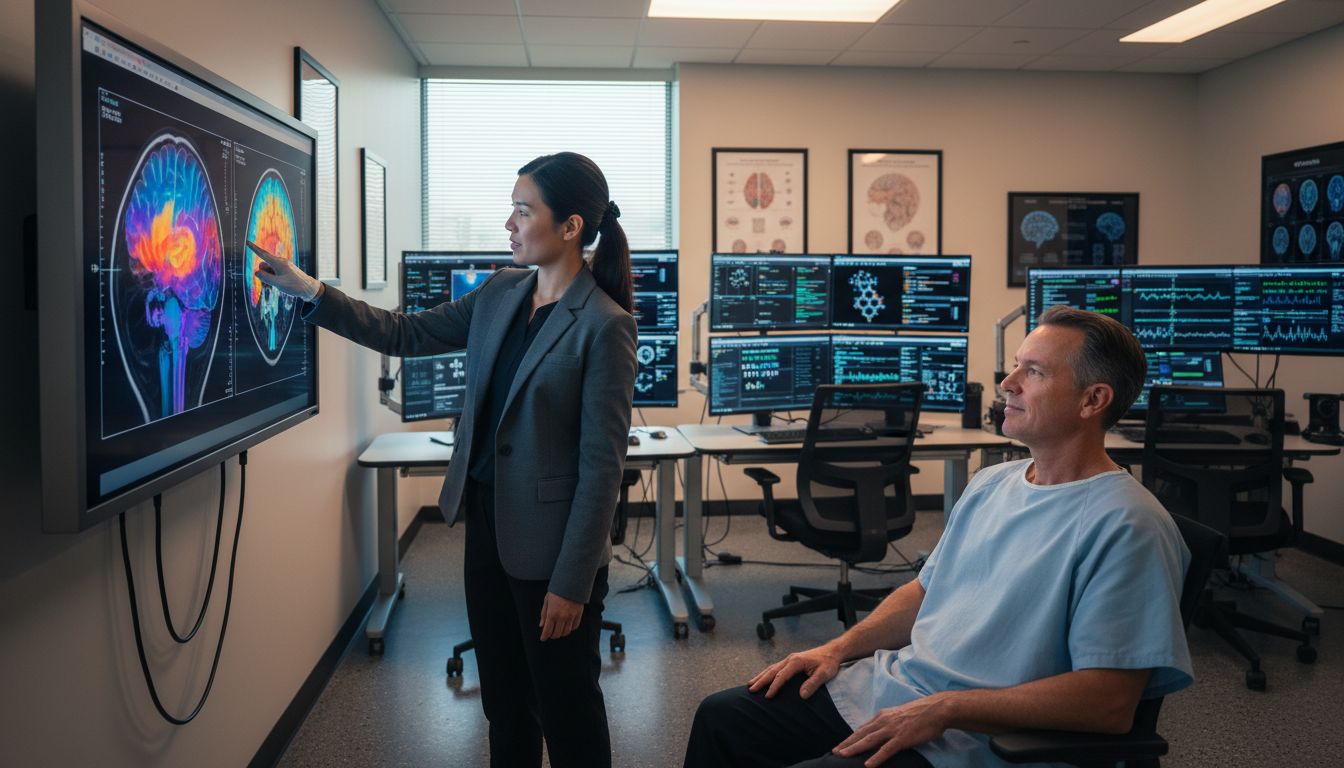
Neurological diagnostic testing represents a sophisticated subset of medical investigation. As NINDS explains, advanced neurological techniques like functional MRI, PET scans, and SPECT scans enable healthcare professionals to map brain activity, detect potential tumors, and assess critical blood flow patterns.
Modern diagnostic methods increasingly leverage cutting-edge technologies, integrating molecular analysis, genetic screening, and artificial intelligence to provide unprecedented levels of medical understanding. These approaches transform raw medical data into actionable insights, enabling healthcare providers to develop targeted treatment strategies with remarkable accuracy and efficiency.
The evolution of diagnostic testing continues to push medical boundaries, offering hope for earlier disease detection, personalized treatment plans, and improved patient outcomes across diverse medical disciplines.
Workflow: From Sample Collection to Results
The diagnostic workflow is a meticulously structured process that transforms raw biological samples into critical medical insights. According to CDC, the diagnostic laboratory workflow involves precise stages of specimen collection, processing, and comprehensive analysis, ensuring accurate and reliable results.
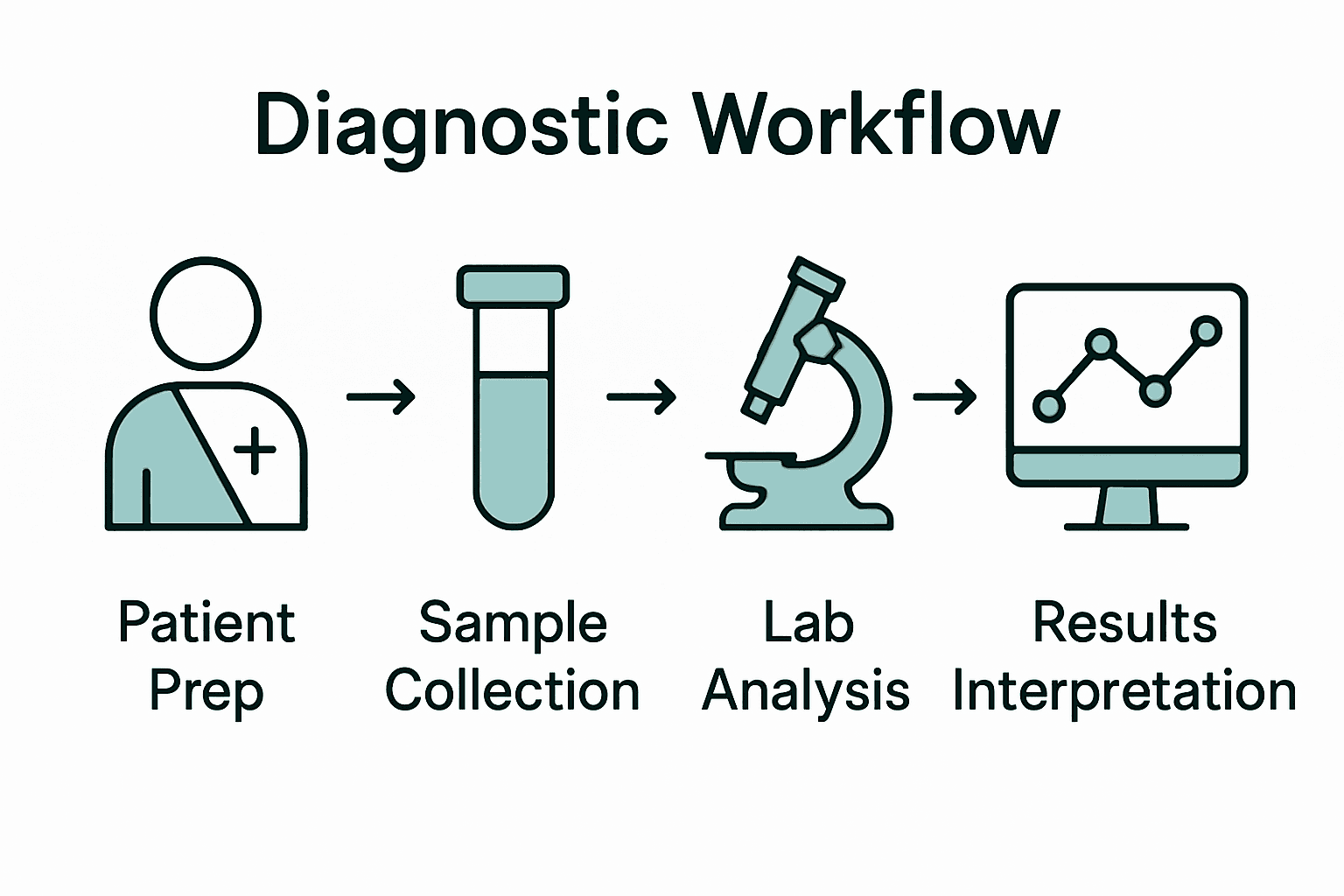
The diagnostic process typically follows these essential steps:
- Patient Preparation: Ensuring proper sample collection protocols
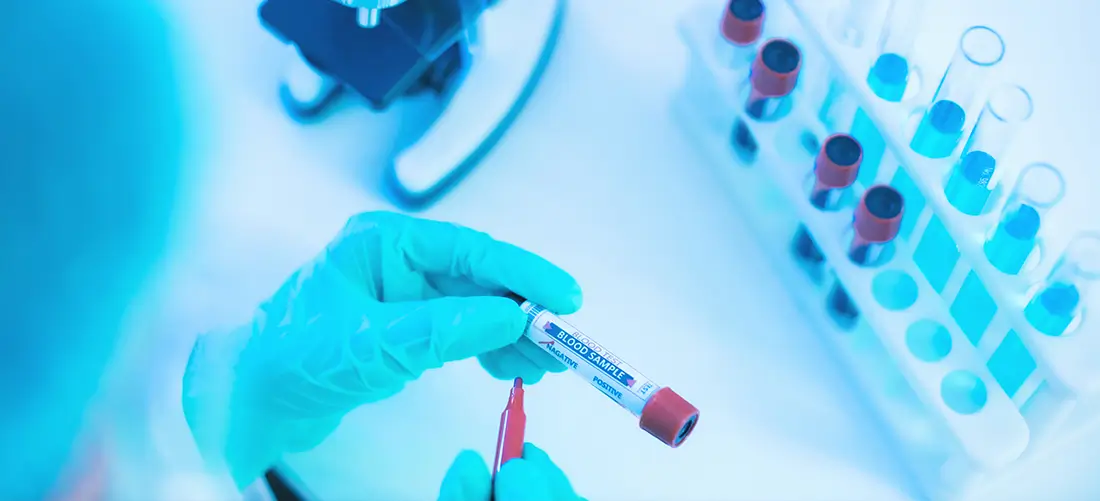
- Sample Collection: Obtaining appropriate biological specimens
- Sample Processing: Preparing and stabilizing specimens for analysis
- Laboratory Testing: Applying specialized diagnostic techniques
- Result Interpretation: Analyzing and contextualizing test findings
- Reporting: Communicating results to healthcare providers
Advanced diagnostic workflows incorporate multiple detection methodologies. As ASPE explains, modern approaches integrate both traditional culture-based techniques and sophisticated molecular diagnostic methods to identify pathogens with unprecedented precision.
Each stage of the diagnostic workflow demands exceptional attention to detail, from maintaining sample integrity during collection to employing cutting-edge analytical technologies. The goal remains consistent: transforming biological samples into actionable medical intelligence that supports accurate diagnosis, effective treatment planning, and improved patient outcomes.
The complexity of diagnostic workflows reflects the intricate nature of medical science, where every step represents a critical intersection of technological innovation, scientific expertise, and patient-centered care.
Impact of Timely Diagnostics on Treatment
Timely diagnostics represent a critical cornerstone in modern medical intervention, transforming the landscape of patient care through early detection and precise treatment strategies. According to MedTech Europe, prompt diagnostic testing is crucial for effectively managing infectious diseases, enabling healthcare providers to implement targeted interventions that can significantly reduce disease transmission and patient risk.
The key benefits of timely diagnostics include:
- Early Disease Detection: Identifying health conditions before they progress
- Precise Treatment Planning: Developing targeted medical interventions
- Cost Reduction: Preventing advanced disease complications
- Improved Patient Outcomes: Increasing chances of successful recovery
Advanced diagnostic techniques play a transformative role in healthcare. As Oak Bend Medical Center explains, comprehensive diagnostic tests like metabolic panels and imaging studies are vital for detecting diseases at their earliest stages, facilitating immediate treatment strategies that can dramatically improve patient prognosis.
Timely diagnostics fundamentally shift medical approaches from reactive to proactive care. By identifying potential health issues before they become critical, healthcare providers can design personalized treatment plans, implement preventative measures, and significantly reduce the overall healthcare burden. This approach not only saves lives but also minimizes long-term medical complications and reduces healthcare system costs.
The intersection of advanced technology and medical expertise continues to push the boundaries of diagnostic capabilities, offering hope for more precise, personalized, and effective healthcare interventions that can transform patient outcomes across diverse medical disciplines.
Limitations, Risks, and Common Pitfalls
Diagnostic testing, while revolutionary, is not infallible. According to USAHA, diagnostic tests inherently possess limitations that can potentially compromise accurate medical decision-making, including challenges with test sensitivity, specificity, and potential for misinterpretation.
Key limitations in diagnostic testing include:
- Cross-Reactivity: Tests producing false-positive or false-negative results
- Variability in Sensitivity: Inconsistent detection capabilities
- Interpretation Challenges: Subjective analysis of test outcomes
- Technical Constraints: Dependence on specific testing conditions
- Host Response Variability: Individual immune system differences
Comprehensive diagnostic approaches must account for these inherent complexities. As Health.gov explains, serologic assays are particularly susceptible to subjective interpretation, with results heavily influenced by an individual’s unique immune response.
Mitigating diagnostic risks requires a multifaceted approach. Healthcare providers must integrate multiple testing methods, understand each test’s specific limitations, and interpret results within comprehensive clinical contexts. This nuanced strategy helps prevent overreliance on single diagnostic indicators and reduces the potential for medical errors.
Ultimately, diagnostic testing remains a powerful tool when approached with scientific rigor, critical thinking, and an understanding that no single test can provide absolute certainty. Continuous medical education, technological advancements, and a holistic approach to patient care are essential in navigating the complex landscape of diagnostic methodologies.
Take Control of Patient Care with Reliable Diagnostic Solutions
The journey from accurate diagnostics to effective treatment starts with trust and precision. This article highlights the challenges of timely and detailed testing essential for confident healthcare decisions such as molecular testing and advanced neurological diagnostics. If you seek to overcome common pitfalls like delayed results or interpretation uncertainties, Centra Diagnostics offers cutting-edge technology and client-focused services that deliver first-in-class turnaround times and dependable outcomes.
Experience how our comprehensive testing options including molecular testing, toxicology, and blood work can empower you with actionable insights today. Don’t let diagnostic delays affect patient outcomes. Visit Centra Diagnostics now and discover how our expert team and innovative lab services can elevate your healthcare decisions with accuracy and speed. Take the next step toward better patient care by reaching out through our live support or contact page.
Frequently Asked Questions
What are diagnostics in patient care?
Diagnostics in patient care refer to the investigative processes and specialized tests used to identify and evaluate a patient’s medical conditions through biological samples, imaging, and physiological analysis.
What types of diagnostic tests are commonly used?
Common types of diagnostic tests include blood tests, imaging studies (like X-rays, CT scans, and MRIs), endoscopic examinations, and biopsy procedures that allow for detailed analysis of health conditions.
Why is timely diagnostics important in healthcare?
Timely diagnostics are crucial as they enable early disease detection, precise treatment planning, cost reductions, and improved patient outcomes by facilitating immediate interventions before conditions worsen.
What are some limitations of diagnostic testing?
Limitations of diagnostic testing include potential false-positive or false-negative results, variability in sensitivity, subjective interpretation of test outcomes, and individual differences in immune responses, which can influence results.
Recommended
- Diagnostics Terminology Explained: Essential Guide for 2024 | Centra Diagnostics
- Complete Guide to the Role of Diagnostic Labs | Centra Diagnostics
- Guide to Ordering Blood Work: Step-by-Step for Professionals | Centra Diagnostics
- How to Choose Diagnostic Services for Reliable Testing | Centra Diagnostics