The process of choosing an American diagnostic lab can feel daunting, especially when you consider that up to 30 percent of diagnostic errors could be avoided with the right approach. Accurate medical testing is the backbone of effective treatment and peace of mind, making every decision count. Discover how straightforward steps and specific criteria can help you confidently select a diagnostic provider that meets your unique health needs.
Table of Contents
- Step 1: Assess Diagnostic Testing Needs And Requirements
- Step 2: Research Lab Accreditation And Certifications
- Step 3: Evaluate Technology And Turnaround Times
- Step 4: Compare Service Offerings And Support
- Step 5: Verify Reliability Through Client Reviews And Testimonials
Quick Summary
| Key Insight | Explanation |
|---|---|
| 1. Assess Diagnostic Needs First | Evaluate what specific tests are necessary based on medical recommendations to avoid unnecessary procedures. |
| 2. Verify Lab Credentials and Accreditations | Check that the lab has proper accreditations from reputable organizations to ensure quality diagnostic services. |
| 3. Examine Technology and Turnaround Times | Ensure the lab utilizes advanced technology and offers timely results critical for effective medical decision-making. |
| 4. Compare Comprehensive Service Offerings | Assess the breadth of support options, including communication and reporting, to enhance the diagnostic experience. |
| 5. Review Client Testimonials for Reliability | Analyze client feedback on accuracy and service quality before making your final laboratory choice. |
Step 1: Assess Diagnostic Testing Needs and Requirements
Selecting the right diagnostic lab requires a strategic approach to understanding your specific medical testing requirements. Before scheduling any tests, you need to carefully evaluate what diagnostic information you actually need and why you need it.
The first critical step involves examining the precise diagnostic information your healthcare provider recommends. Diagnostic technologies provide crucial medical insights, but they also come with associated costs and potential risks. Medical professionals suggest thoroughly assessing whether a specific test will deliver meaningful new diagnostic details that can genuinely impact patient treatment. According to research from the National Center for Biotechnology Information, accurate diagnosis remains central to quality medical practice, which means every diagnostic test should provide significant actionable information that outweighs its potential drawbacks.
When determining your testing needs, consider several key factors. First, understand the specific medical condition or concern being investigated. Second, confirm the test’s relevance to your current health status. Third, discuss potential test limitations and accuracy rates with your healthcare provider. A strategic approach involves matching the diagnostic test precisely to your medical requirements rather than pursuing unnecessary or overly broad testing protocols.
Pro Tip: Always verify the professional credentials of the diagnostic lab and ensure they use current, validated testing methodologies.
The next step involves selecting a diagnostic lab that can meet these carefully assessed requirements with precision and reliability.
Step 2: Research Lab Accreditation and Certifications
Validating a diagnostic lab’s credentials is a critical step in ensuring reliable and accurate testing. Your goal is to confirm the laboratory meets rigorous professional standards that guarantee high-quality diagnostic services.
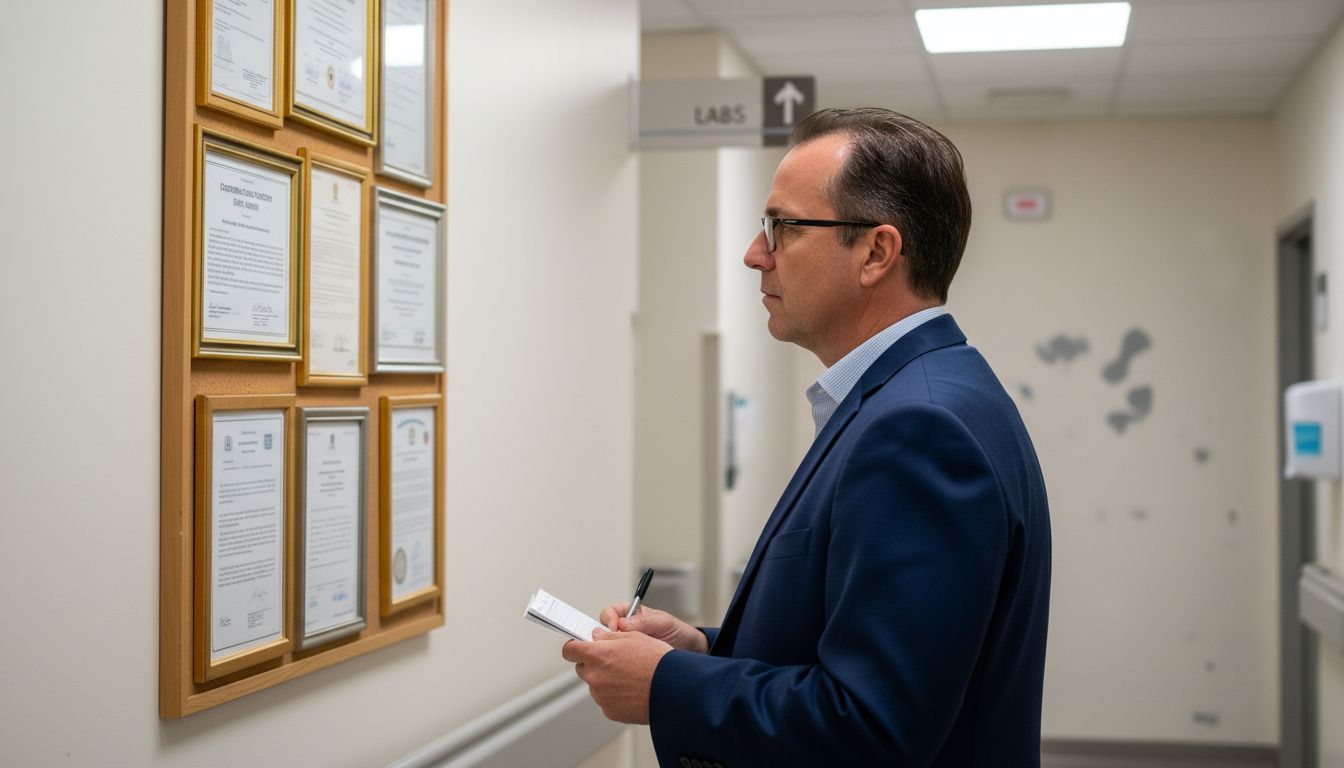
Medical laboratory accreditation represents a comprehensive evaluation process that validates a lab’s operational excellence and technical competence. The most reputable accreditation programs assess multiple dimensions of laboratory performance, including equipment quality, staff expertise, and adherence to standardized testing protocols. Clinical laboratory accreditation programs provide organizations with global recognition and demonstrate a commitment to consistent, high-quality diagnostic services.
When researching lab certifications, focus on key national and international credentials. Look for accreditations from organizations like the American National Standards Institute (ANSI), College of American Pathologists (CAP), and the Centers for Medicare and Medicaid Services (CMS). These certifications indicate that the laboratory follows strict quality management systems and maintains rigorous testing standards. Pay special attention to specific accreditations relevant to your required diagnostic tests, such as ISO 15189 for medical laboratories or specialized certifications in molecular testing, toxicology, or clinical pathology.
Pro Tip: Request copies of current accreditation certificates and verify their validity directly with the issuing organizations.
The next step involves examining the lab’s specific testing capabilities and matching them with your diagnostic requirements.
Step 3: Evaluate Technology and Turnaround Times
Selecting a diagnostic lab involves more than just checking credentials. You need to thoroughly assess the technological capabilities and efficiency of their testing processes to ensure you receive accurate and timely results.
Diagnostic technology assessment requires careful examination of the lab’s equipment, methodologies, and overall testing infrastructure. Each diagnostic test carries inherent costs and potential risks, so understanding the technological approach is crucial. Modern labs should demonstrate advanced testing capabilities, including molecular diagnostics, automated processing systems, and precision instrumentation that can deliver comprehensive and reliable diagnostic information.
When evaluating a lab’s technological capabilities, focus on several key factors. First, inquire about the specific testing platforms and equipment used. Modern diagnostic labs should utilize state-of-the-art technologies that offer high-resolution analysis and minimal error rates. Second, investigate their turnaround times for different types of tests. Rapid result processing can be critical for time-sensitive medical decisions. Third, examine their quality control protocols and how they validate test results. Look for labs that implement comprehensive accreditation standards and maintain rigorous technological oversight.
Pro Tip: Request sample turnaround times for specific tests and compare them across multiple diagnostic laboratories.
The next step involves understanding the lab’s specific testing capabilities and how they align with your unique medical requirements.
Step 4: Compare Service Offerings and Support
Choosing the right diagnostic lab goes beyond technical capabilities. You need to carefully evaluate the comprehensive service package and client support that will accompany your diagnostic testing experience.
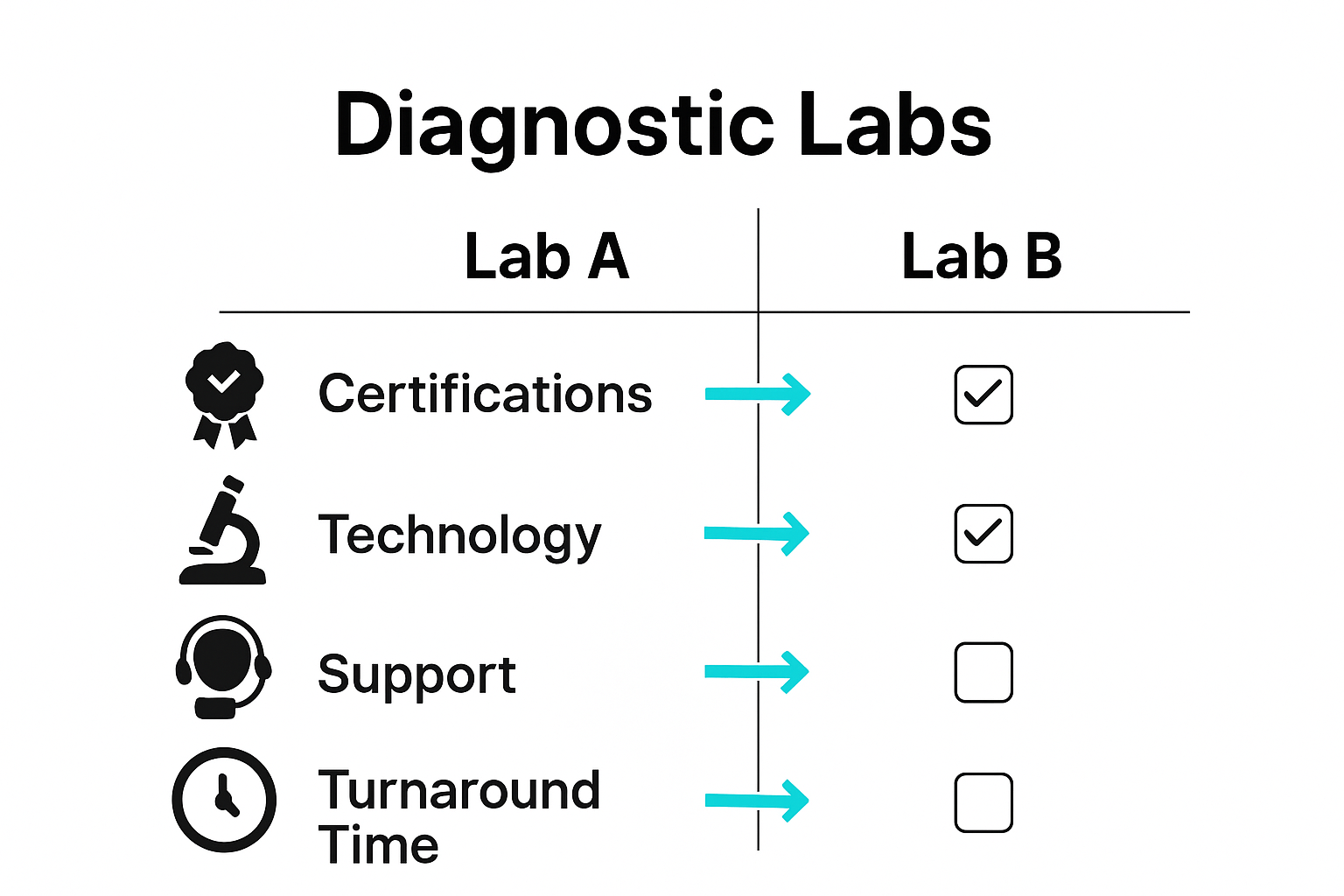
Medical laboratory accreditation programs are designed to help laboratories provide consistent, high-quality services that meet global recognition standards. When comparing service offerings, look for labs that provide comprehensive support across multiple dimensions. This includes detailed reporting, clear communication channels, multiple consultation options, and robust client management protocols.
Evaluate the lab’s service offerings by examining several critical components. First, assess their reporting mechanisms. Do they provide digital access to results? Can you receive comprehensive interpretations alongside raw data? Second, investigate their customer support infrastructure. Look for labs that offer multiple communication channels like phone, email, and online portals. Third, consider their flexibility in handling different types of diagnostic requirements. Accredited clinical laboratories often demonstrate adaptability across various medical disciplines, including diagnostic imaging, physiological sciences, and specialized testing protocols.
Pro Tip: Request sample reports and client support documentation to understand the depth and quality of their service offerings.
The next step involves reviewing pricing structures and understanding the financial aspects of your diagnostic testing process.
Step 5: Verify Reliability through Client Reviews and Testimonials
Gauging a diagnostic lab’s true performance goes beyond official credentials. You need to dive deep into real world experiences from actual clients who have undergone testing and can provide genuine insights into the lab’s actual performance.
Business verification processes offer valuable perspectives on a laboratory’s reliability and trustworthiness. When examining client reviews, look beyond surface level testimonials and seek comprehensive feedback that addresses multiple aspects of the diagnostic experience. Focus on reviews that discuss specific details like result accuracy, communication quality, turnaround times, and overall customer support.
Develop a systematic approach to evaluating testimonials and reviews. First, check multiple sources including professional review platforms, healthcare forums, and independent rating websites. Look for consistent patterns in client feedback rather than isolated comments. Second, pay attention to how the laboratory responds to both positive and negative reviews. A transparent, professional approach to client feedback demonstrates accountability and commitment to continuous improvement. Third, consider the diversity of testimonials. Reviews from different types of clients healthcare providers, individual patients, and organizations can provide a more comprehensive understanding of the lab’s capabilities.
Pro Tip: Contact the laboratory and request references from clients with similar diagnostic testing needs to your own.
The next step involves making a final decision based on all the research and insights you have gathered.
Choose Diagnostic Labs That Deliver Precision and Trust
Selecting the right diagnostic lab can feel overwhelming when facing critical health decisions. This article highlights the importance of matching your diagnostic needs with expertise, accreditation, and cutting-edge technology to ensure reliable results you can trust. At Centra Diagnostics, we understand these challenges and prioritize delivering accurate, timely testing with advanced molecular diagnostics, toxicology, blood work, and COVID-19 testing. Our commitment to using validated methodologies and maintaining rigorous quality controls addresses key concerns such as turnaround time and test accuracy.

Take control of your health with a partner that matches the article’s best practices. Visit Centra Diagnostics to explore our comprehensive diagnostic solutions backed by proven technology and client-focused service. Don’t wait for uncertainty — ensure your diagnostic results support clear and confident healthcare decisions today. Learn more about why precision matters at Centra Diagnostics and experience testing built around your needs.
Frequently Asked Questions
What key factors should I consider when assessing my diagnostic testing needs?
Before selecting a diagnostic lab, evaluate the specific medical condition being investigated and confirm the relevance of the test to your current health status. Discuss potential test limitations and accuracy rates with your healthcare provider to ensure that each test will provide meaningful, actionable information.
How can I verify the accreditation and certifications of a diagnostic lab?
To verify a lab’s credentials, look for accreditations from well-known organizations such as the American National Standards Institute or the College of American Pathologists. Request copies of current accreditation certificates and confirm their validity directly with the issuing organizations to ensure that the lab meets high-quality standards.
What technological capabilities should I look for in a diagnostic lab?
Focus on labs that utilize advanced testing methodologies and state-of-the-art equipment that can provide high-resolution analysis. Inquire about their testing platforms and check their turnaround times to ensure you receive accurate results efficiently, especially for time-sensitive tests.
Why is it important to compare the service offerings of different diagnostic labs?
Evaluating service offerings helps you understand the support and communication you’ll receive throughout the testing process. Look for labs that provide clear reporting, multiple consultation options, and robust client management to ensure a smooth diagnostic experience.
How can client reviews help me choose the right diagnostic lab?
Client reviews reveal real-world experiences and can provide insights into a lab’s reliability, accuracy, and customer support. Look for consistent patterns in feedback from various sources to gauge overall performance and consider contacting the lab for references from clients with similar testing needs.
What steps should I take to make a final decision on a diagnostic lab?
After conducting thorough research on testing needs, accreditation, technology, service offerings, and client reviews, compile all findings. Compare the labs based on how well they meet your specific diagnostic requirements, and aim to choose a lab that aligns with your needs for reliable and timely results.
Recommended
- Top Molecular Testing Labs Comparison – Expert Analysis 2025 | Centra Diagnostics
- Complete Guide to the Role of Diagnostic Labs | Centra Diagnostics
- Step by Step COVID-19 Testing: Complete Guide for 2025 | Centra Diagnostics
- How to Choose Diagnostic Services for Reliable Testing | Centra Diagnostics