Over 80 percent of american adults will undergo diagnostic testing at some point, yet many struggle to fully understand their results. Navigating medical reports can be confusing and even overwhelming without a step by step approach to reviewing key details. Learning how to gather relevant information, spot errors, and compare findings with clinical standards empowers you to take control of your health and make more confident decisions with your care team.
Table of Contents
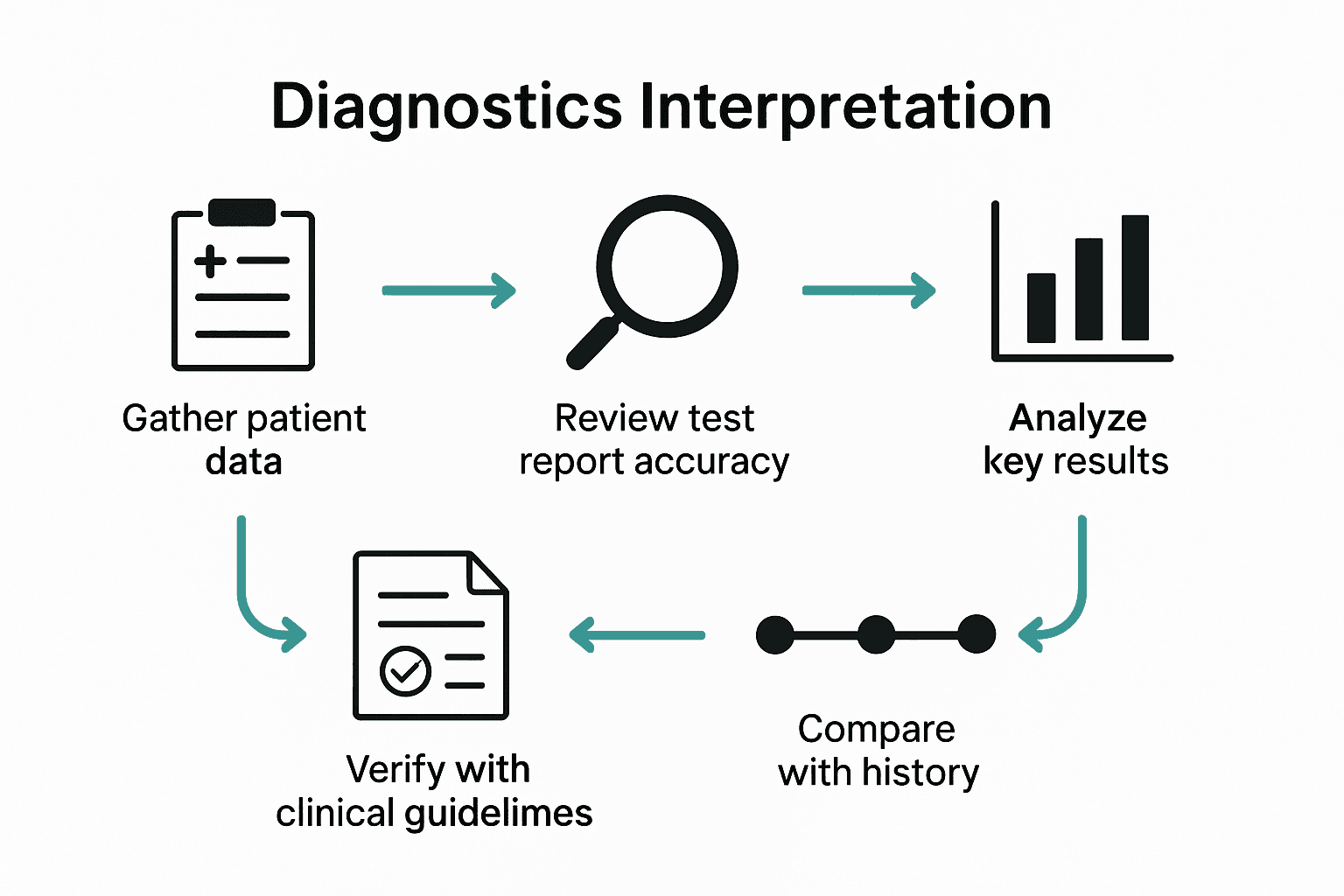
- Step 1: Gather Relevant Patient and Test Information
- Step 2: Review Diagnostic Report for Accuracy and Completeness
- Step 3: Analyze Key Results and Reference Ranges
- Step 4: Compare Results Against Patient History
- Step 5: Verify Findings with Clinical Guidelines
Quick Summary
| Key Point | Explanation |
|---|---|
| 1. Gather Comprehensive Patient Data | Collect detailed demographics, medical history, symptoms, and current medications to contextualize diagnostic results. |
| 2. Review Reports for Accuracy | Examine diagnostic reports thoroughly, ensuring all patient details and test results are correct and complete. |
| 3. Analyze Results Against Reference Ranges | Compare test results to established reference ranges, paying attention to values outside normal limits for potential health concerns. |
| 4. Integrate Findings with Medical History | Review past health issues, treatments, and family history to provide context for understanding test results effectively. |
| 5. Verify with Clinical Guidelines | Compare test results against established clinical guidelines to ensure you understand their significance and recommended actions. |
Step 1: Gather Relevant Patient and Test Information
In diagnostic testing, comprehensive information gathering forms the critical foundation for accurate results and meaningful interpretation. According to NCBI, the diagnostic process involves iterative information collection, integration, and interpretation to develop a precise working diagnosis.
To effectively gather patient and test information, you’ll need to compile a thorough profile that includes several key components. Start by collecting detailed patient demographics, including full name, age, gender, contact information, and relevant medical history. This baseline information helps contextualize test results and identifies potential factors that might influence diagnostic outcomes. Next, document any current symptoms, medications, recent medical procedures, and family medical history that could impact test interpretation.
When collecting test information, pay close attention to specific test requirements and preparation instructions. Different diagnostic tests demand unique preparation protocols, such as fasting, medication adjustments, or timing considerations. Internal Medicine emphasizes that comprehensive data acquisition ensures accurate problem representation and supports informed diagnostic decisions.
Pro tip: Create a standardized intake form or digital checklist to ensure consistent and thorough information collection across all patient interactions. This systematic approach minimizes errors and supports more reliable diagnostic processes.
Step 2: Review Diagnostic Report for Accuracy and Completeness
Reviewing your diagnostic report thoroughly ensures you have a complete and accurate understanding of your test results. NCBI emphasizes the importance of shared decision-making, which requires patients and clinicians to collaboratively review diagnostic information to support informed healthcare choices.
Begin by carefully examining the patient identification details at the top of the report. Verify that your name, date of birth, collection date, and unique patient identifier are correct. Next, scrutinize the test names and specific markers or measurements to confirm they match the originally ordered diagnostic tests. Pay close attention to units of measurement, reference ranges, and any numerical values or qualitative descriptions.
As NCBI notes, ensuring accuracy and completeness of diagnostic reports is crucial for supporting an accurate diagnosis. Look for comprehensive documentation of all relevant test results, including any additional notes from laboratory technicians or healthcare providers. Check that the report includes clear interpretations of the results and highlights any values that fall outside standard reference ranges.

Pro tip: When reviewing your report, create a side by side comparison with previous test results if available. This can help you track changes over time and provide valuable context for your healthcare provider during follow up discussions.
Step 3: Analyze Key Results and Reference Ranges
Analyzing diagnostic test results requires a systematic approach to understanding what your specific measurements mean. PubMed highlights that interpreting diagnostic tests involves comprehending their accuracy and applying this knowledge to assess the probability of a specific health condition.
Begin by carefully comparing your individual test results against the established reference ranges provided on the report. These ranges represent typical values for healthy individuals and are typically broken down by factors like age, gender, and other demographic characteristics. Pay special attention to results that fall outside the standard reference range, as these may indicate potential health concerns or require further investigation. Look for color coding or visual indicators that highlight values which are significantly above or below the expected normal range.
According to PubMed, test result interpretation depends on the test’s ability to distinguish between different health states and considers the specific characteristics of the patient and clinical context. This means that while reference ranges provide a helpful guideline, they are not absolute. Some variation can be normal, and the significance of a result depends on your overall health profile, symptoms, and medical history.
Pro tip: Create a simple tracking sheet to record your test results over time. This allows you to visualize trends and changes, which can be incredibly valuable when discussing your health with medical professionals during future consultations.
Step 4: Compare Results Against Patient History
Comparing diagnostic test results with your comprehensive medical history provides crucial context for understanding your health status. NCBI emphasizes that integrating diagnostic test results with a patient’s clinical history is essential for developing an accurate working diagnosis.
Start by reviewing your medical history thoroughly. Look for connections between your existing health conditions, past treatments, family medical background, and the current test results. Consider how factors such as chronic conditions, recent illnesses, medications, lifestyle changes, or ongoing treatments might influence your diagnostic outcomes. Pay special attention to any symptoms you have been experiencing and how they might relate to the test results youre examining.
According to Med LibreTexts/12%3A_Assessment_-_Recognizing_Cues/12.04%3A_Cognitive_Process_for_Analyzing_Assessment_Data), healthcare professionals utilize comprehensive assessment techniques to gather and analyze data. Emulate this approach by creating a holistic view of your health that goes beyond individual test numbers. Consider how each result fits into the broader context of your overall health profile, including your age, gender, lifestyle, and existing medical conditions.
Pro tip: Create a personal health timeline that includes significant medical events, diagnoses, treatments, and test results. This visual representation can help you and your healthcare provider identify patterns and potential health trends more effectively.
Step 5: Verify Findings with Clinical Guidelines
Verifying diagnostic findings against established clinical guidelines provides a critical framework for understanding your test results with precision and context. ASAHP emphasizes that diagnostic excellence involves collaborative efforts among patients, caregivers, and clinicians, with a strong focus on following established clinical guidelines to achieve accurate diagnoses.
Begin by identifying the specific clinical guidelines relevant to your diagnostic test and medical condition. These guidelines are typically developed by professional medical associations and represent the most current evidence-based standards for diagnosis and treatment. Look for national or international medical society recommendations that align with your specific test type and potential health conditions. Review how your test results compare to the standardized interpretative criteria outlined in these guidelines.
Carefully analyze the recommended next steps provided within clinical guidelines. These guidelines often include detailed protocols for interpreting test results, including thresholds for further investigation, recommended follow up tests, and potential treatment considerations. Pay attention to how your specific test results align with the broader diagnostic criteria and risk assessment frameworks established by medical experts.
Pro tip: Request a copy of the relevant clinical guidelines from your healthcare provider. This will allow you to have a more informed discussion about your test results and understand the scientific rationale behind their interpretation.
Take Control of Your Health with Expert Diagnostic Support
Understanding and interpreting diagnostic test results can feel overwhelming. This guide highlights key challenges like ensuring accuracy, comparing findings with your health history, and verifying results with clinical guidelines. If you want to move beyond confusion and gain clear insights into your health, reliable diagnostic testing with fast turnaround is essential. At Centra Diagnostics we specialize in advanced testing services including molecular testing, toxicology, and blood work designed to empower you with precise information. Our cutting-edge technology and dedicated client management help you confidently analyze and track your results.

Ready to make informed decisions about your health? Visit Centra Diagnostics today to explore our comprehensive testing solutions and experience a streamlined process tailored to your needs. Don’t wait to get reliable answers when it matters most. Connect with our team and take the first step toward better health clarity.
Frequently Asked Questions
How do I gather the right patient information for diagnostic tests?
Start by compiling detailed patient demographics, including full name, age, gender, and medical history. Document current symptoms, medications, and any relevant family medical history to ensure a comprehensive profile for accurate results.
What should I check in my diagnostic report to ensure its accuracy?
Carefully examine patient identification details, test names, and specific measurements to confirm they match your records. Make sure to verify that all test results and interpretations are included, especially those outside standard reference ranges.
How do I analyze my diagnostic test results against reference ranges?
Compare your test results with the established reference ranges on your report, paying attention to values that fall outside the normal limits. Use color coding or visual indicators to easily identify areas that may need further investigation.
How can I link my diagnostic results to my medical history?
Review your comprehensive medical history alongside your test results to find connections between existing conditions and recent test outcomes. Consider how chronic illnesses or medications might influence your current health status and test interpretations.
What are clinical guidelines, and how do I verify my findings against them?
Clinical guidelines are evidence-based standards established by medical associations that help interpret diagnostic results. Identify the relevant guidelines for your specific tests and medical conditions and analyze your results according to these standards.
How can I effectively track changes in my diagnostic test results over time?
Create a tracking sheet to record your test results from various appointments. This will allow you to visualize trends and changes, making it easier to discuss your health with medical professionals during future consultations.
Recommended
- Diagnostics Terminology Explained: Essential Guide for 2024 | Centra Diagnostics
- The Essential Guide to Diagnostics in Patient Care | Centra Diagnostics
- Step by Step COVID-19 Testing: Complete Guide for 2025 | Centra Diagnostics
- What Is Blood Work Analysis? Complete Guide Explained | Centra Diagnostics