More than 60 percent of American patients now benefit from medical breakthroughs that were unimaginable just a decade ago. These advances in diagnostics are redefining what is possible for care, bringing hope to families who face complex health concerns. Understanding how new technologies impact everything from early detection to treatment decisions makes all the difference. Discover how these emerging tools are transforming American healthcare and what they could mean for your own wellbeing.
Table of Contents
- Defining Advanced Diagnostics In Modern Medicine
- Types Of Advanced Diagnostic Testing Explained
- How Advanced Testing Improves Patient Care
- Risks, Costs, And Limitations To Consider
- Choosing The Right Diagnostics Partner In Los Angeles
Key Takeaways
| Point | Details |
|---|---|
| Advanced Diagnostics Revolutionize Healthcare | These technologies enable powerful insights into health conditions, shifting from reactive treatment to proactive care. |
| Early Detection is Key | Advanced testing allows for identifying health risks before symptoms arise, improving patient outcomes and treatment strategies. |
| Challenges Exist | Limitations include high costs, complex data interpretation, and the risk of overdiagnosis, necessitating careful implementation. |
| Choosing a Skilled Partner is Crucial | Selecting a diagnostics partner requires consideration of technological capability, data security, and comprehensive patient support. |
Defining Advanced Diagnostics in Modern Medicine
Advanced diagnostics represent a revolutionary approach in modern healthcare that transforms how medical professionals understand and treat complex health conditions. These sophisticated technologies go far beyond traditional diagnostic methods, offering unprecedented insights into patient health through precision and depth of analysis.
At their core, advanced diagnostics encompass cutting-edge techniques like next-generation sequencing (NGS), gene expression profiling, and liquid biopsy methods. These powerful tools provide rapid and cost-effective pathways to understanding intricate medical conditions, enabling healthcare providers to detect, monitor, and potentially predict diseases with remarkable accuracy.
The key characteristics of advanced diagnostics include:
- Molecular-level analysis capabilities
- Highly precise genetic and genomic screening
- Ability to identify disease markers before traditional symptoms emerge
- Minimally invasive testing procedures
- Personalized medical insights tailored to individual genetic profiles
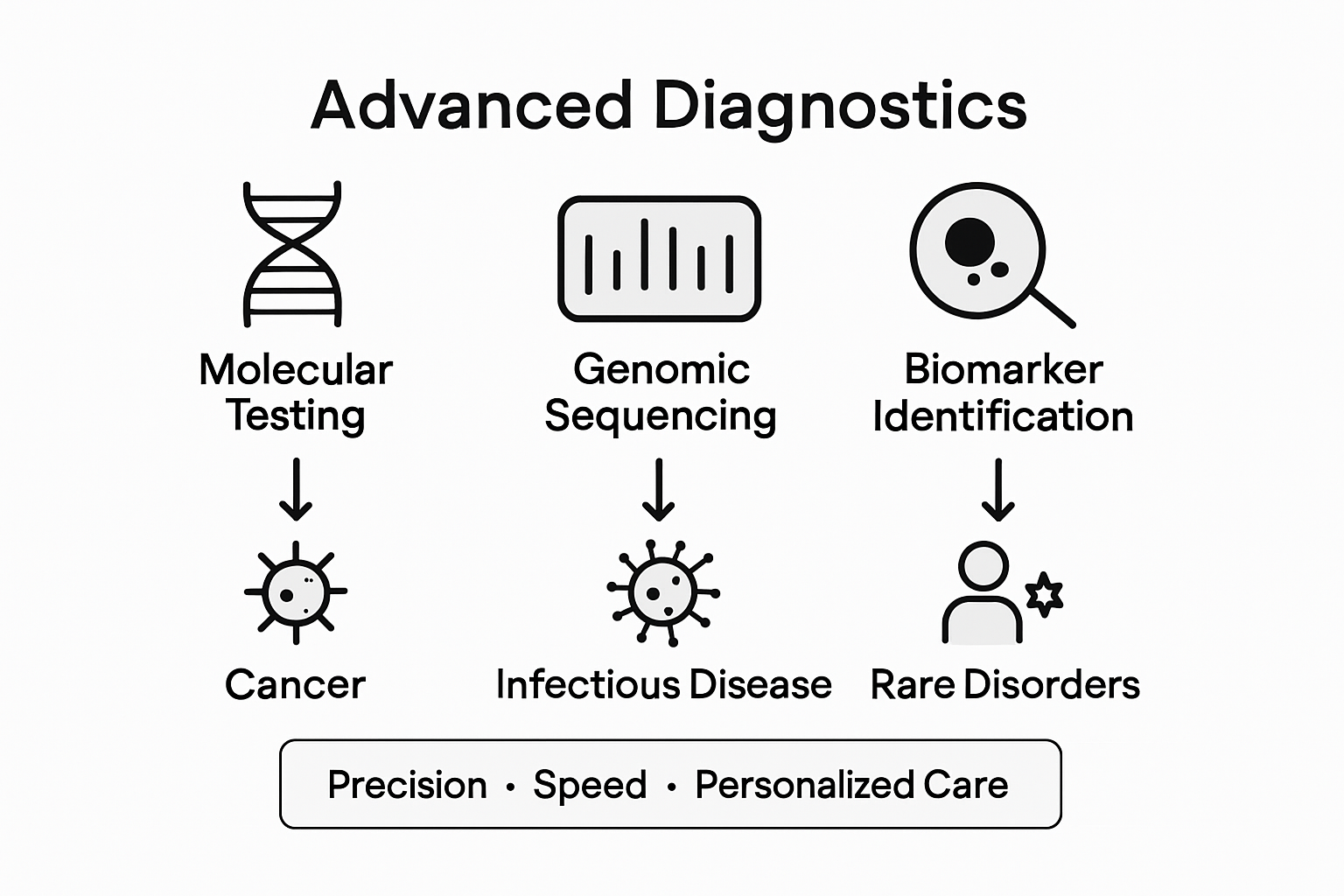
By integrating sophisticated technologies like molecular testing, genomic sequencing, and advanced biomarker identification, these diagnostic approaches represent a quantum leap in medical understanding. They transform healthcare from a reactive model into a proactive, predictive discipline that can anticipate and address potential health challenges before they become critical medical issues.
Types of Advanced Diagnostic Testing Explained
Advanced diagnostic testing represents a spectrum of sophisticated medical technologies designed to provide unprecedented insights into human health. These cutting-edge methodologies go well beyond traditional screening approaches, offering healthcare professionals powerful tools for early detection, precise monitoring, and personalized treatment strategies.
Advanced diagnostic technologies in hemato-oncology showcase the remarkable diversity of modern testing techniques. These include specialized methods such as:
- Next-Generation Sequencing (NGS): Enables comprehensive genetic analysis
- Digital PCR: Provides ultra-sensitive molecular detection
- Liquid Biopsies: Allows minimally invasive cancer screening
- Genomic Profiling: Maps intricate genetic variations
- Molecular Diagnostics: Identifies specific disease markers
These diagnostic approaches represent more than just technological innovations. Precision medicine and drug development processes increasingly rely on these advanced testing methods to understand complex medical conditions at their most fundamental levels. By analyzing genetic, molecular, and cellular information with unprecedented accuracy, healthcare providers can develop targeted interventions that address individual patient needs with extraordinary precision.

The transformative potential of advanced diagnostic testing extends across multiple medical disciplines. From oncology and genetic disorders to infectious disease management and personalized treatment planning, these sophisticated technologies are reshaping our understanding of human health. They offer not just improved diagnostic capabilities, but a comprehensive approach to preventative and personalized healthcare that was unimaginable just a decade ago.
How Advanced Testing Improves Patient Care
Patient care has undergone a transformative revolution with the emergence of advanced diagnostic technologies, shifting from reactive treatment to proactive, personalized healthcare strategies. These sophisticated testing methodologies provide healthcare professionals with unprecedented insights into individual patient health, enabling more precise and targeted medical interventions.
Advanced diagnostic techniques enable early disease detection, which represents a critical breakthrough in medical treatment. By identifying potential health risks and underlying conditions before they become symptomatic, these technologies allow physicians to:
- Develop personalized treatment plans
- Implement preventative interventions
- Reduce overall healthcare costs
- Minimize invasive diagnostic procedures
- Enhance patient outcomes through timely monitoring
Advanced diagnostics in hemato-oncology demonstrate the profound impact of these technologies, particularly in complex medical fields like cancer treatment. By providing molecular-level insights, these testing methods enable oncologists to create highly targeted therapies that address the unique genetic characteristics of individual tumors, dramatically improving treatment effectiveness and patient survival rates.
Ultimately, advanced testing represents more than just a technological innovation. It embodies a fundamental shift in healthcare philosophy, transforming medical practice from a one-size-fits-all approach to a nuanced, personalized model of care that recognizes the inherent complexity of human health. By empowering healthcare providers with deeper, more comprehensive diagnostic capabilities, these advanced testing technologies are redefining what’s possible in medical diagnosis, treatment, and patient care.
Risks, Costs, and Limitations to Consider
Advanced diagnostic technologies, while transformative, are not without significant challenges that healthcare providers and patients must carefully navigate. Understanding these potential limitations is crucial for making informed decisions about implementing and utilizing these sophisticated medical tools.
Advanced diagnostic challenges encompass multiple critical dimensions that can impact their effectiveness and accessibility. These key limitations include:
- Substantial financial investments required
- Complex data interpretation processes
- Need for specialized infrastructure
- Requirement for highly trained technical personnel
- Potential for overdiagnosis or misinterpretation
Modern medical diagnostics face intricate ethical and practical considerations that extend beyond technological capabilities. Ensuring diagnostic accuracy, maintaining patient privacy, and managing the psychological impact of advanced testing results are critical challenges that healthcare systems must address. The potential for generating anxiety through predictive genetic testing, coupled with the high costs of these advanced technologies, means that careful patient counseling and comprehensive support systems are essential.
While these limitations are significant, they do not diminish the remarkable potential of advanced diagnostic technologies. Instead, they underscore the importance of continued research, technological refinement, and a holistic approach to integrating these powerful tools into healthcare systems. Successful implementation requires a balanced perspective that weighs potential benefits against practical constraints, ensuring that advanced diagnostics serve their ultimate purpose: improving patient care and health outcomes.
Choosing the Right Diagnostics Partner in Los Angeles
Selecting a diagnostic partner in Los Angeles requires careful consideration of multiple critical factors that extend far beyond basic testing capabilities. The right diagnostics partner can dramatically impact healthcare outcomes, offering precise insights that transform patient treatment strategies.
Selecting an appropriate diagnostics partner involves evaluating several key dimensions that ensure comprehensive and reliable service. Healthcare providers and patients should prioritize partners who demonstrate:
- Cutting-edge technological infrastructure
- Advanced molecular testing capabilities
- Rapid turnaround times
- Comprehensive result interpretation
- Commitment to patient privacy and data security
Modern diagnostic collaboration requires addressing complex healthcare challenges beyond simple test administration. The ideal diagnostics partner in Los Angeles must showcase a nuanced approach that balances technological sophistication with ethical considerations, patient support, and personalized care strategies. This means looking for a provider that not only delivers accurate test results but also offers comprehensive guidance, clear communication, and a patient-centered approach to understanding complex diagnostic information.
Ultimately, the right diagnostics partner serves as a critical healthcare ally, transforming raw medical data into meaningful insights that can guide treatment decisions, prevent potential health risks, and support overall patient well-being. By carefully evaluating potential partners through a holistic lens that considers technological capability, ethical standards, and patient support, Los Angeles residents can find a diagnostic service that truly meets their complex healthcare needs.
Elevate Healthcare Outcomes with Advanced Diagnostics from Centra Diagnostics
Facing the challenges of complex health conditions requires precision and speed. This article highlights how advanced diagnostics transform patient care through molecular-level analysis and personalized insights. At Centra Diagnostics, we understand the need to overcome obstacles like costly tests and complex data interpretation while delivering reliable, fast results. Our state-of-the-art lab in Los Angeles specializes in molecular testing, toxicology, blood work, and COVID-19 testing, empowering healthcare providers and patients to make informed decisions with confidence.
Discover how partnering with Centra Diagnostics means gaining access to cutting-edge technology and dedicated client management that turn advanced diagnostic challenges into actionable solutions. Don’t wait for symptoms to escalate. Visit Centra Diagnostics today to leverage innovative testing services designed to improve outcomes through early detection and personalized care. Take the next step toward precise, patient-centered diagnostics now.
Frequently Asked Questions
What are advanced diagnostics in healthcare?
Advanced diagnostics refer to sophisticated medical technologies that provide detailed insights into patient health, enabling early detection and personalized treatment strategies.
How do advanced diagnostics improve patient care?
Advanced diagnostics enhance patient care by allowing for early disease detection, enabling personalized treatment plans, and reducing the need for invasive procedures.
What are some examples of advanced diagnostic techniques?
Examples of advanced diagnostic techniques include next-generation sequencing (NGS), liquid biopsies, molecular diagnostics, and genomic profiling.
What challenges are associated with advanced diagnostic technologies?
Challenges include high costs, complex data interpretation, the need for specialized infrastructure and personnel, and the potential for overdiagnosis or misinterpretation.