
Nearly every american will undergo some type of diagnostic panel during their lifetime, yet few realize how these advanced tests shape medical decisions. With over 70 percent of medical diagnoses in the United States relying on lab results, understanding diagnostic panels is more than just a technical concern. This overview breaks down how these panels work and explains why they matter for anyone seeking accurate, efficient healthcare answers.
Table of Contents
- What Are Diagnostic Panels and How They Work
- Common Types and Categories of Diagnostic Panels
- Key Applications in Modern Healthcare Settings
- Benefits and Limitations for Patients and Providers
- Comparing Diagnostic Panels to Individual Testing
Key Takeaways
| Point | Details |
|---|---|
| Comprehensive Testing | Diagnostic panels enable simultaneous assessment of multiple health parameters from a single sample, providing a holistic view of a patient’s health. |
| Cost-Effective Approach | These panels streamline the testing process, potentially lowering overall testing costs compared to individual tests. |
| Enhanced Decision Support | Diagnostic panels assist healthcare providers in making informed decisions by consolidating complex medical data into actionable insights. |
| Challenges in Interpretation | While beneficial, diagnostic panels can uncover genetic variants of uncertain significance, necessitating advanced expertise for accurate interpretation. |
What Are Diagnostic Panels and How They Work
Diagnostic panels represent sophisticated, comprehensive testing strategies designed to provide healthcare professionals with detailed insights into a patient’s health status. These strategic test collections enable rapid, efficient assessment of multiple health parameters simultaneously, offering a powerful diagnostic tool for medical practitioners.
At their core, diagnostic panels are precisely curated sets of medical tests grouped together to evaluate specific physiological systems or potential health conditions. These panels are cost-effective approaches that allow clinicians to gather comprehensive data without ordering individual tests separately. For instance, a comprehensive metabolic panel might include assessments of:
- Kidney function markers
- Liver enzyme levels
- Electrolyte balance
- Blood glucose concentrations
- Protein and nutrient metabolism indicators
The mechanics of diagnostic panels involve collecting a single blood, urine, or tissue sample and running multiple sophisticated tests simultaneously. Advanced laboratory technology enables rapid, precise analysis across various biochemical and physiological markers. By comparing patient results against established reference ranges, healthcare providers can quickly identify potential abnormalities, track health trends, and develop targeted treatment strategies.
Understanding diagnostic panels empowers patients and medical professionals alike. These meticulously designed testing protocols transform complex medical data into actionable health insights, bridging the gap between comprehensive screening and personalized medical care.
Common Types and Categories of Diagnostic Panels
Diagnostic panels are intricately designed to address diverse medical needs, spanning multiple specialized domains. These sophisticated testing protocols are strategically organized to provide comprehensive insights into specific health conditions, enabling targeted diagnostic approaches across various medical disciplines.
Medical Specialty Diagnostic Panels represent a critical approach to advanced healthcare screening. These specialized panels are categorized into several key areas:
-
Genetic Panels
- Prenatal testing
- Rare disease identification
- Oncology screening
- Neurological condition assessment
-
Disease-Specific Panels
- Infectious disease detection
- Metabolic syndrome evaluation
- Respiratory disease screening
- Sexually transmitted infection testing
Each diagnostic panel is meticulously designed to provide comprehensive analysis within its specific domain. Advanced laboratory technologies enable these panels to test multiple genetic markers, biochemical indicators, or pathogenic signatures simultaneously, delivering nuanced insights that traditional single-test approaches cannot achieve.

The power of diagnostic panels lies in their ability to consolidate complex medical information into actionable health intelligence. By combining multiple tests under a single, focused panel, healthcare providers can efficiently screen for potential health risks, track disease progression, and develop personalized treatment strategies with unprecedented precision.
Key Applications in Modern Healthcare Settings
Modern healthcare systems increasingly rely on diagnostic panels as essential tools for comprehensive patient care. These sophisticated testing methodologies have transformed medical diagnostics by providing rapid, precise insights into complex health conditions, enabling healthcare providers to make more informed and timely decisions about patient treatment and management.
The primary applications of diagnostic panels span multiple critical healthcare domains:
-
Disease Prevention and Early Detection
- Genetic risk screening
- Comprehensive health assessments
- Identifying potential health risks before symptom onset
-
Clinical Decision Support
- Precise genetic condition diagnosis
- Treatment strategy development
- Personalized medicine approaches
Diagnostic panels excel in providing nuanced medical intelligence across various clinical scenarios. By simultaneously analyzing multiple genetic markers, biochemical indicators, and pathogenic signatures, these panels offer unprecedented depth of understanding about a patient’s health status. This comprehensive approach allows healthcare professionals to move beyond traditional reactive medical models toward more proactive, preventative strategies.
The transformative power of diagnostic panels extends beyond individual patient care. They play a crucial role in broader public health initiatives, epidemiological research, and population health management. By generating detailed, multi-dimensional health data, these panels contribute to our collective understanding of disease mechanisms, genetic predispositions, and emerging health trends, ultimately driving medical innovation and improving overall healthcare outcomes.
Benefits and Limitations for Patients and Providers
Diagnostic panels offer a comprehensive approach to medical testing, presenting both significant advantages and notable challenges for patients and healthcare providers. These sophisticated testing protocols represent a double-edged sword in modern medical diagnostics, balancing innovative screening capabilities with potential interpretative complexities.
The key benefits of diagnostic panels include:
-
Patient Advantages
- Comprehensive health screening
- Single sample multiple test capabilities
- Reduced overall testing time
- Cost-effective diagnostic approach
-
Provider Benefits
- Enhanced diagnostic precision
- Simultaneous multi-condition assessment
- Streamlined medical decision-making
- Detailed health profile generation
Genetic diagnostic panels introduce unique considerations, particularly regarding variant interpretation. While these panels dramatically improve detection capabilities, they can also uncover genetic variations with uncertain clinical significance. This complexity introduces potential challenges in patient counseling and medical interpretation, requiring nuanced communication and advanced genetic expertise.
Ultimately, diagnostic panels represent a powerful yet intricate medical tool. The potential for false-positive results and uncertain genetic variants must be carefully balanced against the panels’ remarkable ability to provide comprehensive, rapid health insights. Successful implementation demands ongoing collaboration between patients, providers, and genetic specialists to maximize the diagnostic potential while minimizing potential psychological and medical uncertainties.
Comparing Diagnostic Panels to Individual Testing
Diagnostic panels fundamentally transform medical testing strategies by offering a comprehensive alternative to traditional individual testing approaches. Unlike single-condition tests, these advanced screening methodologies provide a holistic view of a patient’s health, enabling more nuanced and efficient diagnostic processes.
Key differences between diagnostic panels and individual testing include:
-
Diagnostic Panels
- Simultaneous multiple condition screening
- Single sample processing
- Comprehensive health assessment
- Potentially lower overall testing costs
-
Individual Testing
- Targeted single condition investigation
- Sequential testing requirements
- Precise, focused diagnostic approach
- More straightforward result interpretation
The complexity of diagnostic panels introduces unique clinical considerations, particularly regarding result interpretation. While individual tests provide clear, focused insights, panels can uncover genetic variations with uncertain clinical significance. This expanded diagnostic landscape requires sophisticated medical expertise to navigate potential false-positive results and complex genetic variants.
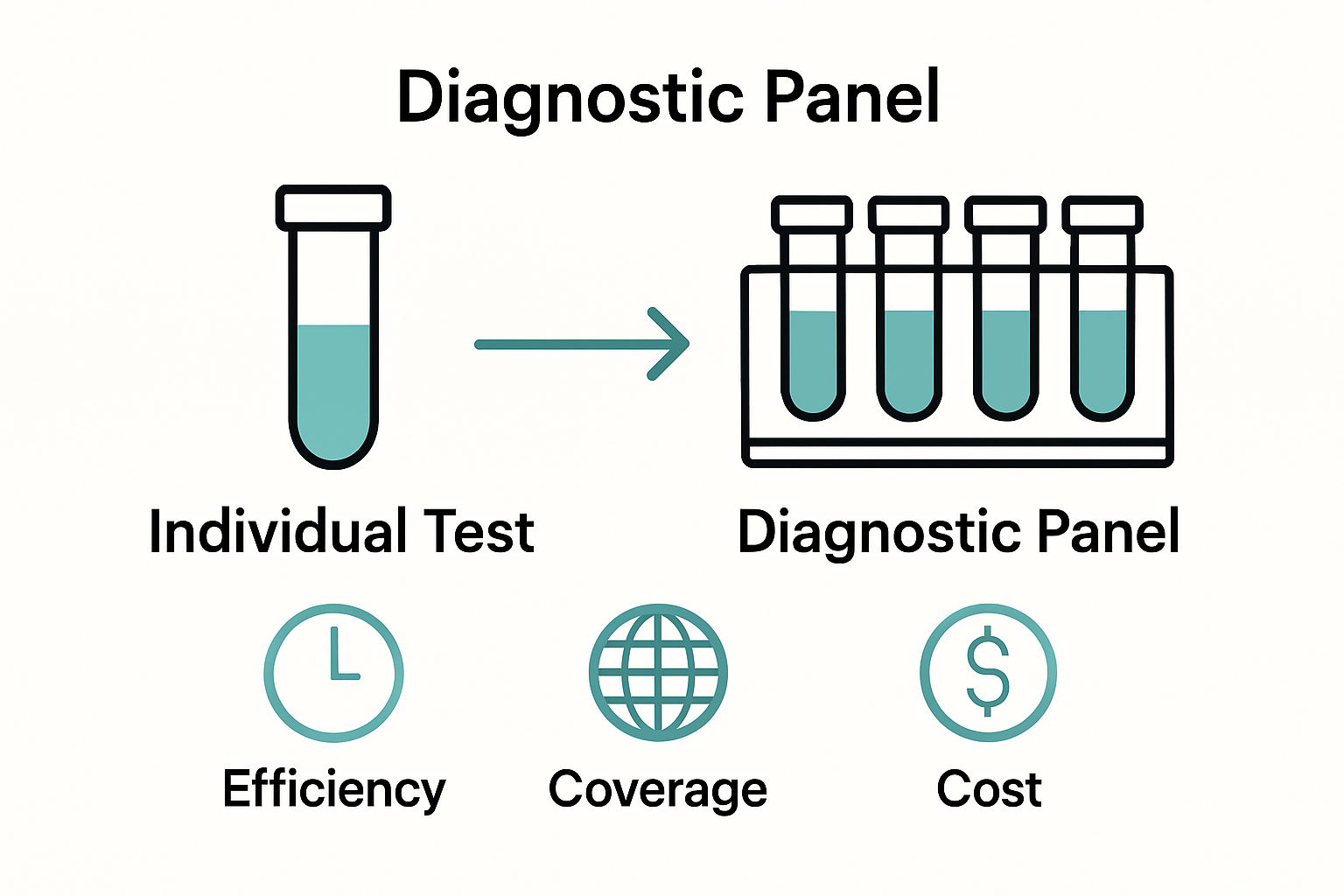
Ultimately, the choice between diagnostic panels and individual testing depends on specific clinical objectives, patient health history, and the particular diagnostic challenge at hand. Healthcare providers must carefully weigh the comprehensive screening capabilities of panels against the precision of targeted individual tests, selecting the approach that best serves the patient’s immediate and long-term health assessment needs.
Enhance Your Healthcare Decisions with Advanced Diagnostic Panels
Navigating the complexities of diagnostic panels can be challenging for both patients and healthcare providers. This article highlights the need for precise, comprehensive, and timely testing solutions to interpret multiple health markers effectively while managing potential uncertainties. If you seek greater diagnostic precision and faster results to support informed treatment strategies and proactive health management, Centra Diagnostics is your trusted partner.

Explore how Centra Diagnostics utilizes cutting-edge technology and client-focused services to deliver advanced molecular testing, blood work, and more with first-in-class turnaround times. Don’t let unclear or delayed results slow down your healthcare decisions. Visit Centra Diagnostics today and experience streamlined diagnostic panels designed to provide rapid, reliable insights you need now. Take the next step toward confident patient care and proactive health screening by reaching out through our live support or contact options.
Frequently Asked Questions
What are diagnostic panels?
Diagnostic panels are curated collections of medical tests that assess various health parameters simultaneously, allowing for comprehensive health insights without the need for separate individual tests.
How do diagnostic panels work?
Diagnostic panels typically involve collecting a single sample (blood, urine, or tissue) and conducting multiple tests using advanced laboratory technologies, allowing healthcare providers to identify potential health abnormalities quickly.
What are the common types of diagnostic panels?
Common types of diagnostic panels include genetic panels for prenatal testing and rare diseases, disease-specific panels for infectious diseases and metabolic syndrome, and other specialized tests tailored to evaluate particular health conditions.
What are the benefits of using diagnostic panels over individual tests?
Diagnostic panels offer several advantages, including comprehensive health screening, reduced testing time, cost-effectiveness, and enhanced diagnostic precision by assessing multiple health conditions from a single sample.
Recommended
- What Is Blood Work Analysis? Complete Guide Explained | Centra Diagnostics
- Guide to Ordering Blood Work: Step-by-Step for Professionals | Centra Diagnostics
- Diagnostics Terminology Explained: Essential Guide for 2024 | Centra Diagnostics
- Complete Guide to the Role of Diagnostic Labs | Centra Diagnostics