Every American workplace faces unique health challenges, yet fewer than half regularly use workplace diagnostics to manage risks and improve safety. As businesses seek to protect employees and boost productivity, understanding diagnostic strategies becomes essential. With advanced screening methods now shaping how health issues are detected and prevented, this guide reveals how organizations can create safer, healthier environments while ensuring legal compliance and building employee trust.
Table of Contents
- Defining Diagnostics In Workplace Health Settings
- Types Of Diagnostic Tests For Workplaces
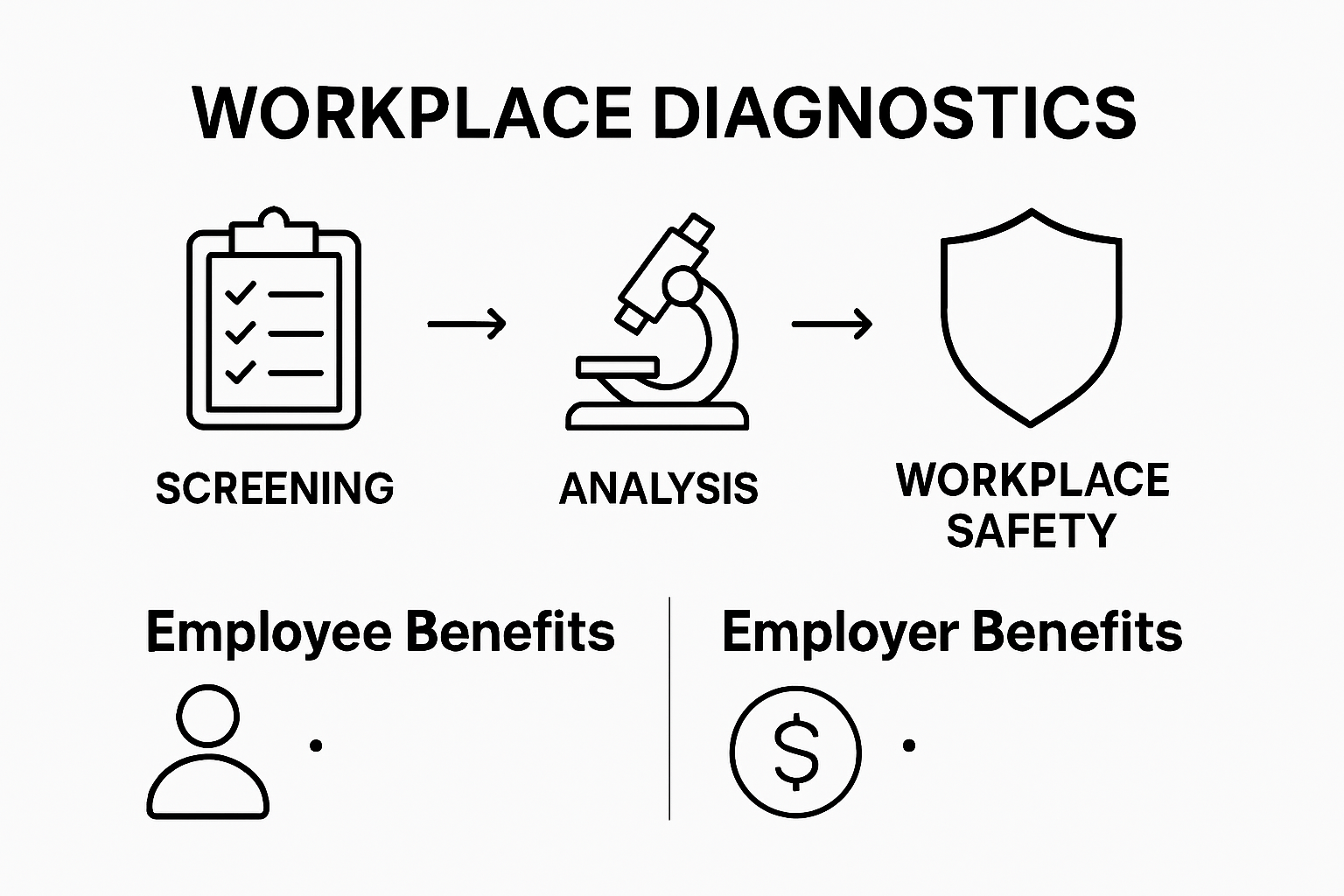
- How Workplace Diagnostics Promote Safety And Wellness
- Legal And Regulatory Aspects Of Occupational Testing
- Common Pitfalls And Best Practices For Employers
Key Takeaways
| Point | Details |
|---|---|
| Workplace Diagnostics Enhance Safety | Implementing systematic diagnostic approaches reduces potential health risks, leading to a safer work environment. |
| Focus on Employee Wellness | Comprehensive diagnostics promote proactive health monitoring, improving both mental and physical well-being of employees. |
| Navigating Legal Compliance | Employers must design testing programs that adhere to privacy laws and non-discrimination regulations to protect employee rights. |
| Best Practices for Implementation | Clear communication, robust privacy management, and regular program evaluations are essential for effective workplace diagnostics. |
Defining Diagnostics in Workplace Health Settings
Workplace diagnostics represent a critical intersection between medical technology and occupational health, providing systematic approaches to understanding employee health status and potential workplace risks. Comprehensive diagnostic tools enable organizations to proactively monitor, assess, and manage health conditions that could impact workforce productivity and safety.
At its core, diagnostics in workplace settings involve medical screening processes designed to detect, prevent, and manage health conditions among employees. The World Health Organization emphasizes that these diagnostic approaches are not merely medical procedures, but strategic interventions that can significantly reduce healthcare complications and associated costs. Workplace diagnostic screenings might include blood tests, physical examinations, substance screenings, infectious disease assessments, and comprehensive health risk evaluations.
The scope of workplace diagnostics extends far beyond simple medical checkups. These advanced processes help organizations identify potential health risks before they escalate, protecting both employee well-being and organizational performance. Key diagnostic strategies typically encompass:
- Pre-employment medical screenings
- Annual health assessments
- Targeted screenings for specific occupational hazards
- Mental health and wellness evaluations
- Substance abuse detection protocols
By integrating systematic diagnostic approaches, employers can create safer work environments, reduce potential health-related productivity losses, and demonstrate genuine commitment to employee welfare. Modern workplace diagnostic strategies represent a proactive, data-driven approach to managing organizational health risks and supporting comprehensive employee wellness programs.
Types of Diagnostic Tests for Workplaces
Workplace diagnostic testing encompasses a broad range of medical assessments designed to evaluate employee health, safety, and potential workplace risks. Point-of-care testing technologies have revolutionized how organizations approach health screenings, enabling rapid and efficient diagnostic processes that deliver immediate insights into employee wellness.
The spectrum of diagnostic tests in workplace settings is diverse and strategically targeted. Common medical diagnostic approaches typically include comprehensive evaluations across multiple health domains. Diagnostic test categories can be systematically grouped into several key areas:
- Blood-based Screenings
- Complete blood count (CBC)
- Cholesterol panels
- Diabetes risk assessments
- Hormone level evaluations
- Substance Screening Tests
- Drug and alcohol screenings
- Nicotine and tobacco use detection
- Performance-impairment assessments
- Physical Health Examinations
- Vision and hearing tests
- Cardiovascular health screenings
- Respiratory function evaluations
- Musculoskeletal assessments
- Infectious Disease Testing
- Immunization status verification
- Communicable disease screenings
- Viral and bacterial infection detection
- Specialized Occupational Health Tests
- Exposure risk assessments
- Ergonomic health evaluations
- Workplace environmental impact screenings
These diagnostic tests serve multiple critical functions, from identifying potential health risks and preventing workplace incidents to ensuring regulatory compliance and maintaining a healthy, productive workforce. By implementing comprehensive diagnostic strategies, employers demonstrate a proactive commitment to employee well-being while simultaneously protecting organizational performance and safety standards.
How Workplace Diagnostics Promote Safety and Wellness
Workplace diagnostics serve as a critical mechanism for proactively protecting both employee health and organizational performance. Comprehensive impairment detection technologies enable employers to identify potential health risks and functional limitations before they escalate into significant workplace safety challenges.

Preventative health strategies are at the core of effective workplace diagnostic programs. Diagnostic interventions recommended by the World Health Organization focus on comprehensive screening processes that address multiple dimensions of employee wellness. These advanced approaches go beyond traditional medical checkups, providing nuanced insights into an employee’s physical and mental health status.
The multifaceted benefits of workplace diagnostics can be categorized into several key areas:
- Safety Enhancement
- Early detection of potential health risks
- Identification of performance-limiting conditions
- Reduction of workplace accident probabilities
- Comprehensive risk management
- Employee Wellness Optimization
- Proactive health monitoring
- Personalized health intervention strategies
- Mental and physical health support
- Stress and burnout prevention
- Organizational Performance Improvements
- Decreased healthcare-related productivity losses
- Lower insurance and compensation costs
- Enhanced workforce resilience
- Improved overall organizational health metrics
By implementing rigorous diagnostic protocols, organizations demonstrate a genuine commitment to creating safe, supportive work environments. These strategic approaches not only protect individual employees but also contribute to building a culture of wellness, transparency, and proactive health management that benefits both workers and the broader organizational ecosystem.
Legal and Regulatory Aspects of Occupational Testing
Occupational testing exists within a complex legal framework designed to balance employee privacy rights with workplace safety requirements. Comprehensive OSHA regulations provide critical guidelines that organizations must navigate carefully when implementing diagnostic testing protocols, ensuring both legal compliance and employee protection.
Workplace diagnostic testing involves intricate legal considerations that extend far beyond simple medical screenings. Employers must meticulously design testing programs that respect individual privacy, prevent discrimination, and maintain strict confidentiality of medical information. Key legal parameters typically encompass:
- Privacy Protection Mandates
- Strict confidentiality requirements
- Limited access to individual test results
- Informed consent protocols
- Data protection standards
- Non-Discrimination Regulations
- Uniform testing standards
- Prohibition of discriminatory testing practices
- Equal application across workforce demographics
- Reasonable accommodation requirements
- Medical Information Management
- Health Insurance Portability and Accountability Act (HIPAA) compliance
- Secure storage of medical records
- Restricted information sharing
- Transparent communication protocols
- Testing Scope Limitations
- Job-relatedness of diagnostic assessments
- Medical relevance to specific occupational roles
- Clear connection between testing and workplace safety
- Proportional testing approaches
- Employee Rights Protection
- Right to understand testing purposes
- Option to contest or challenge test results
- Protection against retaliatory actions
- Comprehensive appeal mechanisms
Successful implementation of occupational diagnostic testing requires a delicate balance between organizational risk management and respect for individual employee rights. By developing transparent, consistent, and legally compliant testing strategies, employers can create a safe workplace environment that protects both organizational interests and employee personal autonomy.
Common Pitfalls and Best Practices for Employers
Successful workplace diagnostic programs require strategic planning and meticulous execution. Diagnostic implementation demands a nuanced approach that balances organizational objectives with employee privacy, trust, and comprehensive health management.
Employers frequently encounter several critical challenges when developing and maintaining diagnostic testing protocols. The most prevalent pitfalls include inconsistent testing standards, inadequate communication, privacy breaches, and poorly designed intervention strategies. Proactive organizations must anticipate and systematically address these potential complications through comprehensive planning and transparent processes.
Key Best Practices for Effective Workplace Diagnostics:
- Communication Strategies
- Develop clear, transparent testing policies
- Provide comprehensive employee education
- Establish open dialogue channels
- Explain testing purposes and potential outcomes
- Privacy and Consent Management
- Implement robust confidentiality protocols
- Obtain explicit informed consent
- Limit access to medical information
- Use secure data management systems
- Testing Program Design
- Align diagnostics with specific job requirements
- Create standardized, non-discriminatory protocols
- Regularly review and update testing procedures
- Ensure scientific validity of diagnostic methods
- Follow-up and Support
- Develop structured post-testing support systems
- Offer comprehensive health guidance
- Create rehabilitation and wellness pathways
- Provide mental health resources
- Continuous Improvement
- Conduct periodic program effectiveness reviews
- Gather employee feedback
- Stay current with medical and legal standards
- Adapt testing approaches based on emerging research
By embracing a holistic, empathetic approach to workplace diagnostics, employers can transform mandatory health screenings from potential sources of tension into valuable opportunities for employee engagement, wellness, and organizational growth. The most successful programs view diagnostic testing not as a compliance requirement, but as a strategic investment in human capital and organizational resilience.
Elevate Your Workplace Health with Advanced Diagnostics
Ensuring workplace safety and employee wellness demands precise and timely diagnostic testing aligned with regulatory standards and privacy protections. The article highlights critical challenges such as implementing consistent testing protocols, managing employee privacy, and proactively detecting health risks before they impact productivity. At Centra Diagnostics, we understand these pain points and offer comprehensive solutions including molecular testing, toxicology, and blood work that support your workplace diagnostic needs with cutting-edge technology and fast turnaround times.
Take control of your organizational health today. Partner with Centra Diagnostics to implement reliable diagnostic strategies that enhance employee safety and wellness while ensuring compliance with legal requirements. Explore our full range of services and dedicated client support to transform your workplace health initiatives into powerful assets. Visit Centra Diagnostics now and invest in diagnostics that protect your most valuable resource your workforce.
Frequently Asked Questions
What are workplace diagnostics?
Workplace diagnostics are systematic medical screenings designed to assess employee health, identify potential risks, and manage workplace-related health conditions effectively.
Why are diagnostic tests important for employees?
Diagnostic tests are crucial for employees as they help in early detection of health risks, enhance employee wellness, and contribute to a safer work environment, minimizing productivity losses from health-related issues.
How do workplace diagnostics promote safety?
Workplace diagnostics promote safety by enabling early detection of health conditions that could lead to accidents or incidents, thus facilitating effective risk management and reducing workplace hazards.
What legal considerations should employers be aware of regarding workplace diagnostics?
Employers must be mindful of privacy protection mandates, non-discrimination regulations, and medical information management while implementing workplace diagnostics to ensure compliance with legal standards and maintain employee trust.