Nearly 14 billion laboratory tests are performed every year across american healthcare systems, shaping how doctors diagnose and treat patients. These tests form the backbone of medical decisions, influencing everything from early detection to ongoing disease management. Understanding lab testing helps patients and providers make better choices, find new treatment options, and improve health outcomes with greater confidence.
Table of Contents
- Defining Lab Testing in Healthcare
- Major Types of Healthcare Lab Tests
- How Lab Testing Informs Clinical Decisions
- Benefits For Providers And Patients
- Risks, Limitations, And Best Practices
Key Takeaways
| Point | Details |
|---|---|
| Laboratory testing is essential for diagnosis and treatment monitoring | It provides critical insights into patient health through the analysis of biological specimens. |
| Diverse test categories cater to different health evaluations | Major types include blood tests, molecular testing, microbiological tests, and toxicology screenings, each with specific purposes. |
| Lab testing informs decision-making in healthcare | It provides objective data that helps clinicians diagnose conditions, plan treatments, and monitor patient progress. |
| Risks and limitations require careful interpretation | Factors affecting results must be considered, and best practices should be followed to ensure diagnostic accuracy. |
Defining Lab Testing in Healthcare
Laboratory testing represents a critical diagnostic process used by healthcare professionals to evaluate patient health, diagnose medical conditions, and monitor treatment effectiveness. According to the FDA, these medical devices are employed on body samples to help diagnose diseases, plan treatments, and track health conditions.
At its core, lab testing involves analyzing biological specimens like blood, urine, tissue, or other bodily fluids to provide insights into an individual’s health status. Stanford Healthcare specifically notes that clinical chemistry focuses on measuring chemical components within body fluids and tissues, most commonly using blood and urine specimens.
The comprehensive nature of lab testing encompasses multiple diagnostic approaches, including:
- Molecular Testing: Analyzing genetic material to identify potential hereditary conditions
- Blood Work: Evaluating blood components for overall health indicators
- Toxicology Screening: Detecting presence of substances or chemicals in the body
- Pathology Analysis: Examining tissue samples for cellular abnormalities
These diagnostic procedures play a pivotal role in modern healthcare, providing medical professionals with objective, quantifiable data to support clinical decision-making. By transforming complex biological information into actionable medical insights, lab testing serves as a fundamental pillar of preventive and diagnostic medicine. Whether screening for potential health risks or monitoring ongoing treatment progress, these advanced diagnostic tools help healthcare providers deliver more precise, personalized patient care.
Major Types of Healthcare Lab Tests
Healthcare lab tests are diverse diagnostic procedures designed to evaluate different aspects of human health, each serving a unique and critical purpose in medical assessment. These comprehensive examinations help healthcare providers detect, diagnose, monitor, and manage various medical conditions through systematic analysis of biological specimens.
The major categories of healthcare lab tests encompass several specialized diagnostic approaches, each offering distinct insights into patient health:
-
Blood Tests
- Complete Blood Count (CBC)
- Metabolic Panels
- Lipid Profiles
- Hormone Level Assessments
-
Molecular and Genetic Testing
- Genetic Disorder Screening
- Infectious Disease Detection
- Cancer Genetic Markers
- Pharmacogenetic Testing
-
Microbiological Tests
- Bacterial Cultures
- Viral Screening
- Fungal Infection Identification
- Antibiotic Resistance Analysis
-
Toxicology Screenings
- Drug Testing
- Chemical Exposure Assessment
- Poison Detection
- Substance Abuse Monitoring
These test categories represent sophisticated diagnostic tools that transform complex biological data into actionable medical insights. By providing precise, quantifiable information about a patient’s physiological state, lab tests enable healthcare professionals to develop targeted treatment strategies, monitor disease progression, and implement preventive healthcare interventions.
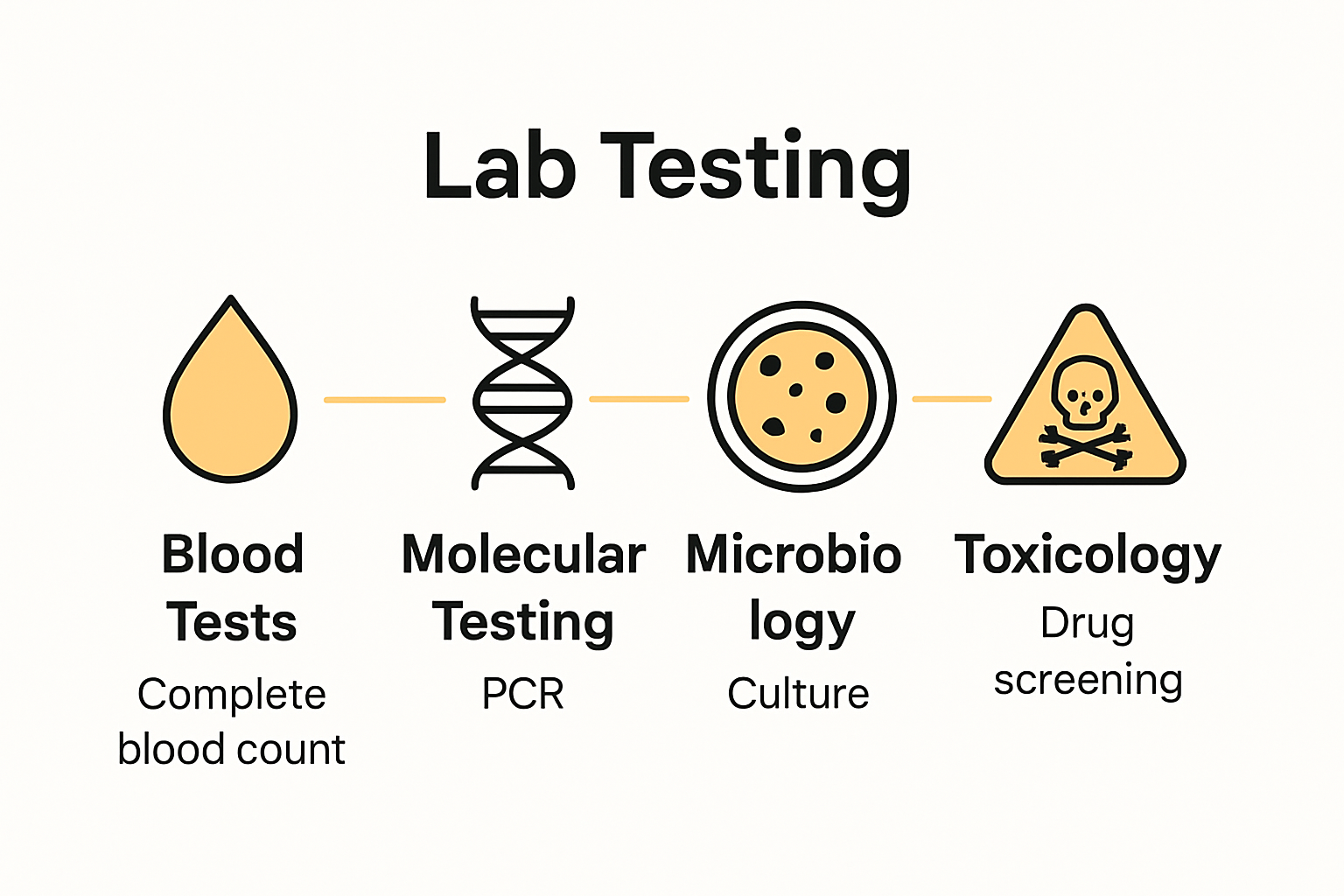
Advanced laboratory technologies continue to expand the capabilities of diagnostic testing, allowing for increasingly nuanced and personalized medical assessments.
 From identifying potential genetic predispositions to tracking treatment effectiveness, these comprehensive testing approaches represent the cornerstone of modern, evidence-based medical practice.
How Lab Testing Informs Clinical Decisions
Lab testing serves as a critical foundation for medical decision-making, providing healthcare professionals with objective, quantifiable data to guide patient care strategies. According to the FDA, lab tests assist doctors in diagnosing diseases, planning treatments, evaluating treatment responses, and monitoring disease progression.
The diagnostic process involves a comprehensive analysis that transforms raw biological data into actionable medical insights. This intricate approach allows clinicians to move beyond subjective observations, leveraging precise scientific measurements to:
-
Diagnose Medical Conditions
- Identify specific disease markers
- Detect early signs of potential health issues
- Differentiate between similar clinical presentations
-
Treatment Planning
- Select most appropriate therapeutic interventions
- Determine medication effectiveness
- Customize treatment protocols
-
Patient Monitoring
- Track disease progression
- Assess treatment response
- Detect potential complications
Emergent technologies are further revolutionizing clinical decision-making. Cutting-edge research, such as the LabTOP model from ArXiv, demonstrates how advanced computational approaches can predict lab test outcomes using electronic health records, enhancing clinical decision support and enabling early condition detection.
By integrating sophisticated laboratory insights with clinical expertise, healthcare providers can develop more precise, personalized medical strategies. These data-driven approaches transform traditional healthcare from reactive treatment to proactive, predictive management, ultimately improving patient outcomes and advancing medical understanding.
Benefits for Providers and Patients
Laboratory testing offers transformative advantages for both healthcare providers and patients, creating a symbiotic relationship that elevates medical care. According to the FDA, lab tests help identify health changes before symptoms appear, enabling early diagnosis and treatment planning.
For healthcare providers, lab testing delivers critical strategic benefits:
-
Clinical Decision Support
- Objective medical data
- Precise diagnostic insights
- Quantifiable patient health metrics
-
Treatment Optimization
- Personalized intervention strategies
- Evidence-based medication selection
- Continuous treatment monitoring
-
Preventive Care Management
- Early disease detection
- Risk factor identification
- Proactive health interventions
Patients similarly experience substantial advantages from advanced laboratory diagnostics. Emerging technologies like the Lab-AI model from ArXiv are revolutionizing patient experiences by offering personalized lab test interpretations, enhancing patient understanding and supporting more collaborative healthcare interactions.
Ultimately, laboratory testing represents a powerful bridge between medical expertise and individual health management. By providing transparent, scientifically validated insights, these diagnostic tools empower both healthcare providers and patients to make informed, proactive decisions about health and wellness, transforming traditional reactive medical approaches into dynamic, personalized healthcare experiences.
Risks, Limitations, and Best Practices
Lab testing, while an invaluable diagnostic tool, requires careful navigation of potential risks and limitations. According to the FDA, factors like age, sex, and medical history can significantly affect lab test results, necessitating careful interpretation within the context of overall health.
Key Risks and Limitations in laboratory diagnostics include:
-
Interpretation Challenges
- Complex result variations
- Potential false positives/negatives
- Contextual health considerations
-
Technical Limitations
- Equipment calibration errors
- Sample collection inconsistencies
- Human error during processing
-
Patient-Specific Variables
- Medication interactions
- Physiological variations
- Timing of specimen collection
To mitigate these challenges, healthcare professionals rely on external quality assessment mechanisms. As Wikipedia explains, external quality assessment evaluates a laboratory’s quality management system, ensuring the accuracy and reliability of test results.
Best practices for maximizing the effectiveness of lab testing involve a comprehensive approach: maintaining rigorous quality control protocols, leveraging advanced diagnostic technologies, ensuring proper sample handling, and integrating test results within a holistic understanding of patient health. By adopting these strategies, healthcare providers can minimize risks, enhance diagnostic precision, and deliver more reliable patient care.
Elevate Healthcare Decisions with Trusted Lab Testing Solutions
Understanding the critical role of lab testing in diagnosing and monitoring health conditions reveals a clear challenge: obtaining fast, reliable, and technologically advanced diagnostic results. Many healthcare providers and patients struggle with delays, unclear interpretations, or inconsistent quality that can hinder timely and precise medical decisions. Whether it is molecular testing, toxicology screening, or comprehensive blood work, you deserve a partner who emphasizes accuracy and innovation to support your health journey.
Centra Diagnostics in Los Angeles meets these needs with first-in-class turnaround times and cutting-edge technology tailored for proactive healthcare management. With dedicated client management and a commitment to quality, Centra transforms complex biological data into clear, actionable insights that empower both providers and patients. Experience the confidence that comes with precise diagnostics and personalized service.
Discover how Centra Diagnostics can enhance your clinical decision-making today.
Ready to improve your healthcare outcomes with reliable lab testing? Visit Centra Diagnostics to explore our advanced testing services including molecular testing and blood work. Don’t let delays or uncertainty slow your care. Connect with our expert team now through live support and take the next step towards informed health decisions.
Frequently Asked Questions
What are the main types of lab tests used in healthcare?
The main types of lab tests used in healthcare include blood tests, molecular and genetic testing, microbiological tests, and toxicology screenings. Each category serves different diagnostic purposes and provides critical insights into patient health.
How do lab tests inform clinical decisions in healthcare?
Lab tests provide healthcare professionals with objective data that helps in diagnosing medical conditions, planning treatments, and monitoring patient health. This data allows for more precise decision-making and tailored treatment strategies.
What are some benefits of lab testing for patients?
Lab testing enables early disease detection, personalized treatment options, and continuous health monitoring. It enhances patient understanding of their health status, leading to more proactive healthcare decisions.
What are the risks and limitations associated with lab testing?
Some risks and limitations include potential interpretation challenges, technical limitations with equipment or sample handling, and patient-specific variables like medications or physiological differences. These factors can affect the accuracy of test results, necessitating careful analysis by healthcare providers.
Recommended
- Step by Step COVID-19 Testing: Complete Guide for 2025 | Centra Diagnostics
- 7 Key Tips for Affordable Lab Testing in Los Angeles | Centra Diagnostics
- Top Molecular Testing Labs Comparison – Expert Analysis 2025 | Centra Diagnostics
- What Is Blood Work Analysis? Complete Guide Explained | Centra Diagnostics