Over eighty percent of American healthcare providers report that outdated testing protocols put patient safety at risk. With shifting regulations and constant advances in medical technology, staying compliant has never been more demanding for American facilities. This practical guide shows how a step by step approach can help hospitals and clinics improve accuracy, meet all regulatory standards, and boost patient confidence from assessment through ongoing protocol updates.
Table of Contents
- Step 1: Assess Facility Needs And Regulatory Requirements
- Step 2: Develop Customized Testing Protocols And Workflows
- Step 3: Train Staff On Protocol Implementation Procedures
- Step 4: Execute Diagnostic Testing With Quality Controls
- Step 5: Verify Results And Update Protocols For Compliance
Quick Summary
| Important Insight | Explanation |
|---|---|
| 1. Review Regulatory Requirements First | Conduct a thorough assessment of regulatory guidelines and operational capabilities to identify gaps in testing protocols. |
| 2. Develop Customized Testing Workflows | Tailor testing protocols based on facility needs to ensure consistent quality and safety in diagnostics. |
| 3. Implement Comprehensive Staff Training | Design multilayered training programs to enhance staff understanding and application of testing protocols. |
| 4. Utilize Quality Control Measures | Establish robust quality control systems to guarantee the accuracy and reliability of diagnostic testing procedures. |
| 5. Regularly Verify Results and Update Protocols | Consistently verify test results and update protocols to maintain compliance with the latest standards and advancements. |
Step 1: Assess Facility Needs and Regulatory Requirements
Assessing your healthcare facility’s testing protocols begins with a comprehensive review of regulatory requirements and current operational capabilities. This critical first step helps you identify gaps and develop a strategic roadmap for implementing robust testing procedures.
Start by thoroughly reviewing guidelines from the Occupational Safety and Health Administration and conducting an in depth facility audit. Your assessment should include evaluating current equipment, staffing resources, and existing testing workflows. Pay special attention to safety standards, patient handling procedures, and compliance requirements. The Health Resources and Services Administration recommends creating a detailed document that captures community health needs, potential service gaps, and specific testing requirements unique to your facility.
Pro tip: Don’t view this as a one time exercise. Regulatory requirements and healthcare technologies evolve rapidly, so schedule annual reassessments to keep your testing protocols current and compliant. Your next step will involve developing a structured implementation plan based on these initial findings.
Step 2: Develop Customized Testing Protocols and Workflows
Customized testing protocols are the backbone of efficient and reliable healthcare diagnostics. In this critical step, you will transform your initial facility assessment into a comprehensive set of tailored workflows that ensure consistent quality and patient safety.
Standard operating procedures are fundamental to creating a systematic approach to testing. Begin by drafting detailed workflows that outline each step of your testing process start to finish. Focus on creating clear documentation that covers all potential scenarios, including equipment calibration, sample handling, documentation protocols, and result verification. Your protocols should be specific enough to guide staff through complex procedures while remaining flexible enough to adapt to emerging healthcare technologies.
Pro tip: Treat your protocols as living documents. Schedule quarterly reviews and encourage feedback from your testing team to continuously refine and improve your workflows. The most effective protocols evolve through collaborative input and regular critical assessment. Your next step will involve implementing comprehensive staff training to ensure these new protocols are understood and consistently applied.
Step 3: Train Staff on Protocol Implementation Procedures
Staff training transforms written protocols into actionable practices that ensure consistent and high quality healthcare diagnostics. This crucial step bridges the gap between theoretical guidelines and real world implementation, empowering your team to execute testing procedures with precision and confidence.

Comprehensive training programs should be designed as multilayered learning experiences that go beyond simple instruction. Start by developing structured training modules that combine theoretical knowledge with hands on practice. Include detailed walkthroughs of each protocol, practical demonstrations, and interactive scenarios that allow staff to apply their learning in simulated environments. Focus on creating a continuous learning environment where staff are encouraged to ask questions, share insights, and continuously improve their understanding of testing protocols.
Pro tip: Implement a certification process that validates each team members competency. Require periodic recertification to ensure ongoing proficiency and keep your staff updated on the latest procedural developments. Your next step will involve establishing a robust monitoring system to track protocol adherence and identify areas for ongoing improvement.
Step 4: Execute Diagnostic Testing with Quality Controls
Executing diagnostic testing requires a meticulous approach that guarantees accuracy, reliability, and patient safety. This critical stage transforms your carefully developed protocols into actionable scientific procedures that deliver precise medical insights.
Quality control measures are the backbone of reliable diagnostic testing. Begin by implementing a robust verification process that includes multiple checkpoints throughout your testing workflow. Use calibrated equipment, establish clear documentation standards, and create a systematic approach to sample handling and result interpretation. Continuous performance monitoring allows you to identify potential variations or inconsistencies before they become significant issues.
Pro tip: Develop a comprehensive error tracking system that documents every deviation from standard protocols. This approach transforms potential mistakes into learning opportunities and helps you continuously refine your testing procedures. Your next step will involve analyzing test results and preparing detailed reports that provide actionable medical insights.
Step 5: Verify Results and Update Protocols for Compliance
Verifying diagnostic test results is a critical process that transforms raw data into actionable medical insights. This step ensures the accuracy, reliability, and regulatory compliance of your testing procedures, protecting both patient safety and your facility’s professional standards.
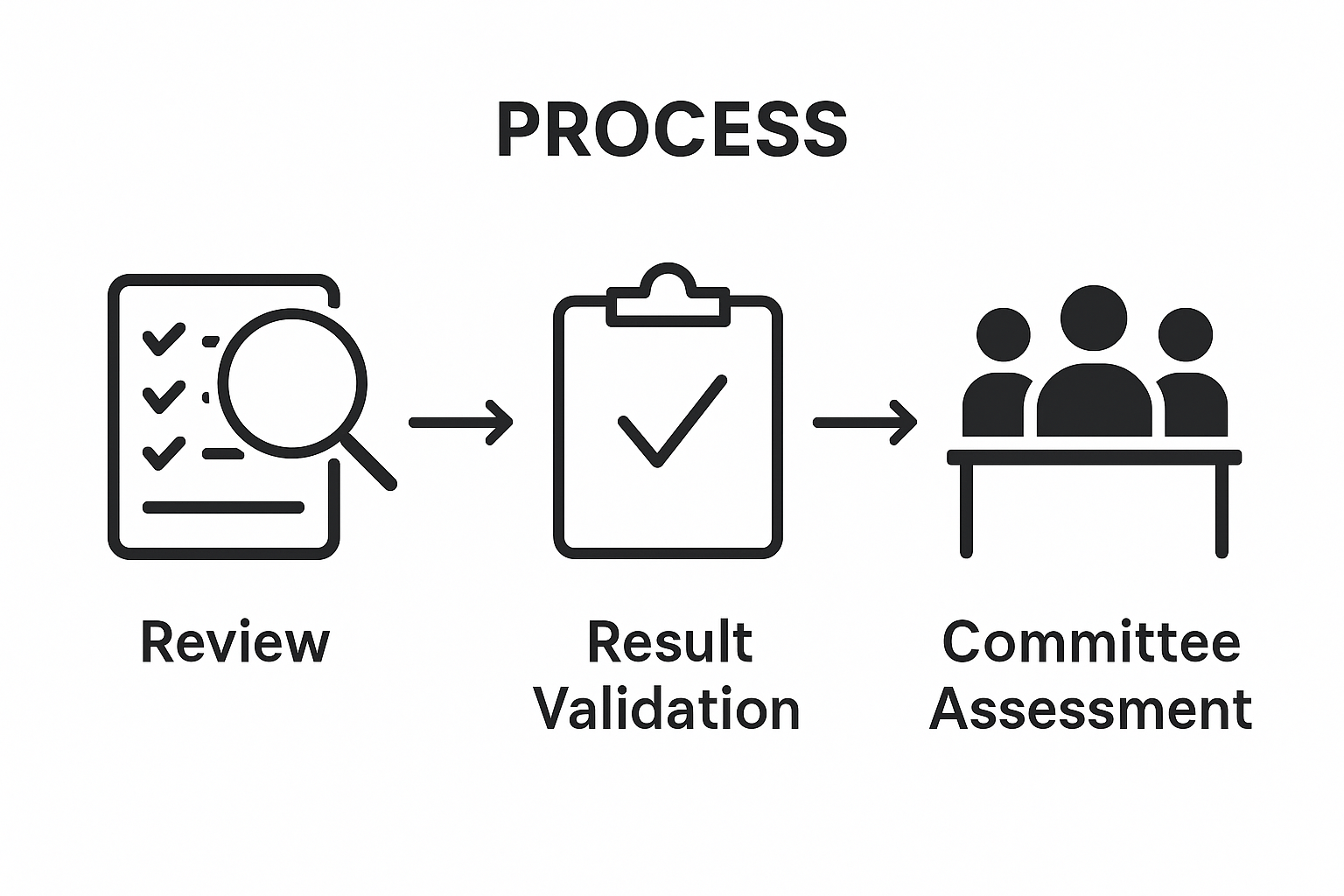
Systematic result verification requires a comprehensive review process that goes beyond simple data checking. Implement a multilayered validation approach that includes cross referencing results, conducting statistical analysis, and comparing outcomes against established benchmarks. Regular protocol updates are essential to maintaining the highest standards of diagnostic accuracy, allowing your organization to adapt to emerging medical research and technological advancements.
Pro tip: Create a dedicated review committee responsible for quarterly protocol assessments. This team should include senior technicians, medical professionals, and quality assurance specialists who can provide diverse perspectives on potential improvements. Your final step will involve comprehensive reporting and strategic knowledge sharing across your healthcare organization.
Strengthen Your Healthcare Testing Protocols with Expert Support
Navigating the complex steps of healthcare facility testing protocols from assessment to verification can feel overwhelming. From customizing workflows and rigorous staff training to ensuring precise diagnostic execution and ongoing quality control, every stage demands accuracy and reliability. If your facility aims to meet and exceed regulatory standards while enhancing patient safety and diagnostic confidence, you need a partner who understands these challenges in depth.
At Centra Diagnostics, we specialize in delivering advanced diagnostic solutions tailored to healthcare facilities like yours. With our molecular testing, toxicology, blood work, and COVID-19 testing services, backed by cutting-edge technology and expert client management, we help you execute testing protocols with precision and speed. Take the critical step today to improve your healthcare decision-making by partnering with a lab committed to innovation and reliability. Visit Centra Diagnostics to learn how our comprehensive testing services can support your facility’s protocol implementation and quality control needs. Act now to enhance your diagnostic workflows and ensure compliance with confidence.
Frequently Asked Questions
What are the essential steps for assessing my healthcare facility’s testing protocols?
Assessing your healthcare facility’s testing protocols begins with a comprehensive review of regulatory requirements and current operational capabilities. Conduct a facility audit, evaluate equipment, and staff resources to identify gaps in your testing workflows.
How do I create customized testing protocols for my healthcare facility?
To create customized testing protocols, draft detailed workflows that outline each step of your testing process. Ensure your documentation covers scenarios such as equipment calibration, sample handling, and result verification to maintain consistency and quality in diagnostics.
What kind of staff training is necessary for implementing testing protocols?
Staff training should be a multilayered experience that combines theoretical knowledge with hands-on practice. Develop training modules that include practical demonstrations and interactive scenarios, ensuring that team members can apply what they have learned effectively in real-world situations.
How can I ensure the quality of diagnostic testing in my facility?
To ensure quality in diagnostic testing, implement robust quality control measures, including verification checkpoints throughout your workflow. Regularly monitor performance and create an error tracking system to identify and learn from deviations in protocols.
Why is result verification important in healthcare testing protocols?
Result verification is vital as it transforms raw data into actionable medical insights, ensuring the accuracy and reliability of your testing procedures. Establish a multilayered validation process that cross-references results and benchmarks to maintain compliance and enhance patient safety.
When should I update my testing protocols for compliance?
You should update your testing protocols whenever there are changes in regulatory requirements, new technologies, or advances in medical research. Schedule regular reviews at least quarterly to keep your protocols aligned with current standards and best practices.