Managing diagnostic testing protocols in Los Angeles means juggling clinical pressures and operational requirements to deliver safe, timely care. Many healthcare administrators encounter confusion about clinical pathology and face common myths that can hinder efficient lab partnerships. Understanding how clinical pathologists actively interact with patients and advise medical teams helps you dispel outdated misconceptions. By exploring the full scope of clinical pathology practice, you gain knowledge that strengthens collaboration with your diagnostic laboratory and guides better decisions for improving both patient outcomes and workflow reliability.
Table of Contents
- Clinical Pathology Defined and Common Myths
- Main Types of Clinical Pathology Tests
- How Laboratory Diagnostics Support Patient Care
- Compliance, Licensing, and Quality Standards
- Cost Implications and Operational Challenges
- Patient Safety and Reducing Errors
Key Takeaways
| Point | Details |
|---|---|
| Clinical Pathology Overview | Clinical pathology diagnoses diseases through laboratory analysis of bodily fluids and tissues, impacting patient treatment profoundly. |
| Myths About Pathologists | Pathologists engage directly in patient care beyond tissue analysis, influencing treatment decisions through real-time consultations. |
| Importance of Regulatory Compliance | Adherence to regulations like CLIA and CAP accreditation is essential for maintaining diagnostic quality and patient safety. |
| Laboratory Cost Challenges | Declining reimbursement rates and rising operational costs put financial pressure on laboratories, necessitating careful evaluation of diagnostic partnerships. |
Clinical Pathology Defined and Common Myths
Clinical pathology is a medical specialty that diagnoses diseases by analyzing bodily fluids and tissues in a laboratory setting. Rather than focusing solely on tissue examination under a microscope, clinical pathologists work with blood samples, urine, cerebrospinal fluid, and other bodily extracts to identify infections, metabolic disorders, blood abnormalities, and countless other conditions. They use specialized techniques including chemistry analysis, microbiology cultures, hematology assessments, molecular testing, and immunological methods to deliver the diagnostic data that drives patient treatment decisions. This work happens behind the scenes in hospital labs and diagnostic facilities across Los Angeles, yet the impact on patient outcomes is immediate and direct.
Here’s where misconceptions often cloud the picture. Many people assume pathologists work exclusively in isolation, reviewing tissue samples for cancer without any direct patient interaction. This is simply not accurate. Pathologists actively participate in patient care by engaging in procedures like apheresis (blood component separation), infectious disease consultations, bone marrow biopsies, and real-time laboratory result interpretation. They educate medical teams about test findings, recommend additional diagnostic approaches, and provide immediate feedback that shapes treatment plans. In urgent care scenarios, a pathologist’s interpretation of blood work or microbiology results can mean the difference between starting appropriate antibiotics within hours versus days. Another persistent myth suggests that clinical pathology only concerns itself with cancer diagnosis. In reality, oncology represents just one application. Clinical pathologists diagnose infections, evaluate organ function, assess clotting disorders, identify genetic conditions, monitor medication levels in patient blood, and screen for countless metabolic imbalances that would otherwise go undetected.
For healthcare administrators in Los Angeles managing diagnostic testing protocols, understanding what clinical pathology actually encompasses matters for operational planning. You need qualified clinical pathologists who hold medical licenses and have completed appropriate medical residency training overseeing your lab operations. They don’t simply run machines and report numbers. They interpret complex data patterns, catch critical abnormalities that automated systems might miss, consult with ordering physicians on test selection, and ensure quality control throughout the entire testing process. When you partner with a diagnostic facility that employs board-certified pathologists with real expertise in molecular testing, toxicology, blood work analysis, and infectious disease diagnosis, you gain access to that clinical judgment. That expertise translates directly into faster turnaround times, more accurate results, and better patient outcomes. The pathologists at your diagnostic laboratory become an extension of your clinical team, not a separate department buried in the basement.
Pro tip: When evaluating diagnostic partners for your healthcare facility, specifically ask about the pathologist’s qualifications, clinical experience, and availability for consultation with your ordering physicians. Direct pathologist access to answer questions about abnormal results or test interpretation will significantly improve your medical staff’s confidence in the lab results and their ability to make informed clinical decisions.
Main Types of Clinical Pathology Tests
Clinical pathology encompasses a wide range of laboratory tests that form the backbone of modern diagnosis and patient monitoring. The testing categories that dominate clinical practice globally include chemistry, hematology, microbiology, blood banking, coagulation studies, immunology, and serology. Each category addresses specific diagnostic questions and provides distinct clinical information. For healthcare administrators in Los Angeles overseeing diagnostic operations, understanding this breakdown helps you allocate resources effectively, set realistic turnaround time expectations, and communicate accurately with your medical staff about laboratory capabilities. These tests collectively represent the highest testing volumes and generate significant revenue across hospital systems worldwide, but more importantly, they directly impact how quickly physicians can diagnose and treat patients.
Chemistry and hematology tests lead the volume charts across most diagnostic facilities. Chemistry panels measure metabolic function by analyzing electrolytes, kidney function markers, liver enzymes, glucose levels, and protein concentrations in blood serum. A basic metabolic panel answers critical questions: Is the patient’s kidney function adequate? Are electrolytes balanced? Is glucose control problematic? Hematology tests focus on blood cell composition and function. Complete blood counts remain among the most frequently ordered tests, providing counts of red cells, white cells, and platelets while also examining cell morphology and identifying potential infections or blood disorders. Coagulation studies measure how well blood clots, essential for preoperative screening and monitoring anticoagulation therapy. These foundational tests answer yes-or-no questions quickly and cost-effectively, making them the workhorses of any clinical laboratory.

Microbiology and blood banking represent specialized yet absolutely critical testing domains. Microbiology laboratories culture specimens from blood, urine, sputum, cerebrospinal fluid, and wound sites to identify bacterial, fungal, or viral infections. The culture process takes time but provides pathogen identification and antibiotic sensitivity results that guide targeted treatment rather than broad-spectrum guessing. Blood bank services handle transfusion compatibility testing, blood typing, and antigen screening to ensure safe transfusions for surgical and trauma patients. Immunology and serology tests detect antibodies and antigens related to infectious diseases, autoimmune conditions, and immune function. These include tests for HIV, hepatitis, COVID-19 antibodies, rheumatoid factor, and thyroid antibodies. The complexity here demands expertise. A negative result doesn’t always mean negative, and a positive result requires clinical correlation. This is where pathologist knowledge directly influences patient care decisions.
Molecular testing has emerged as an increasingly important category, particularly for identifying specific pathogens, detecting genetic mutations, and monitoring viral loads. Clinical pathology laboratories perform comprehensive testing including molecular analysis to support diagnosis, treatment monitoring, and disease prevention. In Los Angeles healthcare facilities managing complex patient populations, molecular testing capabilities can mean the difference between identifying a resistant infection quickly or spending weeks on ineffective therapy. The investment in molecular equipment and trained personnel pays dividends through improved patient outcomes and faster diagnostic resolution.
The tests your facility orders should align with your patient population’s needs and your facility’s capacity. A trauma center needs different testing priorities than a primary care clinic. An urgent care facility emphasizes rapid turnaround on core tests while a research hospital may pursue specialized molecular testing. Your partnership with a diagnostic laboratory should reflect this reality. Look for a facility that excels at your highest-volume test categories while maintaining capability across all major pathology disciplines.
Here’s how the main categories of clinical pathology tests differ in their clinical focus and business impact:
| Test Category | Primary Clinical Focus | Typical Turnaround Time | Operational Considerations |
|---|---|---|---|
| Chemistry | Metabolic, organ function | 1-4 hours | High test volume, automation |
| Hematology | Blood disorders, cell counts | 1-2 hours | Essential for acute patients |
| Microbiology | Infection identification | 24-72 hours | Labor-intensive, specialized |
| Blood Banking | Transfusion compatibility | 1-12 hours | Critical for trauma, surgery |
| Immunology/Serology | Immune and autoimmune status | 4-48 hours | Requires expert interpretation |
| Molecular Testing | Genetic and pathogen detection | 2-48 hours | High cost, advanced tech |
Pro tip: Establish a baseline understanding of your facility’s top 20 ordered tests and their average turnaround times. This data helps you identify bottlenecks, prioritize test requests during peak periods, and communicate realistic expectations to your medical staff about when results will be available for clinical decision-making.
How Laboratory Diagnostics Support Patient Care
Laboratory diagnostics form the foundation of modern clinical medicine. When a patient walks into a physician’s office with chest pain, the doctor orders blood tests. When a child develops a fever, cultures identify the causative organism. When a cancer patient completes chemotherapy, lab work confirms treatment response. These scenarios repeat millions of times across Los Angeles healthcare facilities every year, and in each case, laboratory results drive the clinical decision-making that determines patient outcomes. The reality is stark: laboratory medicine influences virtually every clinical decision in healthcare, from routine cholesterol screening to advanced genomic testing that identifies specific cancer mutations. Without accurate, timely laboratory data, physicians operate with incomplete information, leading to delayed diagnoses, inappropriate treatments, and preventable complications.
The scope of laboratory impact extends far beyond individual test results. Clinical laboratories support three fundamental aspects of patient care. First, they enable diagnosis by identifying the presence of disease through positive findings—a positive blood culture that confirms bacteremia, an elevated troponin that indicates myocardial infarction, or a positive pregnancy test that confirms pregnancy. Second, they guide treatment decisions by providing information that helps physicians select the most appropriate therapy. A patient with elevated kidney function markers requires different medication dosing than someone with normal renal clearance. A patient with a specific antibiotic resistant organism needs targeted therapy rather than broad-spectrum coverage. Third, laboratories support monitoring by tracking how patients respond to treatment over time. A diabetic patient’s hemoglobin A1C measured every three months shows whether glucose control is improving. A patient on anticoagulation therapy has INR values checked regularly to ensure the blood thinning effect stays in therapeutic range. These three roles—diagnosis, treatment guidance, and monitoring—are inseparable from clinical practice. Healthcare administrators managing patient care pathways must recognize that laboratories transition from transactional test providers to proactive partners supporting value-based healthcare, generating actionable data that improve outcomes and optimize costs simultaneously.
The numerical reality underscores laboratory medicine’s centrality to healthcare. Approximately 70 percent of medical decisions rely on laboratory data. Billions of laboratory tests are performed annually across United States healthcare systems alone. Each test represents a clinical question that a physician posed, and the answer shapes what happens next. In Los Angeles, where healthcare administrators manage diverse patient populations across multiple care settings, understanding this dependency helps contextualize laboratory operations. A one-hour delay in blood culture results for a septic patient translates directly to delayed antibiotic therapy. A 24-hour turnaround on chemistry panels instead of four hours means physicians cannot rapidly adjust medications. A test result that arrives with errors forces physicians to repeat testing, wasting time and resources while patients wait. These operational realities illustrate why partnership with a diagnostic facility that prioritizes accuracy, speed, and clinical expertise matters profoundly. When your laboratory partner understands clinical context and provides real-time consultation on abnormal results, your medical staff gains confidence in the data they are using to make life-altering decisions about patients.
The evolution toward personalized medicine amplifies laboratory diagnostics’ importance. Rather than treating all heart disease patients identically, genomic testing now identifies specific cardiac risk variants. Rather than using one-size-fits-all cancer chemotherapy, tumor molecular testing guides drug selection. Rather than guessing which antibiotic will work, susceptibility testing confirms effectiveness. This precision requires more sophisticated laboratory testing, greater accuracy, and faster turnaround times than ever before. Healthcare facilities in Los Angeles that invest in advanced diagnostic partnerships position themselves to deliver this level of individualized care. Your patients benefit. Your physicians practice with better information. Your outcomes improve.
Pro tip: Conduct a quarterly review of your facility’s critical test turnaround times and error rates. Compare these metrics against your diagnostic partner’s performance standards and discuss any gaps with laboratory leadership to identify specific improvements that would directly enhance your clinical workflow.
Compliance, Licensing, and Quality Standards
Clinical pathology laboratories operate within a tightly regulated ecosystem. The regulatory framework isn’t optional background noise—it directly impacts your diagnostic partner’s ability to deliver reliable results and protect your patients. Multiple federal agencies oversee laboratory operations through distinct but overlapping regulatory domains. The Clinical Laboratory Improvement Amendments (CLIA) establish baseline quality and personnel standards for all laboratory testing. HIPAA protects patient privacy and information security. OSHA mandates occupational safety and hazardous material handling. These aren’t bureaucratic checkboxes. They exist because laboratory errors harm patients, privacy breaches betray trust, and unsafe conditions injure staff. When you partner with a laboratory, verifying compliance with these regulatory frameworks isn’t a nice-to-have—it’s fundamental due diligence.
CLIA certification represents the baseline requirement for any facility performing laboratory testing. Under CLIA, laboratories must maintain appropriate personnel qualifications, implement quality control procedures, participate in proficiency testing, and meet specific performance standards for each test type. The complexity increases significantly based on test complexity. High-complexity testing requires different personnel certifications and quality standards than moderate or waived testing. Clinical pathology laboratories must navigate complex regulatory frameworks including CLIA, HIPAA, OSHA, and voluntary accreditation programs, with failure to comply resulting in penalties, accreditation loss, and patient safety risks. Beyond CLIA, the FDA oversees laboratory-developed tests (LDTs), particularly molecular and genetic tests. HIPAA requirements extend beyond privacy to include security safeguards for electronic health information. OSHA standards cover bloodborne pathogen exposure, chemical safety, and hazardous waste disposal. Healthcare administrators need to understand that their diagnostic partner operates under continuous scrutiny from multiple regulatory agencies. CMS conducts routine CLIA inspections. The Office for Civil Rights investigates HIPAA violations. OSHA performs workplace safety inspections. Non-compliance doesn’t result in warnings—it results in fines, operational restrictions, or closure.
Voluntary accreditation through programs like the College of American Pathologists (CAP) represents the gold standard beyond minimum CLIA requirements. CAP Laboratory Accreditation helps laboratories maintain compliance with CLIA, FDA, and OSHA standards through rigorous peer inspections and annual checklist updates ensuring quality, accuracy, safety, and professional development. CAP-accredited laboratories undergo comprehensive inspections by fellow pathologists who understand the clinical context and technical requirements. These inspections identify not just compliance gaps but also opportunities for operational improvement. CAP recognition is accepted by CMS and other regulatory agencies as evidence of laboratory quality and competence. For healthcare administrators in Los Angeles evaluating diagnostic partners, CAP accreditation signals commitment to excellence beyond minimum legal requirements. A laboratory pursuing CAP accreditation invests in systems, training, and quality improvement that ultimately protects your patients and your institution.
Quality assurance mechanisms protect against individual test errors while maintaining overall laboratory reliability. Every laboratory implements quality control procedures—running known positive and negative samples alongside patient samples to verify analyzer accuracy. Proficiency testing requires laboratories to analyze samples of unknown composition and submit results to external agencies for comparison with peer laboratories and established reference values. Any significant discrepancies trigger corrective action. Documentation of these quality measures becomes critical during regulatory inspections. Laboratories maintain detailed records of quality control results, corrective actions, personnel training, and proficiency testing. Your diagnostic partner should be transparent about these quality metrics and willing to discuss them with your medical staff. If a laboratory becomes evasive about quality documentation or proficiency testing results, that’s a red flag. The regulatory and quality framework exists specifically to catch problems early before they reach patients. When your laboratory partner embraces this framework enthusiastically rather than begrudgingly, you gain confidence that patient safety genuinely matters.
Pro tip: Request your diagnostic laboratory partner provide annual documentation of their CLIA certification status, CAP accreditation certificate, and recent proficiency testing results. Include these verification steps in your contract renewal processes and make it clear that regulatory compliance is non-negotiable for your partnership to continue.
The table below summarizes key quality and compliance requirements and their effects on laboratory operations:
| Regulatory Standard | Main Purpose | Operational Challenge | Impact on Patient Safety |
|---|---|---|---|
| CLIA | Assure test quality | Staff credentialing | Reduces erroneous results |
| HIPAA | Protect patient data | IT system upgrades | Prevents data breaches |
| OSHA | Workplace safety | Training and equipment | Lowers laboratory injury risk |
| CAP Accreditation | Exceed minimums | Annual peer inspections | Encourages continuous improvement |
Cost Implications and Operational Challenges
Clinical pathology laboratories operate in a financial squeeze that most healthcare administrators understand all too well. The business model sounds straightforward: run tests, bill insurance companies and patients, collect payment. The reality is far more complicated. Test reimbursement rates from Medicare, Medicaid, and commercial insurers have declined steadily over the past decade while operational costs have risen sharply. A laboratory that generated profit margins in the double digits fifteen years ago now operates with razor-thin margins or outright losses on certain test categories. Staffing represents the largest cost driver, consuming 40 to 60 percent of laboratory operating budgets depending on test mix and automation levels. Highly trained clinical laboratory scientists, medical technologists, and pathologists command competitive salaries, and shortages in these professions continue to intensify competition for qualified personnel. Capital equipment requires substantial upfront investment. A single high-end analyzer can cost $500,000 to $1 million. Reagents, controls, and consumables represent ongoing operational expenses that scale with test volume. Compliance and regulatory costs never disappear. Quality assurance programs, proficiency testing, personnel training, and accreditation fees accumulate.
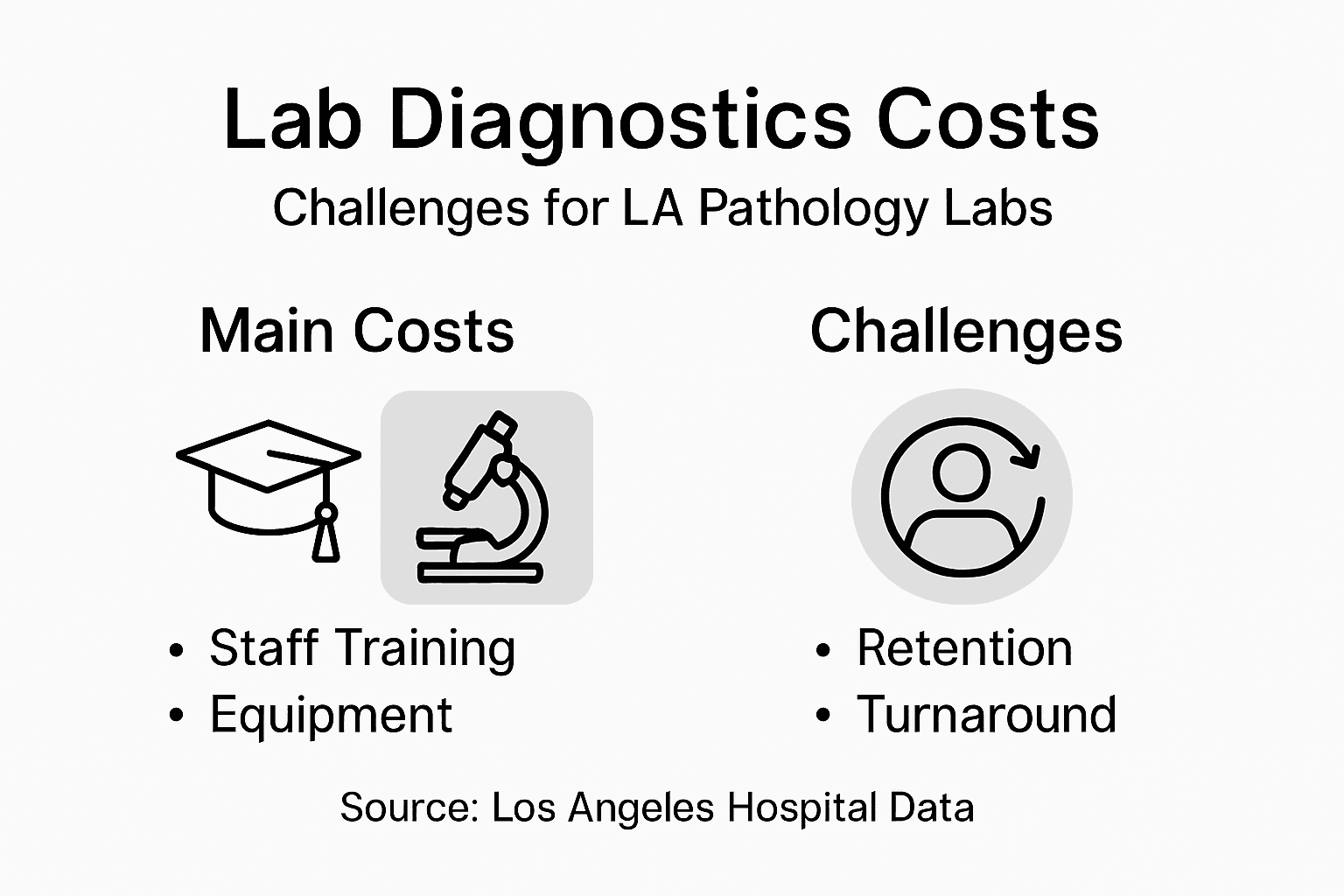
The staffing crisis in clinical pathology creates cascading operational challenges across Los Angeles healthcare facilities. U.S. medical laboratories face staffing shortages and cost constraints alongside pressure to advance digital transformation while managing fragmented data systems. Attracting skilled laboratory personnel has become genuinely difficult. Newly graduated medical technologists have options. They can work in hospital laboratories, reference laboratories, physician offices, blood banks, or diagnostic companies. They can move to other healthcare careers with comparable pay and better work-life balance. Retaining experienced technologists requires competitive compensation, reasonable schedules, and professional development opportunities. When a laboratory loses experienced staff to retirement or relocation, replacing that expertise takes months. During that gap, remaining staff work longer hours, quality suffers, and turnaround times extend. This creates a vicious cycle: poor operational performance drives physician dissatisfaction, which threatens contracts, which limits resources for competitive compensation. Breaking this cycle requires strategic investment in workforce stability, yet laboratories struggle to justify that investment when payers reduce reimbursement.
Technological advancement creates simultaneous cost pressures and opportunities. Electronic laboratory information systems (LIS) now integrate with electronic health records, enabling automated result reporting and real-time clinical alerts. Molecular testing capabilities have expanded dramatically, offering diagnostic precision impossible a decade ago. But implementing these systems requires capital investment, specialized training, and ongoing IT support. Clinical laboratories face cost control and reimbursement challenges driven by regulatory compliance and technological advancement requiring continuous capital investment while managing declining fee schedules and payer pressure. Many laboratories operate with fragmented systems that don’t communicate seamlessly. A blood bank system doesn’t talk to the chemistry analyzer. The microbiology system operates independently. Results must be manually transcribed between systems, creating inefficiency and error risk. Upgrading these systems to communicate seamlessly costs hundreds of thousands of dollars, but the operational gains in speed and accuracy eventually justify the investment. Healthcare administrators must understand that their diagnostic partners face genuine financial pressure. A laboratory that cannot invest in quality systems and personnel cannot deliver the service levels that modern clinical care requires.
For healthcare facilities in Los Angeles, understanding these cost realities helps frame partnership decisions more strategically. Demanding extremely low test prices creates direct pressure on laboratory quality and staffing. A reference laboratory that underbids significantly probably operates with compromised quality assurance or skeleton staffing. Conversely, partnering with a facility that maintains fair pricing, invests in quality systems, and prioritizes rapid turnaround ultimately costs less when you factor in the expense of repeated testing, delayed diagnoses, and medical errors caused by poor laboratory performance. The operational reality is that high-quality diagnostics require adequate funding. Your diagnostic partner must generate sufficient revenue to retain skilled staff, maintain quality systems, invest in technology, and achieve compliance. When you evaluate diagnostic partnerships, consider not just the price per test but the overall value proposition. Can they deliver accurate results quickly? Do they invest in quality and staff retention? Are they positioned to adopt new technologies? These factors determine whether your partnership supports or undermines your clinical operations.
Pro tip: When negotiating contracts with diagnostic laboratories, ask about their staffing retention rates, equipment maintenance schedules, and investment in quality improvement over the past three years. These metrics reveal whether a laboratory is sustainable long-term or cutting corners to maintain low prices, which will eventually impact your service quality and operational reliability.
Patient Safety and Reducing Errors
Laboratory errors don’t abstract away into statistics. They translate directly into patient harm. A mislabeled specimen means a patient receives treatment for a disease they don’t have while their actual condition goes undiagnosed. A lost pathology specimen means a cancer patient waits weeks for diagnosis while disease progresses. A misidentified organism in a blood culture means ineffective antibiotics delay appropriate therapy for sepsis. These aren’t hypothetical scenarios. They occur regularly across healthcare systems, and the consequences ripple through patients’ lives. Clinical pathology laboratories exist in an environment where precision matters absolutely. A single error can alter the entire trajectory of a patient’s medical care. This reality drives the implementation of rigorous error reduction systems in well-managed laboratories.
Specimen handling represents one of the highest-risk areas in clinical pathology because errors at this stage cascade through the entire testing process. A specimen that arrives unlabeled, mislabeled, or damaged cannot be reliably tested. Systematic review of pathology specimen errors highlights lost, mislabeled, and mishandled specimens affecting patient safety, with interventions including education, training, and error reporting systems achieving significant reductions in such errors. Think about the specimen journey: a patient has blood drawn in a clinic or hospital. The phlebotomist labels the tube with patient identifier, date, and time. The specimen travels through pneumatic tubes or regular transport. Laboratory personnel receive it, verify the label matches the test request, prepare the specimen, run it through analyzers, and report results. At any step, errors can occur. The tube label is illegible. The patient identifier doesn’t match the request form. The specimen sits at room temperature too long and degrades. The analyzer malfunctions and produces erroneous results. Modern laboratories combat these risks through multiple safeguards: barcode systems that verify specimen identity electronically, electronic test ordering that prevents mismatches between patient and request, specimen receipt inspection protocols that catch damaged samples before testing begins, and real-time quality monitoring that detects analyzer problems instantly.
Diagnostic interpretation errors represent a separate but equally critical error category. Pathologists review laboratory results and tissue samples, making judgments that determine diagnosis and guide treatment. A pathologist reviewing a biopsy of an ambiguous lesion must decide whether it represents cancer or benign disease. A pathologist interpreting a complex immunology result must determine whether the patient truly has an autoimmune condition or whether the result represents a false positive. These interpretive challenges demand expertise, but expertise alone isn’t sufficient. Evidence-based guidelines help reduce interpretive diagnostic errors through secondary case reviews and timely quality assurance processes that detect errors and improve diagnostic accuracy. Leading pathology practices implement structured review processes. A second pathologist independently reviews suspicious or complex cases. Cases are reviewed against established criteria. Unusual patterns trigger consultation with subspecialist pathologists. These secondary reviews catch errors before results reach physicians and patients. The process takes time and resources, but the alternative—allowing diagnostic errors to reach patients—is far more costly in human terms.
Healthcare administrators evaluating diagnostic partners should specifically inquire about error reduction systems. Does the laboratory track specimen handling errors? Do they measure them? Do they report them? Are there corrective action plans when errors occur? Does the laboratory implement proficiency testing that reveals interpretive accuracy? Do pathologists participate in case review and quality assurance programs? Does the laboratory maintain error trending data? A laboratory that cannot or will not discuss error metrics is a red flag. Error reduction requires genuine commitment from leadership, investment in systems and staff training, and transparent acknowledgment when problems occur. Laboratories that blame errors on individual incompetence while avoiding systemic improvements typically have recurrent problems. Conversely, laboratories that implement systematic error detection and correction processes see measurable improvements over time. Your facility’s partnership with a diagnostic laboratory should include explicit discussion of error reduction commitments. How will they identify errors? How will they communicate errors to your facility? What corrective actions will they implement? These conversations matter because they directly impact patient safety in your facility.
Pro tip: Ask your diagnostic laboratory partner to provide their error rate data for the past two years, including specimen handling errors, reporting errors, and corrective actions taken. Request documentation of their case review process for complex diagnostic cases and verify that secondary review procedures are actually being performed, not just listed in manuals.
Elevate Your Clinical Pathology Diagnostics with Centra Diagnostics
Healthcare administrators and medical professionals in Los Angeles face significant challenges ensuring rapid turnaround, accurate test results, and expert interpretation essential for patient care. The complexities of molecular testing, quality assurance, and regulatory compliance demand a trusted partner who comprehends the critical role laboratory diagnostics play in diagnosis, treatment guidance, and monitoring. Centra Diagnostics addresses these pain points with cutting-edge technology, first-in-class turnaround times, and board-certified expertise in molecular testing, toxicology, blood work, and COVID-19 testing.
With Centra Diagnostics you gain:
- Reliable and precise results that improve clinical decision-making
- Direct consultation access to pathologists enhancing result interpretation
- Compliance with stringent regulatory standards ensuring patient safety

Discover how partnering with Centra Diagnostics can transform your laboratory operations and elevate patient outcomes today. Visit Centra Diagnostics to learn more about our advanced diagnostic services and client-focused solutions. Take the next step in improving your facility’s diagnostic capabilities and secure faster, more accurate pathology testing now.
Frequently Asked Questions
What is clinical pathology?
Clinical pathology is a medical specialty focused on diagnosing diseases by analyzing bodily fluids and tissues in a laboratory setting, rather than only examining tissue under a microscope. It encompasses various testing methods including chemistry, microbiology, and immunology to provide essential diagnostic information.
How do clinical pathologists contribute to patient care?
Clinical pathologists play an integral role in patient care by interpreting laboratory results, engaging in procedures such as blood component separation, and providing real-time consultation to physicians about test findings that influence treatment decisions.
What types of tests are included in clinical pathology?
Clinical pathology includes a range of laboratory tests such as chemistry panels, hematology assessments, microbiology cultures, blood banking, immunology tests, and molecular testing, all aimed at diagnosing and monitoring various health conditions.
Why is laboratory diagnostics crucial in healthcare?
Laboratory diagnostics are essential in healthcare as they inform clinical decision-making. Accurate and timely lab results influence diagnoses, guide treatment options, and monitor patient progress, ultimately impacting patient outcomes.