Feeling run down or noticing unexpected changes in your energy, mood, or weight can leave you searching for answers that go beyond surface explanations. For many health-conscious people in Los Angeles, a precise hormone blood test offers real insight by measuring the chemical messengers that control everything from sleep to metabolism. This guide helps you understand the value of quantifying hormone levels, clarifies why timing and lab methods matter, and highlights how real numbers drive smarter decisions about your health.
Table of Contents
- Defining Hormone Blood Tests And Their Purpose
- Types Of Hormones Tested In Blood Panels
- How Hormone Blood Testing Works
- When Providers Recommend Hormone Level Testing
- Interpreting Your Hormone Test Results
- Risks, Costs, And Common Mistakes To Avoid
Key Takeaways
| Point | Details |
|---|---|
| Hormone Tests Diagnose Health Issues | Hormone blood tests are essential for diagnosing imbalances, guiding treatment decisions, and monitoring existing conditions. Understanding specific symptoms helps determine if testing is necessary. |
| Timing Matters for Accurate Results | Hormone levels fluctuate throughout the day and month, making it crucial to follow a doctor’s instructions for testing times, especially for cortisol, FSH, and LH. |
| Interpreting Results Requires Context | Test results should be understood in relation to individual symptoms and health history, as reference ranges can vary widely among individuals and labs. |
| Proactive Health Management | Regular hormone testing can help detect underlying health concerns early, especially in aging populations or those with hormonal-related symptoms, allowing for timely interventions. |
Defining Hormone Blood Tests and Their Purpose
Hormone blood tests measure chemical messengers in your body that regulate everything from energy levels and mood to sleep patterns and reproductive health. These tests don’t just show whether hormones are present or not. They quantify exactly how much of each hormone circulates through your bloodstream at a specific moment in time. Think of it like checking your car’s fuel gauge rather than simply knowing you have a tank. The number matters because the difference between 50 nanograms per milliliter and 150 nanograms per milliliter can explain why you feel exhausted at 3 PM or why your sleep remains disrupted despite eight hours in bed.
Your body produces hormones from multiple glands and organs, including your pituitary gland, thyroid, adrenal glands, pancreas, and reproductive organs. Each hormone has a specific job. Cortisol manages stress response. Insulin controls blood sugar. Testosterone and estrogen influence sexual function, bone density, and mood stability. When these systems work correctly, you maintain consistent energy, stable mood, regular sleep cycles, and healthy metabolism. When something goes wrong, the consequences ripple across multiple systems at once. A patient in Los Angeles might notice weight gain they cannot explain through diet or exercise, not realizing their thyroid produces insufficient hormone. Another might experience persistent anxiety, attributing it to work stress, when actually their cortisol rhythm has gone completely off schedule.
The primary purpose of hormone blood tests is diagnosis and monitoring. Your doctor orders these tests when symptoms suggest hormonal imbalance or dysfunction. Common reasons include irregular menstrual cycles, unexplained fatigue, sudden weight changes, mood disorders, sexual dysfunction, or fertility problems. The tests also monitor existing conditions. If you already take thyroid medication or hormone replacement therapy, regular blood tests confirm your current dose is working correctly or needs adjustment. Some tests measure hormone levels at specific times of day because hormones fluctuate on daily schedules. Cortisol peaks in the morning and drops by evening. FSH and LH fluctuate throughout the menstrual cycle. Testosterone varies seasonally. Understanding when and why to test matters as much as understanding what the numbers mean.
Hormone blood tests serve four specific functions. First, they identify deficiencies when glands produce too little hormone. Second, they detect excess production when glands become overactive. Third, they reveal timing problems where hormones follow abnormal daily patterns. Fourth, they guide treatment decisions by establishing baseline measurements against which future tests can be compared. For someone living in Los Angeles managing their health proactively, these tests provide concrete data for conversations with healthcare providers. Rather than saying “I feel tired,” you can say “My TSH is 8.2 when normal is 0.4 to 4.0.” That specificity changes everything about treatment planning.
Pro tip: Request your test results in writing and keep copies in a personal health file, noting the date and time of testing, as this helps you and your doctor track trends across months or years rather than interpreting single snapshots.
Types of Hormones Tested in Blood Panels
Blood panels test dozens of different hormones, but your doctor won’t order all of them at once. Instead, they select specific hormones based on your symptoms, medical history, and what they suspect might be causing your health concerns. The most commonly tested hormones fall into several major categories: thyroid hormones, sex hormones, adrenal hormones, and metabolic hormones. Understanding what each category does helps you recognize why your doctor ordered particular tests and what the results actually mean for your health. In Los Angeles, where health-conscious patients often manage multiple health concerns simultaneously, knowing which hormones affect which systems helps you ask smarter questions during your appointments.
Thyroid hormones dominate routine blood work because thyroid dysfunction affects nearly every system in your body. The main tests measure TSH (thyroid stimulating hormone), T4, and T3. TSH originates from your pituitary gland and signals your thyroid to produce hormones. When your thyroid produces too little hormone, TSH climbs as your body desperately tries to stimulate more production. When your thyroid produces too much, TSH drops because your body doesn’t need additional stimulation. T4 and T3 are the actual hormones your thyroid manufactures. T4 represents the storage form while T3 represents the active form that cells use. Some labs also test reverse T3, which increases during stress and can interfere with normal metabolism even when T4 and T3 look normal.

Sex hormones include testosterone, estrogen, progesterone, and related compounds. These hormones do far more than control sexual function. They influence bone density, cardiovascular health, mood regulation, metabolism, and immune function. Women typically get tested for estrogen, progesterone, and testosterone, especially when experiencing irregular periods, fertility challenges, or menopausal symptoms. Men get testosterone testing when experiencing low energy, decreased libido, or mood changes. LH (luteinizing hormone) and FSH (follicle stimulating hormone) regulate sex hormone production from the reproductive organs, so doctors often measure these alongside actual sex hormones to understand whether the problem originates in the reproductive organs themselves or in the pituitary gland controlling them. Adrenal hormones include cortisol, DHEA, and aldosterone. Cortisol manages stress response and controls your daily energy rhythm, which is why testing often happens at specific times of day. A morning cortisol level should be higher than evening cortisol. When this pattern inverts or flattens out, it signals burnout or chronic stress that needs addressing.
Metabolic hormones center on insulin and glucose control. Insulin resistance affects millions of Americans and remains largely undetected until serious problems develop. Fasting insulin levels reveal how hard your pancreas works to maintain normal blood sugar. High fasting insulin suggests your cells aren’t responding normally to insulin signals. Some doctors also test C-peptide, which correlates with insulin production, or use the HOMA-IR calculation, a mathematical assessment of insulin resistance, to evaluate metabolic function more completely. Prolactin gets tested when investigating fertility problems or unexplained breast discharge. Progesterone measured after ovulation confirms whether ovulation actually occurred. Growth hormone testing typically requires special collection protocols because this hormone pulses irregularly throughout the day rather than staying constant.
Your blood panel might also include testing for less common hormones depending on your specific situation. Parathyroid hormone (PTH) regulates calcium levels and bone health. Testosterone and its variants get measured differently in men versus women since normal ranges vary dramatically. Some patients need testing for thyroid antibodies like TPO or thyroglobulin antibodies when autoimmune thyroid disease is suspected. Pregnenolone and DHEA-S provide insight into adrenal function and aging. The specific combination your doctor orders creates a personalized snapshot of your hormonal health rather than a generic overview everyone receives.
Here’s a quick overview of common hormone categories and their main clinical roles:
| Hormone Category | Key Examples | Primary Function | Likely Test Reasons |
|---|---|---|---|
| Thyroid Hormones | TSH, T4, T3 | Regulate metabolism, energy | Fatigue, weight changes |
| Sex Hormones | Estrogen, Testosterone, Progesterone | Sexual function, mood, bone health | Irregular cycles, libido, fertility |
| Adrenal Hormones | Cortisol, DHEA | Stress response, energy rhythm | Morning fatigue, chronic stress |
| Metabolic Hormones | Insulin, C-peptide | Blood sugar regulation | Unexplained weight gain, diabetes risk |
Pro tip: Ask your doctor to order a full hormone panel rather than individual tests, as this costs less and provides a more complete picture of how your hormonal systems interact rather than isolating single values.
How Hormone Blood Testing Works
Hormone blood testing follows a straightforward process, though the science behind analyzing your blood is far more complex than simply drawing a sample. The entire process starts with collection and ends with results you can actually understand. From your perspective as a patient in Los Angeles seeking answers about your health, understanding what happens during each stage removes anxiety and helps you prepare properly. The timeline matters because some hormone tests require specific timing to produce accurate results. Cortisol levels differ dramatically between morning and evening. FSH and LH fluctuate throughout your menstrual cycle. Insulin levels need to be measured after fasting. These variables mean your doctor’s instructions about when to get tested aren’t random preferences but essential guidelines for accurate results.
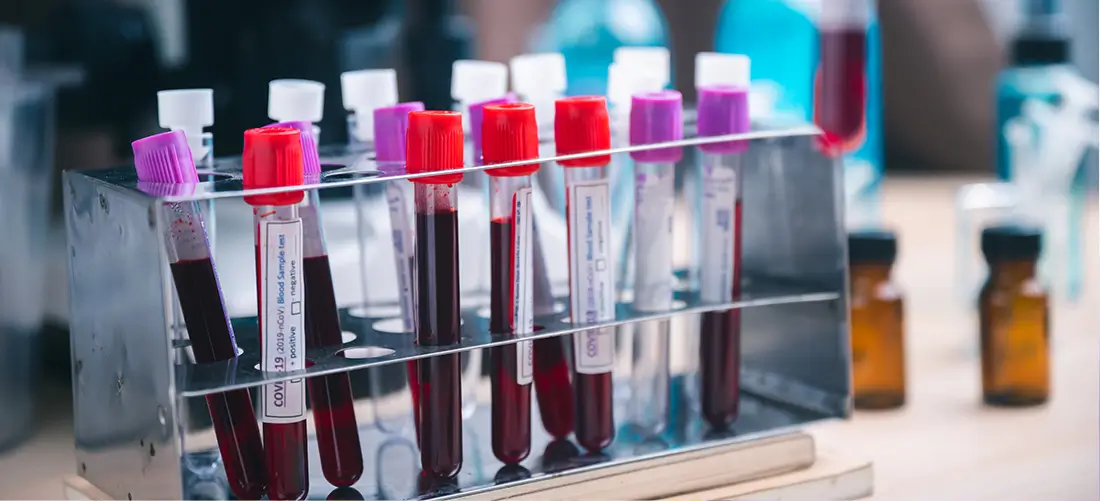
The process begins with a simple blood draw, typically performed at a lab facility during morning hours when hormones are most stable. A phlebotomist inserts a needle into a vein, usually in your arm, and collects blood into specialized tubes. Different hormone tests may require different tube types because some tubes contain additives that preserve hormone integrity during transport and storage. You might receive instructions to fast beforehand, arrive at a specific time, or avoid certain activities before testing because hormones respond to food intake, stress, time of day, and physical activity. Once collected, your blood sample gets labeled with your name, medical record number, and collection time, then transported to the laboratory. This is where advanced analytical instrumentation processes your sample and measures hormone concentrations with extraordinary precision.
At Centra Diagnostics and other sophisticated labs, your blood enters automated analyzers that use various methods to measure hormone levels. The most common method is immunoassay, which uses antibodies that bind specifically to the hormone being measured. When the hormone binds to these antibodies, a chemical signal is generated that the machine detects and quantifies. A different hormone might require a different measurement technique because different hormones behave differently at the molecular level. Some labs use liquid chromatography paired with mass spectrometry, an even more precise method that directly measures hormone molecules rather than relying on antibody reactions. This level of sophistication matters because it explains why results from different labs might vary slightly for the same test. The methodology affects accuracy. Higher quality labs invest in cutting-edge technology that produces more reliable results you can actually trust for medical decisions.
Once analysis is complete, your results get reviewed by medical professionals before being released. The lab compares your individual values against reference ranges, which are established from large populations of healthy individuals. A result of 45 nanograms per milliliter might be normal if the reference range is 20 to 80, but abnormal if the reference range is 10 to 40. Reference ranges sometimes differ between laboratories, which explains why your doctor might want repeat testing at the same facility rather than jumping between labs. Age, sex, and menopausal status affect reference ranges for many hormones. A testosterone level normal for a 25 year old man would be concerningly low for another 25 year old man and completely normal for a 65 year old man. Your doctor interprets results considering all these variables plus your individual symptoms and medical history. Two people with identical TSH values might require completely different treatment decisions because one person has thyroid antibodies indicating autoimmune disease while the other doesn’t.
Turnaround time varies depending on complexity and your lab’s processing capacity. Routine hormone tests typically return results within three to five business days, though some facilities offer faster turnaround. More specialized tests might require two weeks or longer. Centra Diagnostics emphasizes rapid turnaround times as a competitive advantage, recognizing that patients want answers quickly to guide treatment decisions. Once results are ready, your healthcare provider contacts you with findings and discusses what the numbers mean for your health and next steps. This conversation matters more than the numbers themselves because context transforms raw data into actionable information.
Pro tip: Schedule hormone blood tests early in the morning on an empty stomach if your doctor mentions fasting requirements, as this standardizes your results and prevents variables like food intake from skewing values.
When Providers Recommend Hormone Level Testing
Your doctor doesn’t order hormone testing on a whim. They recommend these tests when specific symptoms or medical circumstances suggest hormonal dysfunction might be the underlying cause. Understanding when testing makes sense helps you recognize whether your own symptoms warrant asking your provider about hormone evaluation. Some scenarios are obvious, like a woman experiencing sudden hot flashes at age 52 likely needs estrogen and FSH testing. Others are less obvious because hormonal problems mimic many common conditions. Persistent fatigue gets attributed to stress or depression when actually thyroid dysfunction is the culprit. Weight gain gets blamed on overeating when insulin resistance is actually driving the problem. A Los Angeles patient managing their health proactively should know which symptoms prompt hormone testing so they can advocate for themselves during medical appointments rather than accepting incomplete explanations for their health struggles.
Reproductive and fertility concerns dominate hormone testing referrals. Women experiencing irregular periods, absent periods, or abnormally heavy or light bleeding get tested for thyroid dysfunction, prolactin elevation, or polycystic ovary syndrome. Infertility evaluations require comprehensive hormone assessment to identify ovulation problems, luteal phase defects, or other hormonal barriers to pregnancy. Men with low libido, erectile dysfunction, or infertility concerns need testosterone testing plus evaluation of LH and FSH to understand whether reproductive problems originate in the testes themselves or in the pituitary gland controlling them. Women struggling with menopausal symptoms like hot flashes, night sweats, mood swings, and sleep disruption need FSH and estrogen testing to confirm menopausal status and guide hormone replacement decisions. Post-menopausal women on hormone replacement therapy need regular testing to ensure their doses remain appropriate as their bodies change.
Metabolic concerns trigger thyroid testing constantly because thyroid dysfunction affects metabolism more dramatically than almost any other hormonal problem. Unexplained weight gain, weight loss resistance despite calorie restriction and exercise, persistent fatigue despite adequate sleep, constipation, hair loss, cold intolerance, or dry skin all point toward thyroid problems. Some patients come to their doctor saying “I feel like something is wrong with my metabolism” without being able to describe specific symptoms, and thyroid testing often reveals exactly what they sensed intuitively. Insulin and fasting glucose testing become relevant when someone gains weight easily, experiences afternoon energy crashes, craves carbohydrates constantly, or has a family history of diabetes. High triglycerides or cardiovascular risk despite good cholesterol numbers sometimes reflects insulin resistance rather than lipid metabolism problems. Doctors increasingly recognize that metabolic health underpins overall wellness, so hormone testing helps identify the root causes of metabolic dysfunction rather than treating symptoms superficially.
Mood and cognitive symptoms often get attributed to psychiatry when hormones are actually the cause. A woman experiencing depression or anxiety that appeared suddenly during perimenopause might benefit from hormone testing before psychiatric medications. A man experiencing mood swings, irritability, or depression might have testosterone deficiency. Brain fog, memory problems, or difficulty concentrating sometimes reflects thyroid dysfunction rather than early cognitive decline. Panic attacks, generalized anxiety, or mood instability can reflect cortisol dysregulation from chronic stress. A person with a family history of thyroid disease who develops mood symptoms should definitely get tested since thyroid autoimmunity runs strongly in families. Hormonal testing helps providers distinguish between psychiatric conditions requiring behavioral or pharmaceutical intervention versus hormonal imbalances requiring hormone replacement or adjustment.
Age-related and preventive testing has become increasingly common as doctors recognize that hormone decline affects quality of life significantly. Men over 50 and women approaching or in menopause often benefit from baseline hormone testing to understand their current status and plan proactively for age-related changes. Some preventive medicine practitioners recommend periodic hormone assessment for all adults over 40 to catch problems early before they create serious health consequences. Centra Diagnostics supports this preventive approach by making comprehensive hormone testing accessible and providing rapid results that help patients and providers make informed decisions quickly.
Other specific scenarios requiring hormone testing include suspected adrenal insufficiency or excess (Addison’s or Cushing’s syndrome), growth concerns in children, delayed or precocious puberty, unexplained osteoporosis or bone loss, persistent acne or excess facial hair in women, or suspected growth hormone deficiency in adults experiencing unexplained fatigue and decreased muscle mass. Patients recovering from significant illness or surgery sometimes need hormone assessment because stress and trauma can disrupt normal hormonal function.
Pro tip: Bring a symptom timeline to your doctor appointment noting when symptoms started, how they’ve changed, and what makes them better or worse, as this information helps your provider determine whether hormone testing is appropriate and which specific tests would be most useful.
Interpreting Your Hormone Test Results
Receiving hormone test results can feel overwhelming. You get back a paper or digital report filled with numbers, abbreviations, and reference ranges that mean nothing without context. Your TSH is 4.8. Your free T4 is 0.9. Your cortisol at 8 AM is 12 micrograms per deciliter. These numbers only become useful when you understand what they actually mean for your health and what your doctor plans to do about them. Raw numbers are just data points. Context transforms those points into actionable information. A TSH of 4.8 falls within the standard reference range of 0.4 to 4.0 at many labs, making it technically normal, yet some doctors consider this elevated and recommend treatment while others watch and wait. This discrepancy frustrates patients in Los Angeles seeking clear answers, but it reflects genuine disagreement in the medical community about optimal hormone levels versus merely acceptable ones.
Your first step is understanding reference ranges. These ranges represent the values found in 95 percent of healthy people. The lab establishes them by testing thousands of healthy individuals and calculating the middle 95 percent of results. That means 5 percent of completely healthy people fall outside the range naturally. Your result might be flagged as abnormal simply because it lands in that healthy 5 percent. Additionally, reference ranges vary between laboratories because different testing methods produce slightly different values. A TSH of 3.5 might be normal at one lab and elevated at another if they use different methodology or different population standards. This is why your doctor sometimes wants repeat testing at the same facility rather than comparing results from different labs. The reference range printed on your report applies specifically to the lab that tested your blood.
Age, sex, and reproductive status dramatically affect hormone reference ranges. Normal hormone values differ significantly by life stage, meaning a testosterone level perfectly normal for a 70 year old man would be concerningly low for a 25 year old man. Estrogen levels that represent menopause in a 55 year old woman might indicate ovarian disease in a 35 year old woman. FSH values climb gradually as women approach perimenopause, so interpreting your FSH requires knowing your age and menstrual status. Cortisol values are higher in the morning and lower in the evening, so a cortisol reading only makes sense when you know what time it was collected. Your doctor considers all these variables when interpreting your results rather than simply comparing your numbers to reference ranges like a checklist. This personalized interpretation is why you cannot reliably self diagnose from online symptom checkers or by comparing your results to friends with similar test values.
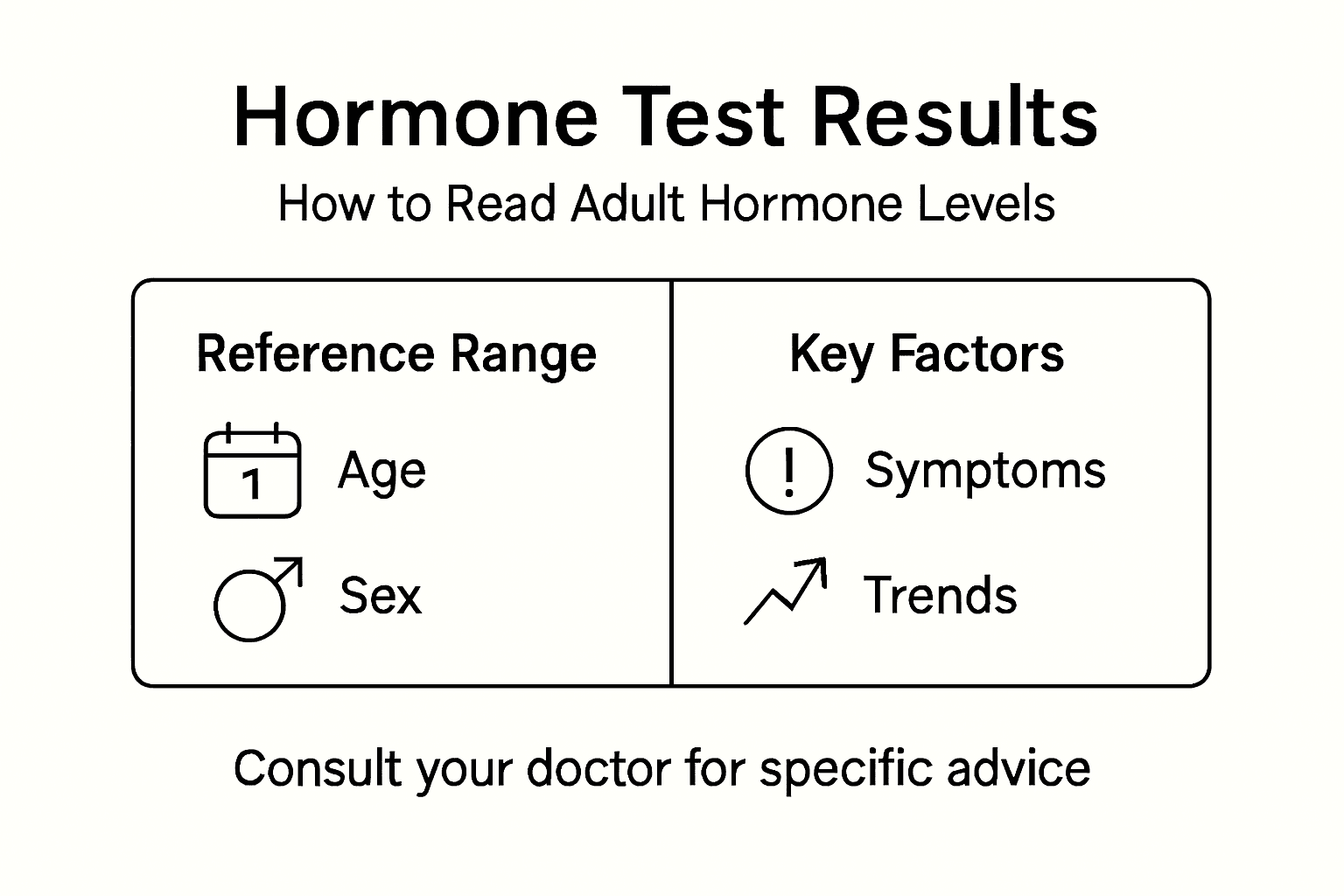
Symptoms matter more than numbers alone. A patient with a TSH of 2.5 and no thyroid symptoms probably needs no treatment, even if their TSH technically elevated compared to the optimal range some doctors prefer. Another patient with identical TSH of 2.5 plus significant fatigue, weight gain, and cold intolerance might benefit from thyroid treatment. The symptom picture transforms how doctors interpret the numerical results. This is why bringing a complete symptom list to your result discussion appointment matters so much. Your doctor needs to understand not just your numbers but how you actually feel. Some patients get frustrated hearing “your results look normal” when they clearly feel abnormal. The results are measuring one snapshot of one system while your symptoms reflect your lived experience. Both matter. Good doctors acknowledge this tension and work with you to determine whether numerical abnormality explains your symptoms or whether something else requires investigation.
Trend matters more than single results. A TSH that rises from 2.0 to 3.5 to 4.8 across three tests over two years suggests a declining thyroid even if all three values technically fall within normal ranges. A cortisol that crashes from a healthy 15 micrograms per deciliter in the morning to 2 micrograms per deciliter reveals a pattern of adrenal dysfunction that a single test might miss. This is why your doctor asks about previous test results and why maintaining your personal health records becomes valuable. If you can show your doctor that your energy has declined as your TSH has gradually climbed, even if still within normal range, that trend might prompt earlier treatment than waiting for numbers to cross into clearly abnormal territory.
The table below clarifies when repeat hormone testing is useful and when it is unnecessary:
| Situation | Need for Repeat Testing | Suggested Timing |
|---|---|---|
| Monitoring medication effects | Yes | Every 6–12 weeks |
| Baseline screening, no symptoms | Usually No | Every 1–2 years |
| Acute illness/major life change | Sometimes | Case-by-case |
| Tracking persistent symptoms | Yes | As directed by doctor |
Related hormones provide context for individual values. A low testosterone result only makes sense when examined alongside LH and FSH values because those show whether the problem originates in the testes themselves or in the pituitary gland controlling them. An elevated TSH alongside normal free T4 looks different than elevated TSH with low free T4. A cortisol that fails to drop in the evening while morning cortisol stays normal reveals a specific pattern of adrenal dysfunction. Your doctor looks at the entire hormone picture, not isolated values, to construct an accurate understanding of what your endocrine system is actually doing.
Pro tip: Request a copy of your complete test results showing every value, the reference range for each value, and the lab’s contact information, then create a personal spreadsheet tracking your results across months or years to identify trends your doctor might otherwise miss.
Risks, Costs, and Common Mistakes to Avoid
Hormone blood testing is remarkably safe. There are no serious risks from the test itself. The needle insertion causes minimal discomfort. Bruising at the puncture site resolves within days. Some people experience mild dizziness or lightheadedness immediately after blood draw, particularly if they have needle anxiety or haven’t eaten beforehand. Fainting during blood draw happens occasionally but carries no serious consequences. The real risks come not from testing itself but from what happens after you get results. Misinterpreting results, overreacting to borderline values, making treatment decisions without medical guidance, or discontinuing prescribed medications based on misunderstood test values can create genuine health problems. In Los Angeles, where patients have access to abundant health information and direct to consumer testing, the biggest risk is acting on incomplete understanding rather than partnering with qualified healthcare providers to interpret results accurately.
Cost varies dramatically depending on which hormones you test and whether your insurance covers testing. A basic thyroid panel including TSH, free T4, and free T3 costs between 75 and 200 dollars without insurance. A comprehensive hormone panel testing thyroid, sex hormones, cortisol, and metabolic markers runs 300 to 800 dollars. Direct to consumer testing kits advertised online might cost less upfront but often provide results without professional interpretation, leaving you confused about what your numbers actually mean. Insurance coverage depends on your specific plan and whether your doctor ordered testing for medically necessary reasons versus preventive health screening. Many insurance plans cover hormone testing when symptoms suggest hormonal dysfunction but exclude purely preventive hormone assessment in asymptomatic patients. You should call your insurance company before testing to ask whether they cover specific tests your doctor recommends. Some labs offer payment plans or reduced pricing for uninsured patients. Centra Diagnostics and similar quality labs often provide competitive pricing and can work with you on payment options.
Common mistakes begin with testing at the wrong time. Cortisol levels must be measured at specific times because they fluctuate dramatically throughout the day. Testing cortisol at 2 PM when it should be measured at 8 AM produces meaningless results. FSH and LH fluctuate throughout the menstrual cycle, so testing during the follicular phase produces different results than testing during the luteal phase. Testosterone in women varies across the cycle. Some patients test fasting insulin without actually fasting, invalidating the result. Another frequent mistake involves comparing your results to someone else’s normal ranges. Your friend might tell you their TSH is 2.0 and yours is 2.8, but that doesn’t mean something is wrong with your thyroid. Reference ranges vary between labs. Age and sex differences matter. The comparison means nothing. Patients also make mistakes by self treating based on test results without medical guidance. Someone discovers elevated cortisol and starts taking supplements they read about online without understanding whether elevated cortisol represents Cushing’s disease requiring specialist care versus simple stress dysregulation. Another discovers low testosterone and orders pharmaceutical testosterone without medical supervision, risking serious side effects. Understanding supplement interactions and safety profiles becomes critical when treating hormonal conditions.
Another mistake involves testing too frequently or testing the wrong markers. Your TSH doesn’t change rapidly. Testing every month produces nearly identical results and wastes money. Most hormone tests should be repeated every 6 to 12 weeks if monitoring for changes. Some patients get seduced by trendy tests marketed on social media like “adrenal fatigue” panels or expensive specialty hormone assessments that aren’t standard medical practice. These tests sometimes use non standard reference ranges, produce abnormal results that seem to confirm their marketing narrative, then recommend expensive supplements or treatments. If you’re considering an unusual test, ask your primary care doctor whether it’s evidence based and whether the cost justifies the information it provides.
Patients also stumble by ignoring medication interactions and lifestyle factors affecting hormone tests. Birth control pills elevate some hormone values. Thyroid medications must be taken on an empty stomach hours before testing. Stress and poor sleep dramatically affect cortisol patterns. Heavy exercise timing affects various hormonal markers. Soy consumption affects thyroid hormone absorption. These variables mean interpreting a single test result without understanding context produces misleading conclusions. You must disclose all supplements, medications, and lifestyle factors to whoever is interpreting your results. Finally, patients make the error of treating numbers instead of treating people. A TSH of 4.5 doesn’t require treatment simply because it’s numerically elevated if you have no symptoms and feel completely fine. Conversely, a TSH of 2.5 deserves consideration for treatment if you have severe symptoms and strong clinical suspicion of thyroid dysfunction. Good medical care balances laboratory values with clinical presentation. If your provider seems focused only on the numbers without considering your symptoms and quality of life, that’s a red flag suggesting you need a second opinion.
Pro tip: Before taking any test, ask your provider specifically when to test, whether fasting is required, what medications to hold beforehand, and what specific markers they’re measuring, since testing errors caused by poor timing or instructions waste money and produce unreliable results.
Take Control of Your Hormonal Health with Precise Blood Testing
Hormonal imbalances can disrupt your energy, mood, metabolism, and overall well-being without clear warning signs. If you struggle with unexplained fatigue, weight changes, or mood swings it is crucial to get accurate hormone blood tests performed at a trusted laboratory. At Centra Diagnostics in Los Angeles, we understand how important it is to have precise and timely hormone level analysis that guides your healthcare provider to the right diagnosis and treatment. Our advanced testing technology and fast turnaround times mean you spend less time waiting and more time improving your health.

Don’t let confusing symptoms hold you back. Take the next step toward clarity by scheduling your hormone blood testing at Centra Diagnostics. Whether you need thyroid panels, sex hormone assessments, or metabolic hormone evaluation, our expert team supports you every step of the way. Visit our main page now to learn more and book your appointment. Empower yourself with accurate data and trusted results today.
Frequently Asked Questions
What are hormone blood tests used for?
Hormone blood tests are used to diagnose and monitor hormonal imbalances or dysfunctions. Common reasons for testing include irregular menstrual cycles, unexplained fatigue, mood disorders, and fertility problems.
Which hormones are commonly measured in blood tests?
Common hormones measured in blood tests include thyroid hormones (TSH, T4, T3), sex hormones (testosterone, estrogen, progesterone), adrenal hormones (cortisol, DHEA), and metabolic hormones (insulin).
How should I prepare for a hormone blood test?
To prepare for a hormone blood test, it’s generally recommended to fast beforehand, especially for tests measuring insulin and glucose levels. Additionally, some tests should be taken at specific times of day for accurate results, so follow your doctor’s instructions closely.
How are hormone blood test results interpreted?
Hormone test results are interpreted by comparing individual hormone levels to established reference ranges, which vary based on age, sex, and health status. Context, including symptoms and medical history, is also considered to determine treatment options.