
Over 60 percent of american adults receive only basic blood tests during routine checkups, missing out on key health insights that advanced blood work can provide. Many health conditions remain undetected until it’s too late, which can leave patients feeling uncertain about their true health status. By exploring the broader scope of advanced blood testing, readers can see how this modern approach offers deeper knowledge, earlier detection, and more precise medical guidance than standard screenings.
Table of Contents
- Defining Advanced Blood Work And Its Purpose
- Types Of Advanced Blood Work Tests
- How Advanced Blood Work Is Performed
- Benefits Over Standard Blood Testing
- Risks, Limitations, And Cost Considerations
Key Takeaways
| Point | Details |
|---|---|
| Advanced Blood Work Definition | Advanced blood work offers a detailed diagnostic approach, examining various health markers that traditional tests may overlook. |
| Types of Tests Conducted | This includes comprehensive metabolic panels, hormonal profiling, and genetic diagnostics that assess multiple health dimensions simultaneously. |
| Benefits Over Standard Testing | Key advantages include early disease detection, personalized treatment plans, and enhanced health monitoring capabilities. |
| Risks and Costs | While beneficial, advanced blood work may carry procedural risks and high out-of-pocket expenses, often with limited insurance coverage. |
Defining Advanced Blood Work and Its Purpose
Advanced blood work represents a comprehensive diagnostic approach that goes far beyond traditional blood testing. According to the National Heart, Lung, and Blood Institute, these specialized tests provide detailed insights into various health conditions, organ functions, and disease markers, enabling precise diagnosis and targeted treatment planning.
Advanced blood testing is not a single, uniform procedure but a sophisticated suite of diagnostic tools designed to uncover intricate health details. These tests analyze multiple biological markers, metabolic indicators, and physiological signals that standard blood work might miss. By examining complex interactions within your bloodstream, healthcare professionals can detect potential health risks, assess organ performance, and develop personalized healthcare strategies.
The purpose of advanced blood work extends beyond basic health screening. MedlinePlus highlights that these tests are critical for:
- Detecting early-stage diseases
- Monitoring organ performance
- Evaluating treatment effectiveness
- Identifying potential genetic predispositions
- Assessing nutritional and metabolic health
By providing a comprehensive overview of an individual’s health status, advanced blood work empowers both patients and healthcare providers with unprecedented diagnostic capabilities. This approach transforms reactive healthcare into a proactive, precision-driven model of medical intervention.
Types of Advanced Blood Work Tests
Advanced blood work encompasses a wide array of specialized diagnostic tests that provide deep insights into an individual’s health. While traditional blood work offers basic health indicators, advanced testing goes several steps further by analyzing complex biological markers and molecular signals. Centra Diagnostics’s guide on blood work analysis highlights the breadth and depth of these sophisticated diagnostic tools.
Comprehensive metabolic panels represent one critical category of advanced blood tests. These panels evaluate multiple organ systems simultaneously, measuring crucial elements like electrolyte balance, kidney function, liver performance, and glucose metabolism. By examining intricate biochemical interactions, healthcare professionals can detect subtle metabolic disruptions that might indicate underlying health conditions before they become more serious.
Other key types of advanced blood work include:
-
Hormonal Profiling Tests
- Thyroid function assessments
- Testosterone and estrogen level evaluations
- Cortisol stress hormone measurements
-
Genetic and Molecular Diagnostics
- Chromosomal abnormality screenings
- Inherited disease risk assessments
- Pharmacogenomic testing for medication responses
-
Inflammatory and Immune System Markers
- C-reactive protein tests
- Autoimmune disease indicators
- Comprehensive immunoglobulin analyses
These advanced diagnostic approaches transform healthcare from a reactive model to a proactive, personalized strategy. By uncovering detailed insights into an individual’s physiological landscape, advanced blood work empowers both patients and medical professionals to make informed, precise health decisions.
How Advanced Blood Work Is Performed
Advanced blood work begins with a precise and carefully managed sample collection process. According to the National Heart, Lung, and Blood Institute, these tests are typically conducted by drawing blood from a vein, usually in the patient’s arm, with specialized techniques designed to preserve the sample’s integrity for comprehensive laboratory analysis.
Blood collection involves several critical steps that ensure accurate and reliable results. Trained phlebotomists or healthcare professionals follow a stringent protocol, which includes preparing the collection site, selecting the appropriate collection tubes, and handling the sample with meticulous care. Different advanced blood tests require specific tube types and processing methods to maintain the biological markers’ stability and prevent contamination.

The laboratory analysis phase is where advanced blood work truly distinguishes itself from standard testing. MedlinePlus explains that the collected sample undergoes multiple sophisticated processing techniques, including:
-
Centrifugation
- Separating blood components
- Isolating specific cellular and molecular elements
-
Molecular Diagnostic Techniques
- Polymerase chain reaction (PCR)
- Genetic sequencing
- Immunoassay testing
-
Specialized Screening Processes
- Hormonal level measurements
- Genetic marker identification
- Metabolic profile analysis
These advanced techniques transform a simple blood draw into a comprehensive health assessment, enabling healthcare providers to uncover intricate details about an individual’s physiological condition with unprecedented precision and depth.
Benefits Over Standard Blood Testing
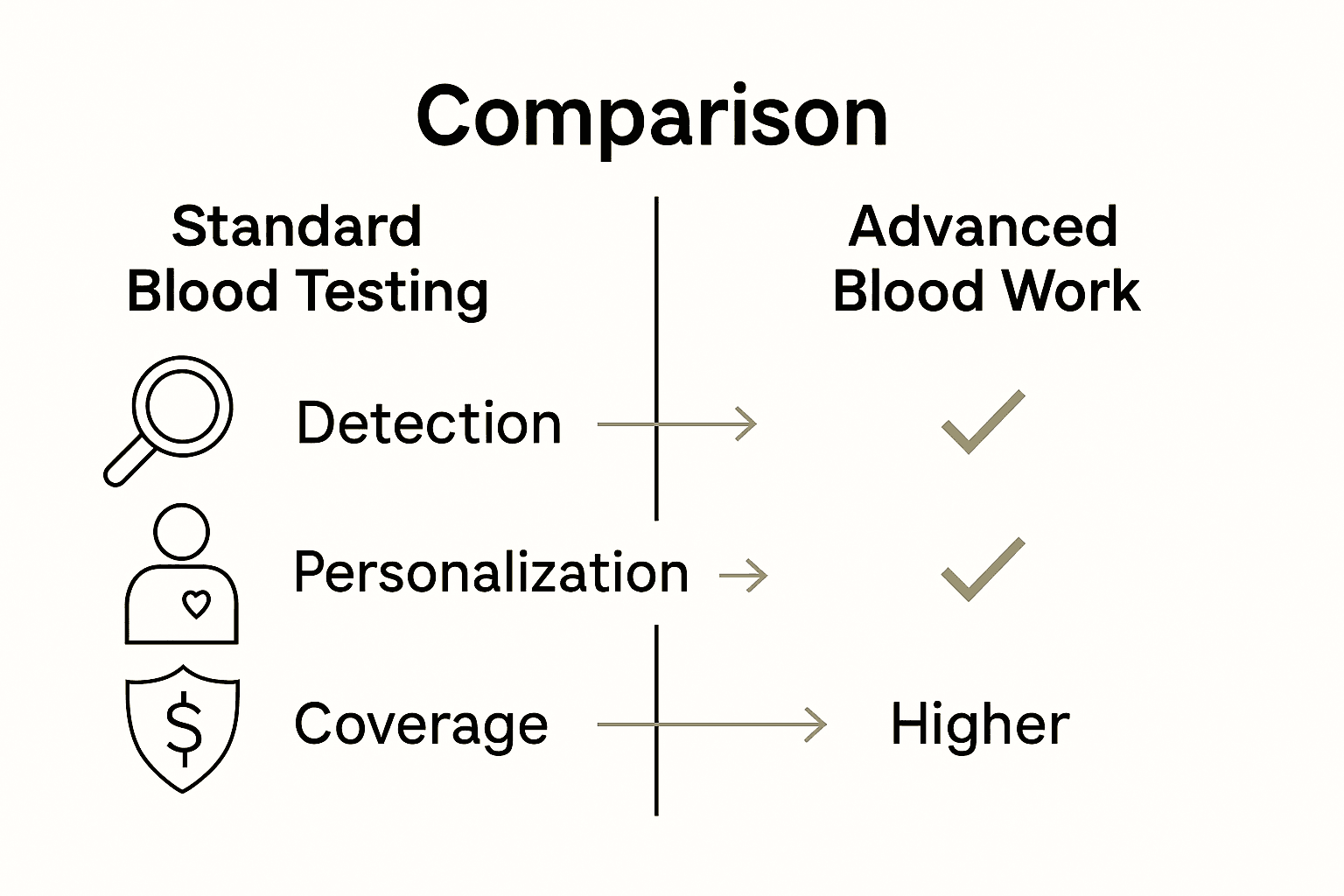
Advanced blood work represents a quantum leap in diagnostic capabilities, offering significantly more comprehensive insights than traditional blood testing. According to the National Heart, Lung, and Blood Institute, these advanced tests enable early detection of diseases, personalized treatment plans, and superior health condition monitoring that standard tests simply cannot match.
Precision diagnostics distinguish advanced blood work from conventional testing methods. Where standard blood tests provide basic health indicators, advanced testing delves deep into an individual’s unique physiological landscape. Cleveland Clinic highlights that these tests can identify specific biomarkers and genetic factors, offering unprecedented insights into potential health risks and individual molecular characteristics.
Key advantages of advanced blood work include:
-
Early Disease Detection
- Identifying subtle health changes before symptoms emerge
- Detecting pre-clinical conditions
- Revealing genetic predispositions
-
Personalized Healthcare
- Tailoring treatment strategies
- Understanding individual metabolic profiles
- Predicting medication effectiveness
-
Comprehensive Health Monitoring
- Tracking complex biochemical interactions
- Assessing multiple organ systems simultaneously
- Providing nuanced health performance metrics
By transforming raw biological data into actionable medical intelligence, advanced blood work empowers healthcare providers to develop more targeted, proactive, and individualized treatment approaches that go far beyond traditional diagnostic methods.
Risks, Limitations, and Cost Considerations
Advanced blood work, while revolutionary in diagnostic capabilities, is not without potential drawbacks and considerations. MedlinePlus notes that while blood tests are generally safe, they do carry minimal risks such as bruising or potential infection at the puncture site, with advanced tests potentially introducing additional complexities.
Financial implications represent a significant consideration for many patients. According to the National Heart, Lung, and Blood Institute, certain advanced tests may not be comprehensively covered by insurance, potentially leading to substantial out-of-pocket expenses. These costs can range from moderately expensive to prohibitively high, depending on the complexity and specificity of the diagnostic panels requested.
Key risks and limitations to consider include:
-
Procedural Risks
- Minor bruising at blood draw site
- Rare instances of infection
- Potential discomfort during sample collection
-
Diagnostic Limitations
- Potential for false positive results
- Possibility of inconclusive findings
- Variability in test accuracy
-
Financial Considerations
- High out-of-pocket expenses
- Limited insurance coverage
- Varying cost structures across different testing panels
Patients should approach advanced blood work with a balanced perspective, weighing the comprehensive diagnostic insights against potential risks and financial investments. Consulting with healthcare providers can help determine the most appropriate and cost-effective testing strategy tailored to individual health needs.
Unlock the Full Potential of Your Health with Advanced Blood Work
Understanding the detailed insights offered by advanced blood work can be overwhelming, especially when faced with complex results and important healthcare decisions. If you want to detect early-stage diseases, monitor your body’s metabolic and hormonal balance, or personalize your treatment plans, the key is accurate and timely diagnostics performed with cutting-edge technology. Many patients struggle with the uncertainty of standard tests and need deeper understanding to take control of their health journey.
At Centra Diagnostics, we specialize in comprehensive advanced blood testing that aligns perfectly with the goals highlighted in this article. Our reliable molecular testing and blood work services provide precise data to detect subtle health changes and support personalized healthcare like never before. We combine first-class turnaround times and dedicated client management so you get the clarity you need without delay.
Take charge now and transform how you manage your health.
Experience the power of advanced blood work with Centra Diagnostics

Ready to move beyond standard tests? Visit Centra Diagnostics today to explore our advanced testing solutions and partner with a trusted lab committed to your well-being. Early detection and personalized care start with the right diagnostics. Don’t wait until symptoms appear, act now for a healthier tomorrow.
Frequently Asked Questions
What is advanced blood work?
Advanced blood work is a comprehensive diagnostic approach that analyzes multiple biological markers and physiological signals, providing detailed insights into health conditions, organ functions, and disease markers that traditional blood testing may miss.
What types of tests are included in advanced blood work?
Advanced blood work includes various specialized tests such as comprehensive metabolic panels, hormonal profiling tests, genetic and molecular diagnostics, and inflammatory and immune system markers.
How is advanced blood work performed?
Advanced blood work is performed by drawing blood from a vein, followed by laboratory analysis that includes sophisticated techniques like centrifugation, molecular diagnostics, and specialized screening processes to ensure accurate and comprehensive results.
What are the benefits of advanced blood work compared to standard blood testing?
The benefits of advanced blood work include early disease detection, personalized healthcare approaches, and comprehensive health monitoring by providing deeper insights into an individual’s unique physiological landscape.
Recommended
- What Is Blood Work Analysis? Complete Guide Explained | Centra Diagnostics
- Guide to Ordering Blood Work: Step-by-Step for Professionals | Centra Diagnostics
- 7 Essential Types of Lab Tests Every Provider Should Know | Centra Diagnostics
- 7 Key Tips for Affordable Lab Testing in Los Angeles | Centra Diagnostics